I've been thinking quite a lot about Jason's post from Monday night, though I feel reasonably confident that I still don't understand it completely. I've decided to carry the conversation forward with a post of my own rather than simply taking it up the subject in the comment thread, both because I'm hoping (in vain?) it will spur me to return to posting and because it gives me the opportunity to get into a couple of loosely-related ideas I've been kicking around for some time now.
Having read through Jason's post three or four times, I'm still trying to put my finger on just what exactly the problem is that he describes. I take it that he basically agrees with Mark Safranski, whose diagnosis seems reasonably straightforward to me. Here's how I read it: in a democratic society, decision-makers will often select policy options that are reflective of an approval-seeking need to do something—to signal a certain position or preference to a domestic audience rather than to accomplish a considered aim and effect a new reality. This can lead to suboptimal outcomes for the simple reason that the decision-maker's calculus is largely indifferent to outcomes: his incentive structure rewards superficially correct action more than it does substantively beneficial results.
If this isn't what Mark meant to say, then I'll stand corrected. But if it is, then I agree with him.
But here's the part where I get confused: even if civilian policymakers are prone to this sort of error (and I agree that they are), and even if, as Jason writes, "our strategy in Afghanistan is guided by process" (and I agree that it is)... I still don't understand how or why those two conditions should be causally related. Let me put it this way: the fact that our campaign planning in Afghanistan is process-focused seems to me largely disconnected from the fact that our politicians care more about doing right-looking things than right-ending things, because campaign plans and operational concepts aren't the purview of those politicians.
I'm willing to concede that the line between civilian and military reponsibilities in strategy formation and the associated operational planning is a blurry and unstable one, and that what I've laid out as the normative standard isn't always the way things play out in reality. You certainly shouldn't take anything I've written above as an exculpatory argument for our elected officials. But more on this a bit later.
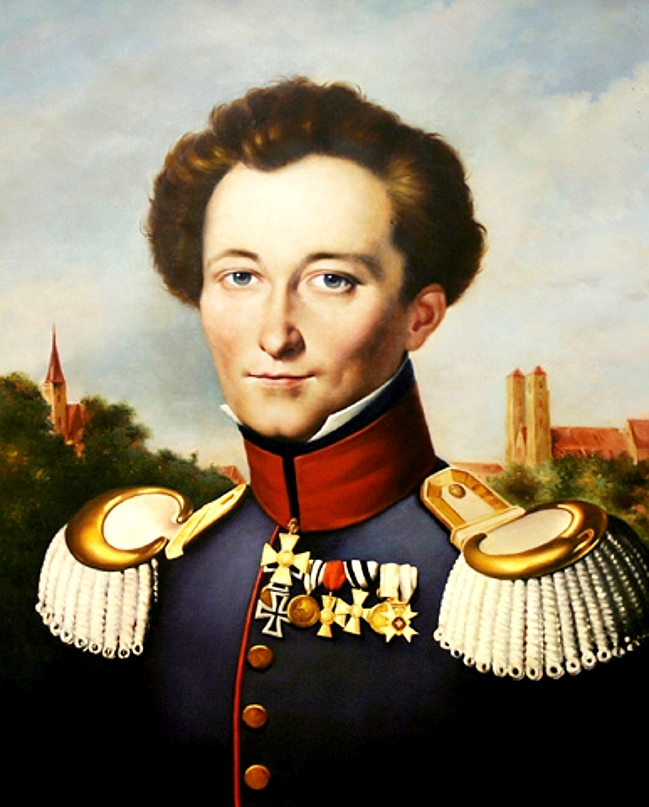
As for our man Carl: Jason's choice of Clausewitz quote is simultaneously interesting and surprising to me. Committed students of the sage will recognize it from perhaps the most remarked-upon pages of On War: Book Eight, Chapter 6B. (If it were an episode of "Friends," they'd call it The One With the Politics By Other Means.) The language Jason excerpted is from the 19th-century Graham translation; just for the purpose of clarity, let's look at the somewhat more fluent Paret/Howard version:
In making use of war, policy evades all rigorous conclusions proceeding from the nature of war, bothers little about ultimate possibilities, and concerns itself only with immediate probabilities. Although this introduces a high degree of uncertainty into the whole business, turning it into a kind of game, each government is confident that it can outdo its opponent in skill and acumen. (606)This is a pretty difficult passage (especially as I present it here, mostly out of context) but I take it to mean that governments are little interested in ruminations on war's escalatory momentum in the direction of its absolute form, but rather in how violence may be used to achieve concrete political goals. But the paradoxical reality is that addition of violence to politics – violence that is fueled in part by hatred and enmity, violence that is fundamental to war's nature and sets it off as distinct from all other human activity – actually re-shapes the character of the political contest. War's essential violence pressures the political contest to take on the character of a duel or a sporting event; without the harness of policy, war risks becoming a self-contained competition conducted according to its own rules, one where victory is not the mere accomplishment of political objectives but rather a revision of the relationship between the two competitors such that the victor is free to enact his preferences.
The "high degree of uncertainty" that Clausewitz concedes is introduced "into the whole business" is produced by divergence between the things we do in war and the things they are meant to achieve. In limited war, our actions are conceived as violent but discrete and purposive acts of policy, while as war moves toward its absolute form our actions are increasingly divorced from discrete political objectives short of the destruction of our enemy. To put it simply, shit gets crazy in war.
But "policy converts the overwhelmingly destructive element of war into a mere instrument," Clausewitz continues.
It changes the terrible battle-sword that a man needs both hands and his entire strength to wield, and with which he strikes home once and no more, into a light, handy rapier—sometimes just a foil for the exchange of thrusts, feints and parries. (606)Of course, for the military instrument to be used effectively, its employment must be strategic—that is to say, it must be reasoned.
In the Kings of War post that Jason referenced, Kenneth Payne talks about what behavioral economists and psychologists call "choice-supportive bias"—our tendency to feel a preference more strongly after we've made a choice in its favor than we did when considering the whole range of options. (Payne incorrectly labels this as the "endowment effect," which describes a different cognitive bias – our tendency to value more highly those things that we already possess and stand to lose than those things we might gain – that's closely related to loss-aversion, but that small error is not germane to his point.)
Preferences are not revealed by choices, so much as created by them. That's particularly true if the choice we make is emotionally engaging, as war is—passionately so, ofttimes.I feel a bit like a broken record, but Clausewitz talked about this, too: war's violent nature and appeal to primal hatred and enmity give it a tendency to escalate toward the absolute, to break free of its harness to policy, to unbalance "the remarkable trinity" that ensures it is purposive and endows it with meaning.
What I take from Payne's brief post is that modern discoveries in behavioral psychology and neuroscience are highlighting just exactly how difficult it is for individuals to behave "rationally," which has a complicating effect on strategy—the method we use to plan and undertake purposive action to achieve our goals. I very much agree with this, but I suppose it's worth including a reminder that while the science may be new, the behaviors that it observes and seeks to explain are not. Strategy has always been complicated by our flawed rationality; it's only now that we're beginning to achieve a more granular understanding of the biases impacting it than the somewhat more homespun generalizations Clausewitz offered on the subject.
That said, I very much disagree with what seems to be Payne's prescription: that we should give up on efforts at "balancing ends ways and means, or even discerning them," and instead conceive of strategy as a sort of elevated form of reactive planning.
Instead it's perhaps better to think about strategy in its less 'grand strategic' sense—and instead to conceptualise it as the organisation of power in the moment, in response to contingencies. Stop trying to anticipate the future so much, because, as Philip Tetlock has shown, we are rather bad at it.Stipulated! But this form of "strategy" is an exercise in throwing the baby out with the bathwater, conceding initiative to our enemies and foregoing even the possibility of imposing our own preferences on the environment. Strategic thinking will not always be effective, even when the inputs are perceived correctly. But it beats the alternative, doesn't it? And how does Payne's model escape the very same pitfalls of bounded rationality? Even if we "conceptualise [strategy] as the organisation of power in the moment, in response to contingencies," are we not dogged by the same cognitive biases and flawed rationality that impinge on our ability to plan over the longer term?
The problem of modern strategy isn't that we make so many miscalculations—that's to be expected, and it's the very reason that strategy formation and adaptive planning are meant to be iterative processes. The main issue is that the so-called "strategy bridge" is still absent: we are failing to adequately specify – even to ourselves! – how successful operations will create the political effects we seek. When we pretend to do so, we speak in buzzwords, cliches, and generalities.
This is a failing on both sides of the political-military divide. Our elected leaders are responsible for ensuring that we undertake wars that have meaning—wars that can plausibly achieve the objectives set out in policy. And our uniformed leaders must ensure that those meaningful wars are executed sensibly, in a manner that maps military action to intended effect—whether that's the wholesale destruction of the enemy, conquering and holding a sliver of territory, deterring an adversarial regime, or whatever. I feel like I say this a lot, but this is the essence of strategy: developing a theory of victory, a reasonable concept of how the actions you take with the resources at your disposal can combine to achieve the objectives you seek.
The "strategy bridge" is the causal, conceptual link between the accomplishment of military objectives and the creation of political effects, something that is all too often missing in today's strategic thought. We fill that chasm only with bromides, wishful thinking, and specious "plans," then wonder why no one can walk across.
I suppose this is where I come to my issue with Jason's post, which I understand to be saying that the main problem with our strategy in Afghanistan is a failure to recognize that we've met our initial objectives.
We're still fighting a war against al Qaeda in Afghanistan even though they're no longer there because the policy has not adapted. So the military has experimented with various ways (as the means have been dominated by policy-makers) to achieve ends that have effectively been achieved. But we can't say that we've won because there is still so much violence in Afghanistan, so we toil longer and talk about 'winning'—and yet the original policy's ends still have not changed.The policy objective in Afghanistan is, and presumably always has been, the one the president identified at the completion of the Af-Pak strategy review in March of 2009: "to disrupt, dismantle, and defeat al-Qaeda in Pakistan and Afghanistan, and to prevent their return to either country in the future." He further articulated the component parts of that overall objective several months later in the West Point speech announcing the escalation:
To meet that goal, we will pursue the following objectives within Afghanistan. We must deny al Qaeda a safe-haven. We must reverse the Taliban's momentum and deny it the ability to overthrow the government. And we must strengthen the capacity of Afghanistan's Security Forces and government, so that they can take the lead responsibility for Afghanistan's future.Looking at those intermediate objectives and at the overall policy goal, isn't it obvious that the crippling and fundamental issue has nothing to do with a failure to revise ends in line with progress and change in conditions and everything to do with the government's determination to pursue political aims that were almost certainly unachievable and inaccessible to military action?
The problem in Afghanistan isn't strategy—it's policy. (The more I think about it, the more Jason seems to agree.)
Even if U.S. military operations over, say, a five-year period actually did achieve what the president hoped to – if al-Qaeda were effectively denied a safe haven in Afghanistan for so long as U.S. forces actively operated there; if the Taliban were held off or even decisively defeated over that time period; and if the GIRoA and ANSF were made capable and effective in the maintenance of the country's own internal security – there simply wasn't any plausible explanation presented for how the creation of those conditions would conclusively produce the end states we desired: al-Qaeda's disruption, dismantling, and defeat in Afghanistan and Pakistan and the prevention of its return to either country in the future.
The only conceivable justification for our continued refusal to do this is that winning just isn't all that important to us. And so we've come full-circle back to what Mark Safranski wrote: "the net result becomes burning money and soldiers' lives to garner nothing but more time in which to avoid making a final decision, hoping to be rescued by chance." As long as we're doing something, maybe something good will happen. The same logic animates a great deal of the anti-authoritarian interventionist sentiment we've seen in recent months, but that's a whole separate conversation.
I read a paper recently with the extremely lede-burying title, "The Myth of Military Myopia: Democracy, Small Wars, and Vietnam," by Jonathan Caverley. The thesis can be boiled down to this: those who argue that the military lost Vietnam through the application of flawed doctrine generally fail to recognize that the adoption of militarily sub-optimal courses of action was in fact a result of a rational policy determination by the country's political leadership.
Caverley oversimplifies quite a bit in his assumptions about optimal strategy, but the basic idea is that because the average voter cared far less about the financial cost of war than about the human cost (including not only casualties, but the possible expansion of the draft, etc.), politicians were incentivized to "substitute capital for labor"; i.e. to fight a technology-intensive style of war that was sensitive to the electorate's preference for limiting human costs, even while it was more expensive and less militarily effective. In short, politicians cared less about losing the war than they did about doing what the average voter seemed to want. (Which is, of corse, sort of what democracy is about.) I have some significant problems with the paper and am not sure the conclusions are all that sturdy, but it's an interesting hypothesis.
It's even more interesting if you read it in tandem with Patricia Sullivan's "War Aims and War Outcomes: Why Powerful States Lose Limited Wars," which is one of the most thought-provoking papers I've read in a really, really long time. Sullivan argues that the primary determinant of success for powerful states in small wars is the degree to which prewar expectations about the cost of victory match with reality: a state is most likely to pack up and quit when a war proves more difficult than expected. This often happens with limited wars because of the difficulty of accurately assessing the probability of victory (and associated casualties, duration, etc.) when accomplishment of war aims depends on concessions or lack of resolve on the part of the enemy rather than his wholesale defeat—in short, it's easier to predict how difficult it will be to destroy an army and conquer a state than to accurately project how many sorties are required to compel the enemy to make different political choices. I'm not doing the paper justice, and you ought to read it yourself.
What the hell does any of this have to do with what we were talking about earlier?, you're wondering. Surely I've just gone off on some stream-of-consciousness rant, spilling all the lost blog posts of the last two months into one text box. Well, there's a little bit of that. But try this one on for size: what Sullivan's and Caverley's papers both show is that powerful states often engage in wars that are not particularly important either to the government or to the electorate, and that they often wage them ineffectively and quit early as a result. In other words, states quite literally waste lives, money, and materiel on impulsive trifles, undertakings designed to send a message or show hardness or keep a campaign promise or give the appearance of doing the right thing.
And all of these things are perfectly acceptable uses of military force, perfectly acceptable instrumentalizations of policy... if you can show how the means you've chosen have even the faintest hope of accomplishing those political ends! I'm not at all suggesting that violence should only be used to conquer territory, or to destroy the enemy—not at all. What I am suggesting is that we cease to use military force in an unconsidered fashion. This isn't even an argument for choosing the right wars, but for figuring out whether the things we can do in war have any hope of creating meaning from war. If not, then we really are wasting lives—and those of us who fancy ourselves strategists are wasting our own. It's our job to build the damned bridge.
P.S. I am completely in love with the Kelly-Brennan monograph (pdf) MK mentioned in his comment on Jason's post—I have been since I first read it. I had hoped to discuss it here, but let's be serious: you can't take any more of this right now.