Thursday, August 9, 2012

Ohio and military votes: towards a warrior caste and unbalanced civil-military relations

The Ohio military voting issue that surfaced within the past week has raised some ugly politics and views. While reticent to wade into what is primarily a domestic political concern, this confrontation is pouring light into the dark corners of civil-military relations that we'll discuss shortly. But first a synopsis of the facts as they occurred.

Election Day in Ohio in 2004 was a disaster in that the state was obviously unprepared for the number of voters who came to vote. Some voting lasted until the early hours of the next morning and provisional ballots were improperly used, causing a significant number of them to be discounted. As a response (in part as well as for other reasons it seems), the State of Ohio opened up an early voting period for any voters in the days prior to Election Day in order to ease the burden on the big day and the potential for screw-ups (i.e., discounting valid votes). This option was used extensively since, particularly in the final three days before Election Day. However, this past year the Ohio House of Representatives passed a law that maintained early in-person voting rights in the final 3 days before Election Day only for Ohioans subject to the Uniformed and Overseas Citizens Absentee Voting Act (UOCAVA) - most of whom are military members and their families. This bill removed the right of all other Ohioans to vote early in person in the final 3 days running up to Election Day, cutting their early voting off on the Friday prior. To sum, every Ohioan had been able to vote early in person in the three days before Election Day until this year when the Ohio legislature changed the law so that only  military personnel and their families could do this. The Obama campaign, and others, have sued the State of Ohio to reinstate early in-person voting for all of Ohio, not just those subject to UOCAVA. Please read this, this, and this for more perspective (thanks to Hayes Brown - @HayesBrown - for providing the Slate link to get this started for me).

The response from Mr. Obama's political opponents can be most kindly described as misrepresenting the Obama campaign's lawsuit. The Romney campaign has billed it as an attempt to suppress military votes - suggesting that the lawsuit was attempting to remove military members' ability to vote early instead of reinstating all Ohioans' ability to vote early. The Romney campaign is supported on this position by a number of influential military-affiliated organizations, including the Association of the U.S. Army. Their argument is petty politics and they're using smoke and mirrors to attack the Obama campaign. Fine. There is a lot of political football in this, but that does negate the fact that the Obama campaign is in no way suing to prevent extra time for military personnel from Ohio to vote. It also has absolutely nothing to do with mail-in absentee ballots from overseas. This is the bottom line and these facts are not (should not be, rather) in contention.

At this point you're probably asking yourself why I'm going on about this on a relatively apolitical security blog. If you move beyond the pandering, obfuscation, and outright lying that passes for political discourse, this issue has given the darkest and most extreme voices of CMR a drum to beat upon. Congressman Allen West issued a statement in which he doesn't propagate the Romney campaign lie of disenfranchising military, but instead avers that what the President is trying to do is offensive:
how dare this President compare the service, sacrifice, and commitment of those who Guard our liberties not as special and seek to compare them to everyone else.
Poor use of the English language aside, a sitting member of the U.S. House of Representatives is saying the law in Ohio should stand as it is because those that serve our nation in arms are better than everyone else and should be given an edge. You can't even compare those in uniform to the rest of society. It seems that Mr. West believes service members deserve more rights, more democracy than those who do not serve. Don't think this is a prevalent viewpoint among many Americans, especially those who have or are serving? Right-leaning blog This Ain't Hell covered the Ohio voting issue along the same lines. This poem, ubiquitous among military/veteran Facebook pages and crappy PX art expos, explicitly states how much more important veterans are than other members of society. Or the old quote, too often mis-attributed to George Orwell:
People sleep peacefully in their beds at night only because rough men stand ready to do violence on their behalf.
Thank God for those rough men or the rest of you weenies would have a rough go of it. All of those policemen, firemen, engineers, architects, sewage maintenance types, water purifiers and others who contribute to our way of life should, in contrast, apparently keep me up all night. Still think I'm reading too much into this? The Stolen Valor Act was an attempt to criminalize a narrow band of lying to prevent people from pretending to be a decorated service member or veteran and that such lies somehow diminish the acts of valor that really occurred. Read commentary on the Supreme Court's decision to overturn the Act and tell me it doesn't reek of men and women offended that others deign to pretend they are in this elite and protected element of society (and then read the comments sections of those and similar posts). I ask: why was lying about having advanced degrees or sleeping with members of the opposite sex or about your personal wealth not also outlawed? The only conclusion I can come up with is that they aren't special like the military and therefore not worthy of special protection.

There are a number of reasons why the public treats current and former military members and family as special, including their very real sacrifices over the past 10 years of war and Vietnam guilt. Some of that is warranted. But this pernicious belief that these self-selecting members of society are better, beyond comparison to rest of the country, and thus deserving of greater helpings of democracy than the rest is anti-democratic and antithetical to any reasonable theories of civil-military relations necessary to keep our society safe. There is a reason they are called service members - their volunteering to serve our society does not grant them more rights and privileges. Some remediation is necessary to repair inequities created by their service (such as veterans' healthcare and jobs programs), but their rights as citizens are not impaired.  Embracing acts that go beyond correcting inequalities and that instead promote the creation of a special caste of citizens with more rights is exactly the kind of attitude that could help foment a warrior caste that would in actuality upend the balance of civil-military relations. Huntington weeps and our country hurts for it.

Thursday, August 2, 2012

Romney abroad: on culture, busts, and the categorical imperative of democracy

NOTE: I feel the need to introduce this post with a reiteration of the usual disclaimer. I'm not representing anyone else's views or analysis here but my own. I can't imagine why you would have assumed that I might be, but we don't normally veer into domestic politics and this post does so unabashedly. That said, I don't believe it's partisan, and I hope you'll evaluate the analysis as being up to the standards we typically uphold around here.

Mitt Romney’s recent travels abroad have caused a brief surge in commentary on the foreign policy and national security aspects of the presidential campaign. In this general category I include the re-animated flap over the Obama administration’s return to Britain of a Churchill bust that once graced the Oval Office; the sundry criticisms of the president for being “anti-Poland” in his Reset policy toward Russia; the hilarious and incredible suggestion that there are such things as pro- and anti-Israel camps among national politicians in America; and Governor Romney’s controversial and unsubtle suggestion that Israelis are rich and Palestinians poor because of something he failed to adequately explain but subsumed under the heading of “culture.”

It’s this last bit that has perhaps spurred the most discussion, if only because the rest is such well-trod ground. Social scientists and economic historians have criticized Romney’s claims in the press, both for oversimplification and for genuine factual errors. None of this will matter to potential voters, of course, who can’t be fussed to read the books that political candidates variously satirize, lionize, or otherwise caricature. By now we’re all very well acquainted with the fundamental reality of politics, which is that people don’t care so much about the truth as what their particular orthodoxy tells them is the truth.

But the “culture” comments – which are viewed as a gaffe by the left, but will likely serve as the sort of happily impolitic, plain-truth rallying cry so beloved by ignorant culture warriors of every stripe – are interesting for the way they distill right-wing ideology about ideas, circumstances, cause and effect in politics and history, and the triumph of one people over another. Put another way, what Romney said is the collectivized and nationalized version of basic conservative dogma: some people have good ideas, good values, good habits, and good personal qualities, and those people succeed in the world – including by getting rich – as a result. Be better, work harder, think the right way, and you’ll have a better life—it’s the foundation of the American Dream… isn’t it?

An admittedly amusing critical blog post on the Economist ignores the appeal of this thinking to a large segment of Romney’s base (and arguably to an even broader segment of the American electorate, including some voters who are currently undecided):
Comparing the income of the average Israeli to that of the average Palestinian, as though their prospects at birth had been equivalent and their fortunes today are largely the result of their own efforts and their "culture", is gratuitously insulting and wreaks damage to American diplomacy. Besides that, it's just wrong.
Wrong or right, this should sound familiar to those who have paid attention to other recent campaign imbroglios—most notably the “you didn’t build that” spat. With its efforts to paint the president as a socialist, a collectivist, an enemy of business, an impediment to Americans’ entrepreneurial spirit, the Romney campaign is catering to the sort of people who believe (against any and all evidence to the contrary) that personal success is far more attributable to hard work and right-thinking than to background, context, and circumstantial factors—including sheer good luck.

The entire American political and economic project is built around a shared commitment to this fantastical aspiration: that we can create a society that is so free, so fair, so basically egalitarian that the sole determinant of success and failure will be the quality of one’s ideas and one’s willingness to work. Left and right disagree, of course, about the various and competing merits of liberty and equality, and about whether the modern United States offers a sufficiently level playing field to permit pure freedom to fairly and effectively separate losers from winners. The important role played by American political and economic institutions and by the public goods that government has enabled are at the core of the Obama speech from which “you didn’t build that” has been so unceremoniously wrenched.

Romney understands this, of course, and his paean to the Israelis’ superior “culture” surely was founded on respect not simply for shared religious identity and classically liberal political ideals, but for the policies through which culture (and political culture) is mediated into economically productive activity. But he has a base to pander to, and that base includes a fair number of people who really do believe what Romney’s semantic imprecision made it look as though he actually meant: that Israelis are rich because they’re mostly Jews, while Palestinians are poor because they’re mostly Muslims.

But I digress a bit here. What we’re really dealing with is nothing more complicated than the most conservative (both in the literal and politically-partisan senses of that word) of all possible arguments: that the circumstances in which people and nations find themselves are fair and just, that they are a product of history’s implicit judgment (or fate’s, or God’s; Romney gave this one away in Israel when he referred to the “hand of providence”), and that as a result they ought generally to be left alone. What is is what ought to be. All is for the best in this best of all possible worlds! Israel’s triumph and prosperity is a validation of its goodness, to this strain of thought.

We needn’t look too far back in history for similarly conservative justifications of the status quo, and at least one bears in part an almost literally unbelievable similarity to Romney’s remarks in Israel. In his critical re-telling of Britain’s history abroad, Mark Curtis recounts a 1946 speech by a colonial administrator in Kenya who noted that
“the greater part of the wealth of the country is at present in [British] hands… This land we have made is our land by right – by right of achievement.” He explained to the Africans that “their Africa has gone forever,” since they were now living in “a world which we have made, under the humanitarian impulses of the late nineteenth and the twentieth century.” The Governor added: “We appear to Africans as being immensely wealthy and nearly all of them are in fact very poor… But these are social and economic differences and the problems of this country in that respect are social and economic and not political; nor are they to be solved by political devices.” Britain was in Kenya “as of right, the product of historical events which reflect the greatest glory of our fathers and grandfathers.” [Emphasis mine.]
One presumes that by characterizing inequality as “social and economic and not political” in origin, the governor meant to imply that social and economic change were a necessary precursor to the political resolution of the imbalance, or even that political arrangements were altogether irrelevant to it. (It takes no great imagination to see that this was wildly disingenuous. Britons justified their Empire with the perverse and thankfully obsolete rhetoric of the White Man’s Burden, but the practical administration of the empire was intended to head off the sort of independent political development that might threaten London’s essentially extractive relationship with the colonies, which were progressively liquidated as their economic value came to be outweighed by the complications and costs of their maintenance.)

Israeli conservatives and their American supporters view the matter of the Palestinian territories in a similar way: stop complaining about “occupation” and fix yourselves, as you’re the real cause of what’s wrong. Don’t tell us we’re responsible for your backwardness—look at how we’ve succeeded! We can talk about rights once you’ve built a properly liberal political culture and eliminated the extremist populism our own policies and attitudes help to perpetuate. And so it goes.

There’s intended irony in the parallel I draw between Romney’s attitude toward Palestinians and the British imperial view of Kenyans, considering the unhinged ramblings of Dinesh D’Souza and Mike Huckabee on the subject of President Obama’s alleged “anti-colonial ideology.” The author of a crypto-racist, pseudo-Freudian volume in whose telling the president’s position on everything from interior decoration to tax policy is foreordained by his father’s incontrovertible foreignness may assert that “my argument has nothing to do with the ‘birther’ claim,” but this is plainly untrue. As Amy Davidson notes in an excellent New Yorker piece on the aforementioned statuary controversy,  
[T]he shadow behind Churchill’s bust is birtherism, or its less conspiracy-minded companion, the conviction that Obama is, by virtue of his heritage, alien and un-American. This notion was most blatantly expressed by Dinesh D’Souza. […] This is part of a larger story about how Obama is really an anti-colonialist socialist who doesn’t like countries like Britain or America. In this telling, all that Obama keeps hidden about himself is exposed because he just can’t stand to look Churchill in the eye.
“Less conspiracy-minded” than a tale of document forgery is the belief that the President of the United States, driven by an un- and anti-American worldview, has repeatedly sought elective office in order to purposefully enact policies that would hamstring and damage a country that he secretly loathes? That even a writer unsympathetic to either narrative should describe them in this way reveals an unhealthy focus on the forms of criticism rather than their substance. To aver that the President is not legally an American is considered out-of-bounds to all but the most ridiculous figures in our political scene, yet it’s deemed acceptable and plausible for others to suggest not simply that Obama’s policies are bad for America, but that they are intentionally so!

A candidate for the presidency can’t say this, of course, lest he be made to look like a raving lunatic. Or worse, he may be accused of casting doubt on his opponent’s patriotism—and patriotism is a subject with which the American electorate simply will not tolerate you messing around. But he and his proxies and surrogates can insinuate as much, and this is exactly what both Bust-Gate and Culture-Gate are all about: boiling down complicated, ambiguous reality to proclaim an objective truth (Churchill was an unvarnished American hero! Israelis are comparatively successful because they think and act like Westerners!), framing that “truth” as an essentially American consensus, and then insinuating that the president simply stands outside this consensus. The message is this: Barack Obama does not share our American values.

You’ll note that I began this essay by referencing “the foreign policy and national security aspects of the campaign,” rather than simply “foreign policy and national security.” That’s because all of this has very little to do with other countries, or with advancing American interests, or with ensuring the safety of our people, a truth that’s made obvious by Romney’s adulation of foreign political figures (Churchill, Wałęsa, Netanyahu) whose own countrymen tend to view them with considerably more ambivalence. (The Republican often pays homage to Margaret Thatcher, which is risible when juxtaposed with his wife’s newfound enthusiasm about her Welsh heritage. The Iron Lady isn’t likely to have many fans in Nantyffyllon.)

Instead this talk of the special relationship is about – like everything else in the campaign – manipulating the feelings of U.S. voters by invoking code-words associated with the issues and seeding doubts about your opponent, signaling that I’m One of You and the Other Guy Isn’t. (This isn’t unique to Romney or to conservatives, as should be plain to see: the president’s campaign is largely based on the thinly-veiled assertion that his opponent is taking advantage of Regular People to further enrich the small minority of People Like Him.)

The code-words in foreign policy are simple to discern: victory, patriotism, American exceptionalism, American strength. Standing with the forces of freedom and democracy. Standing with those who Share Our Values. Standing with Churchill and Israel. Accept each of these elements wholeheartedly, without reservation or nuance, or be accused of enthusiasm for their Manichean alternatives: Defeat. Betrayal. Self-hatred. American weakness. Tyranny and terrorism. Appeasement.

Must it be this way? Surely the questions are not so simple, nor the answers so clear. Maybe D’Souza has done us all a favor by invoking the president’s alleged “anti-colonial ideology” instead of treating him as a “conventional liberal”; maybe we can pause and ask what exactly is so wrong with anti-colonial ideology? Are we only permitted to be anti-colonialists as private citizens, or as white people? Was not Dwight Eisenhower an anti-colonialist? Should we doubt the patriotism and integrity of that most eloquent critic of empire – a Serious Anti-Communist who wouldn’t be out of place on the list of Romney heroes – George Orwell?

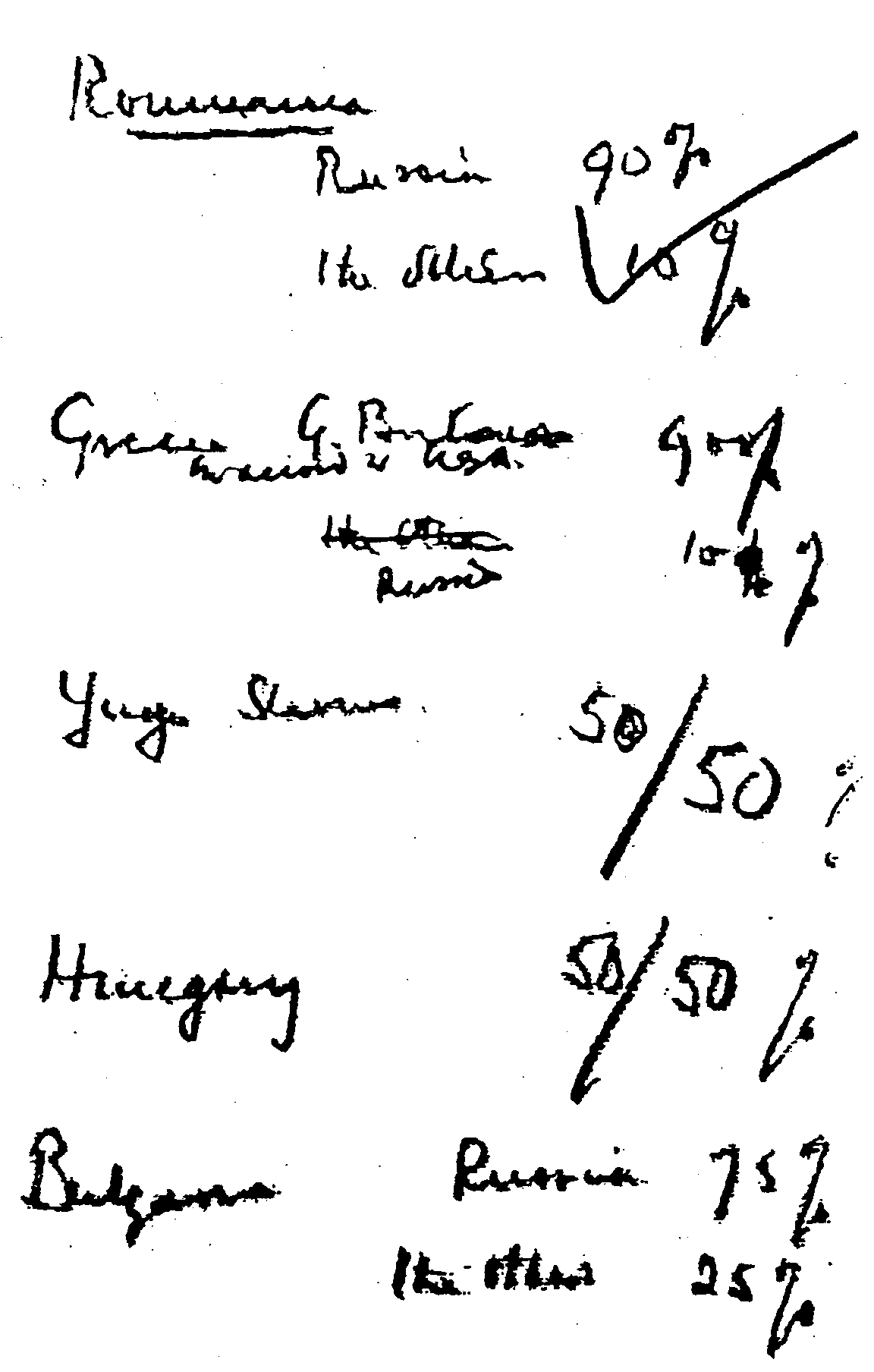
And what of Churchill? His committed colonialism would surely find favor with D’Souza – in 1954 the prime minister wrote to Eisenhower that he was “a bit skeptical about universal suffrage for the Hottentots” – but he was far from uncomplicated. Does Romney name as “one of [his] heroes” not just the man who warned of “an Iron Curtain [that] has descended across Europe,” but the one who sat with Stalin and chopped up a continent on a slip of paper? What of the parliamentarian who introduced legislation creating a minimum wage and offering unemployment insurance? What about the man who supported eugenics, who wrote the prime minister in 1910 to warn that “the multiplication of the feeble-minded is a very terrible danger to the race”? Or the budgeteer who prioritized solvency over military strength, championing adoption of the Ten-Year Rule, whereby the armed services took as an indefinite and continuous planning assumption that no major war would occur in the upcoming decade? Are those Churchills among Romney’s heroes?

Such two-dimensional comic-book likenesses as we find in Romney’s description of foreign countries and leaders are not only inaccurate, they’re insulting. They lay bare a truth most thinking people will already know, and one that is far more damaging to American diplomacy than returned artwork: unless you can raise money, give money, or vote, you are meaningless to a U.S. political candidate, and so your proud history will be rendered in finger-paint to influence those who can.

Why do we allow these caricatures to dominate our politics? Why do even our very best indulge them, much as they do the flag lapel pin and the simple-minded platitudes about Supporting the Troops? Because they fear the consequences of trying and failing to broaden the discourse, of trying to lead and being seen to lecture or pontificate or condescend, of alienating voters by unreservedly embracing knowledge and nuance. Because the greatest sin in our democracy is not to lie, but to lose.

The sad reality is that it doesn’t matter a damn whether Mitt Romney is right or wrong about culture, or Solidarity, or Churchill, or whether he tells Americans the truth about them or just a pretty story. And the reason is doesn’t matter is even sadder: because we’re stupid, and we’re easily manipulated, and because we don’t care.

L Paul Bremmer as exemplar UPDATED

Seriously. Any observer of the Iraq War should readily acknowledge the deleterious effect L. Paul Bremmer III had as the administrator of the Coalition Provisional Authority. Specifically his de-Ba'athification policy and the wholesale firing of the regime's military and police. I was in Baghdad the days these were announced and they were not good days. Previously, we had enjoyed significant security in Baghdad (I couldn't say the same about the Iraqis unfortunately) and what seemed to be widespread support of the people. The day the Army was disbanded saw the first of many thousands of attacks on the route from Baghdad into the airport, a grenade attack on a HMMWV that burned the vehicle to the ground with no U.S. casualties. Attacks against Coalition Forces only grew from there and a good amount of the blame for that lies with Bremmer.

Today Foreign Policy reported that Ambassador Bremmer has retired to Vermont as of 2007 to spend his days painting watercolors oil on canvas*. From an artistic point of view, the paintings are marginally interesting - not the best I've seen but certainly not worse than many of the so-called art I've seen for sale in recent months. The most important aspect of this is thus: a man who failed in his public service duties, failed on an astronomical scale, has removed himself public service and does not pundificate on public service matters.  I have nothing but disdain for what this man did to Iraq, based purely on his political ideology, but I respect that he acknowledges his failure and does not attempt to repeat his past mistakes. How refreshingly rare.  Good for you Mr. Bremmer.

Here are some other people, to picture but a few, who should follow Mr. Bremmer's example and give serious thought to moving to rural corners of the United States to take up the production of mediocre arts and crafts instead of doubling down on decade-old mistakes. Our country would be better off without your thoughts on how to run it - you have already tried and failed.


* The FP piece said he was doing watercolors. A closer examination of Mr. Bremmer's website shows he paints primarily with oil on canvas.

UPDATE: I may have jumped the gun here in praising Mr. Bremmer. Because I came across this today. Stick to painting Bremmer.

Monday, July 23, 2012

Military Police actually aren't like civilian police

Marine Corps Warfighting Publication 3-34.1: Military Police in Support of the MAGTF states:
The MP mission and capabilities include support for AT/FP operations, maneuver and mobility support operations, area security, law and order, and internment operations. 
So the United States Marine Corps has law enforcement battalions now (or, rather, again). Three of
them to be exact. The linked article talks about how
Marines have been increasingly taking on the role of a street cop along with their combat duties over the past decade in Iraq and Afghanistan, where they have been in charge of training both countries' security forces. [...] 
The war on terror has also taught troops the importance of learning how to gather intelligence, secure evidence and assist local authorities in building cases to take down criminal networks. Troops have gotten better at combing raid sites for clues to help them track insurgents. 
They also have changed their approach, realizing that marching into towns to show force alienates communities. Instead, they are being taught to fan out with interpreters to strike up conversations with truck drivers, money exchangers, cellphone sellers and others. The rapport building can net valuable information that could even alert troops about potential attacks.
According to the commander of the 1st Battalion, a Major Jan Durham, "no group of Marines is better at that kind of work than the Corps' military police, who graduate from academies just like civilian cops". I am a huge fan of the Military Police (seriously), but let's not kid ourselves: they are not like "regular police". Their main wartime functions (and therefore training time) are spent on internment ops, force protection, and route and rear-area security in high intensity conflict. They have done a bunch of mentoring to host nation police forces in Iraq, Afghanistan, Kuwait, Panama, etc. But they are not police.

Their law enforcement functions are seriously limited to maintaining the peace and preventing crime, specifically around the Uniform Code of Military Justice and Federally-owned jurisdictions. Yes, they do have different authorities in different places, but this is rare. Traffic tickets and investigations, domestic disturbances, putting drunkards in the tank, and the occasional drug bust are all most MPs do on any regular basis - outside of the special investigative services such as CID or NCIS. I am sure that most MPs would love to do what civilian cops do, but that's just not their job as it's more important for them to prepare for and execute their wartime functions. But they do not gather intelligence, conduct community policing, or bring down criminal or terrorist networks. They are not the FBI.

Even their use as mentors for host nation police forces has had problems historically. Because they do not deal with the issues civilian police do - and certainly not the issues police in current or post-conflict nations face - they have little they can provide to the host nation, outside of seasoned non-commissioned officers, warrants, and officers due to lack of experience (outside of internment operations).

This is not to bag on MPs - they are a vital element of any task force. But let's recognize what they are: they are military police, not police who happen to be military. They are not going to be a quick reaction NCIS to solve terrorist or drug cartel crimes in far reaches of the globe. Particularly with only three battalions to go around. I think forming them into battalions is a great idea (and not just because the Army does it this way) - it gives commanders a greater force, with more flexibility, to address his military police objectives. Which are force protection, area security, maneuver support, some personnel protection, some tactical site exploitation, and a whole lot of internment ops. Three battalions of Marine police are not going to suffice as the world police force, in spite of what some of the article suggests.

(And please ignore the Thompson quote at the end - I don't know what he thinks Marine MPs do differently than Marine grunts to contain threats. Escalation of force is escalation of force.)

(Also, if you can identify the little piece of USMC doctrine I helped write on this topic, I'll buy you a drink or something - but not those of you who I told about it.)

Friday, July 20, 2012

Things, change, stay the same, etc.

[A]n all-volunteer military is not expected to differ significantly from the present mixed force in its size, composition, and relations with civilian society. Its subordination to the nation's political leaders will change not at all. The belief that volunteers will be more aggressive, will have greater autonomy from the civilian leadership and will exploit international tensions to their own advantage springs, not from any rational evidence, but from an irrational fear of relying on the neglected mechanism of freedom to preserve and protect our nation. 
I have been reading through a few documents from the 1970s discussing the move from a mixed force of conscripts and volunteers to the all-volunteer force. It's fascinating that the discussion has not changed much since then. The quote above is from The Report of the President's Commission on an All-Volunteer Armed Force. I also recommend RAND's Military Manpower and the All-Volunteer Force.   

In addition to little change in the discourse, I was struck by how much these documents talk about fairness. Today's debate focuses on the fairness to the "other 1%" who have borne the burden of war. I've never understood this from a service perspective (a war tax on the other hand...) since that 1% did volunteer to carry burden. But the 1970s debate focused their fairness on those induced into service for peacetime service - their service was not often necessary, was against their wishes, and was economically unsound to both the service and the draftees. I have the feeling that a lot of modern pro-draft voices would prefer that compelled service into the other 1% would come from the original 1% and aren't thinking about all of these other kids (from populations more likely to volunteer anyway) who get saddled with this unnecessary infringement upon their rights.

Concerns of civil-military relations seem to not have changed much over time. Decades with a draft military did not abate those concerns (some of the biggest crises in CMR in our history occurred during these decades).  If you are interested in this topic, I highly recommend that you read these two publications.

Wednesday, July 11, 2012

CMR: balance maintained by the divide


CMR is a multifaceted topic with issues at many levels, the major branches of which regard the military’s relationship with the civil population of the state, the military’s function within the state, and the military’s relationship with the civilian government of the state who in turn strives to manage the first two facets in accordance with the values and needs of the state. Often these facets are conflated in debate which in incorrect. Each has issues and solutions that interrelate in various ways but should be considered in turn. As such, I intend here to take a cursory look at the first – the military’s relationship with the civil population. I think we can generalize the second – that the military’s function is to leverage its capabilities to meet state objectives throughout the world – for our purposes here. This is a topic deserving of more depth later as the U.S. military struggles to find its place in the world for the coming decades. The third I’ll discuss at a later date.

CMR Basics

Huntington describes the CMR as the friction between the military’s function and society’s norms:
The military institutions of any society are shaped by two competing forces: a functional imperative stemming from threats to a state’s security and a societal imperative arising from social forces, ideologies, and institutions dominant within the society. Military institutions which reflect only social values may be incapable of performing effectively their military function. On the other hand, it may be impossible to contain within society military institutions shaped purely by functional imperatives. The interaction of these two forces is the nub of the problem of civil-military relations.
He establishes this interaction as the conflict of conservative Military Realism with society’s American Liberalism.  Military Realism encompasses a worldview of “permanence, irrationality, weakness, and evil in human nature” and “stresses the supremacy of society over the individual and the importance of order, hierarchy, and division of function.”  American Liberalism is opposed to this Realism and is defined by five tenets (taken from both Huntington and Michael Desch’s chapter in American Civil-Military Relations: The Soldier and the State in a New Era):
  1. indifference to international affairs,
  2. application of domestic solutions to international affairs,
  3. objectivity in international affairs,
  4. ambivalence about war, and
  5. distrust of military institutions.

These were not meant to describe the differences between political parties (the only difference between the parties may only apply to the fifth tenet). Liberal versus conservative instead denotes the fundamental differences between the American society as a whole (and the philosophical foundations of the American government) and the institutional worldview of the military mind required to effectively wage wars. This is not unlike other dichotomies proposed by others such as George Lakoff, de Tocqueville, or Herbert Spencer. The “interaction of these two forces” is in reality the clash ideals of individuality and democracy against the ideals regimented and hierarchical life.  Huntington asks the million-dollar question (on page 346 of the Belknap/Harvard edition printed in 2003): “how can a liberal society provide for its military security when this requires the maintenance of professional military forces and institutions fundamentally at odds with liberalism?”

Most of Huntington’s work centers on how the government of the state balances its security with its philosophy. Writing in the mid-1950s, he provides three options to the question above:
  1. Cut military forces to the bone, isolating military institutions from society, and reducing military influence to negligible proportions. This maintains the purity of an American Liberal society at the expense of national security.
  2. Accept increased military authority and influence but to insist that military leaders abandon their professional outlook and that military institutions be reformed along liberal lines.  This is good for society at the expense of military effectiveness.
  3. Society adopted a more sympathetic understanding and appreciation of the military viewpoint and military needs.  This is good for the military but drives society to abandon its liberal heart. 

Interestingly, over 50 years after this was written and following both the transformation to an all-volunteer force and over 10 years of war, America has essentially taken the path of all three options in part. A purely professional force is by nature small. It is a force isolated to garrisons located throughout the country in places where (generally) not a lot of civilians live. Military influence in both political life and international affairs has increased. Society has adopted a more sympathetic appreciation of the military need. And yet military influence has not been reduced to negligible proportions, military institutions and philosophy has not liberalized, and society has not adopted a more sympathetic understanding of the military viewpoint.   

The result of this amalgam solution is a highly professional and effective military that enjoys nearly extensive (if not unlimited) support of that all important element of the Trinity: the people. The military keeps its Realism and society keeps its Liberalism. The political power of military elites is certainly concerning and is no doubt at least partially a result of the support the military enjoys from the population in contraposition to the popularity of civilian government institutions. I think it is important to make the distinction that military elites have not sought out (as a rule) the power and influence they exercise but instead have filled a role they have been asked to fill. (Would retired generals publically support candidates if the political parties did not seek their support for the benefit of the candidate? I do not think so for the most part.) I firmly believe that if military elites are not asked to fill those roles in the future that they will gladly abdicate them to civilians.

What This Means Today

In summation, we are in a situation there is a general balance of the military’s function with society’s norms. In my mind any imbalance is correctable and within an acceptable order of magnitude.  In spite of this and with regard to the people’s relationship with the military, a number of pundits and officials have declared at civil-military challenge or even a crisis, centered upon society’s lack of understanding of the military and their non-participation in military affairs. For example, Admiral Mullen stated in September last year that the “eroding” connection between the military and the people is a “very bad outcome for America […] an outcome that this democracy could not [stand] to have its military essentially detached from its people.”  While not calling for a draft yet, Mullen suggests it may be required in the future to bridge this population-military divide. Similarly, in the past two weeks both Tom Ricks and Stanley McChrystal have made calls for a return to compulsory service and a draft, respectively. Without delving into the particulars and bureaucratic issues of Ricks’ proposal (another topic altogether), both men have argued that compulsory service or a draft would ensure all (or at least more) Americans have “skin in the game” when making decision of war and peace.

However, and it’s a big however, none of these three have explained the consequences of current system to society or the military. What is the effect on society and the military if there is a detachment between the two? What is the result of only having only 1% of the population with “skin in the game”? Most superficially it seems the answer is unfairness.  It is not fair that only a few are waging war for 10 years. It is not fair that, in spite of extensive support, civilians do not understand what the military goes through. But I ask again: what is the consequence of this unfairness?  How does fairness result in a more effective military? How does this perception of fairness interact with American Liberal mores upon which our society is built?

A draft, or compulsory service, may bridge this divide between the military and the people, but that divide may be natural and necessary.  Intermingling these two elements of American society more than they currently do could potentially result in fundamental changes to either element by which they would not benefit. American Liberal philosophy is one of the things that make America great in other endeavors (principally with regard to social and economic constructs). Adding conservative Military Realism has the potential to adversely affect the acceptance of this societal philosophy. A wider-ranging exposure and subsequent understanding of military culture could potentially increase the influence and power of military elites beyond current levels, creating a new (and real) crisis of CMR (See, WWII – which is also an example of the military ceding its influence when it wasn’t need anymore). Conversely, the forced infusion of Liberalism into Military Realism could potentially erode military effectiveness due to the extent that military effectiveness is dependent upon its conservatism (See: draft, Vietnam War).  It is possible that the two conflicting forces could reach equilibrium, but equilibrium in CMR is rarely realized historically and there is no reason to assume that it would in this case, especially considering the potential risks to society and the military.

Leaving aside such issues as what the draftees would do, how their services are paid for, the creating of large bureaucracies to manage the process, a draft or similar course of action threatens civil-military relations more than any existing divides between the people and the military. It would be great if the people understood the military or felt some of the pain the military has felt during the past decade (it would only be fair were it so…). Not only is this understanding or fairness not necessary, it has a greater potential to upend the relative CMR balance we currently enjoy instead of fixing a different “crisis” altogether. The divide that does exist serves a purpose: it maintains the integrity of society and the effectiveness of the military. Simply put, we can have a divide or we can have an imbalance.  I choose a divide because I can get over the “unfairness” of it. Society or the military may take a long time to recover from an imbalance created for ill-advised or unsubstantiated reasons.

Monday, July 9, 2012

NYT Op-Eds on intervention: The good, the bad, and the ugly

I've tried to steer clear of the debate about intervening in Syria on the blogosphere for two reasons. First, while I know a lot about this type of crisis and the challenges it poses, I don't know much about I don't know a lot about Syria. Secondly, so much of the commentary on both sides has struck me as silly and uninformed. From pro-interventionists who haven't done their homework on the utility, limitations, and implications of using military force to stop the killing, to anti-interventionists who dismiss the idea that the US has any interests in halting atrocities, determined not to let reality undermine their faith in Realism, I have seen little in the way of serious, informed discussion.

So I was impressed to find a remarkably thoughtful op-ed on the subject in the New York Times a few weeks ago. I've never read anything from Professor Dr. Volker Perthes before, but this constitutes one of the more nuanced pieces I've seen on Syria since the crisis began. I particularly appreciated his emphasis on addressing the existential fears of Syrian minorities as a key element in any viable plan (whether incorporating military force or not).

On the other side of the ledger, on Saturday Ross Douthat penned an unfortunate and ill-informed piece on the alleged second-order effects of the intervention in Libya - that is to say, the current crisis in Mali. According to Douthat, the intervention in Libya sent heavily-armed Tuaregs who had been fighting for Qaddafi back into Mali, bolstering the ranks of the Tuareg rebellion - and this much is true. That bolstered rebellion in turn launched an offensive that quickly conquered the northern half of the country - also true. The Malian government fell to a military coup, and the divisions within the rebel ranks have allowed more radical elements to gain the upper hand, violently imposing a harsh version of Sharia and destroying important historical sites. All this is true, but Douthat's still wrong on two counts.

First, the weakness of the Malian government and security forces was not new, and it's hard to gauge the impact of Libyan weapons on the balance of power between the Tuareg rebels and the Malian Army when Malian soldiers were losing battles for lack of sufficient ammunition. The discontent among the soldiers who launched the coup didn't start with the renewed Tuareg rebellion, and as the speakers at an event in May emphasized, spill-over from Libya may have been the proximate trigger, but the Malian crisis had been brewing for a long time.* On this subject, Alma knows far more, and I hope she'll chime in.

Second and far more perniciously, Douthat draws a blatantly false parallel between Libya then and Mali now:
So Mali today looks a bit like Libya did in early 2011, except with a more obvious jihadi presence: You have a weakened authoritarian government governing half the country, a dubious and divided rebellion trying to rule the other, and a humanitarian crisis looming for the civilians caught in between.
All of which is more or less true, but neglects to mention that - in contrast to Qaddafi - neither the Tuareg rebel factions nor the Malian government have embarked on systematic and widespread violence against civilians. There have been brutal human rights abuses on both sides, but there are no columns marching towards cities of more than 600K people with orders to kill every male between 17 and 40, as was the case with Benghazi.

I point this out because there seems to be a growing attempt by some to show up the alleged hypocrisy and capriciousness of interventions to prevent atrocities by equating any violence against civilians in conflicts with the exceptional cases in which they're being deliberately slaughtered. Douthat claims that's not his angle, but I notice that in assessing the impact of US actions on Malian politics, the US counter-terrorism programs that have been running for years don't merit even passing mention.

The Libya intervention was by no means perfect, and there's no question we should be cognizant of the potential unintended or downright perverse human and strategic consequences of any foreign policy initiative, military or otherwise. But in parsing the lessons of the Libya operation, let's try not to let our ideological perspectives completely corrupt our reading of facts. Or perhaps Douthat will take his own advice from January 2011 to heart:
We have theories, and expect the facts to fall into line behind them...But history makes fools of us all..Sooner or later, the theories always fail. The world is too complicated for them, and too tragic. History has its upward arcs, but most crises require weighing unknowns against unknowns, and choosing between competing evils.

* According to the speakers, US security assistance may have inadvertently contributed as well by encouraging the deployment of additional Malian security forces to the north in the absence of much political progress, thus increasing the day-to-day friction between the central government and Tuareg communities.

Thursday, July 5, 2012

On Independence Day as a celebration of our military

It is impossible in the modern era to celebrate America without simultaneously venerating Our Troops. The culture that enables and nourishes this cynical farce is a threat to our politics, our democracy, and our very opportunity to embody the high ideals articulated at our national founding.

I noted with self-satisfied amusement the tendency of many people to begin their Fourth by reflexively thanking The Troops, those brave and altruistic souls who have sacrificed so much to win and preserve our independence. A friend challenged my cynicism, asking why it was so inappropriate to express gratitude to those who have served. I'm disappointed to say that this sensible plaint fell on mostly-deaf ears, and that my immediate reaction had something to do with the idiocy of unthinkingly conflating American greatness with military excellence. But her comment deserved a more thoughtful reply, and I've spent most of the last day reconsidering the substance of my flip dismissal. So, then: why is it a big deal to turn Independence Day into another Veteran's Day?

While I should hope my support for the military and appreciation to those who have served is a settled concern, let me just get this out up front: I value the hell out of American veterans, and the scant thanks we give those who have truly sacrificed is a scar on our national honor. What's worthy of respect is not their defense of freedom, their fight for liberty, or their preservation of independence, but the simple act of service: all who have worn the uniform chose to do something uncomfortable, unpleasant, occasionally unfashionable, and very often unnecessary—and they have done so because the country asked for men and women, and they knew this, and they wouldn't say "someone else can go."

We are a nation of laws, not of men. Our liberty was imagined by the thoughtful, courageous men who articulated our rejection of tyranny in the Declaration; but the fact of our independence was enacted through a successful rebellion—through a feat of arms. We mustn't forget this.

But what does it mean to be a nation of laws? It means that our national greatness is not embodied in king or president or flag or uniform, but in our political and social ideals: consent of the governed, equality under the laws, real justice for all, due accord to the views of our peers (and a decent respect to the opinions of mankind). The foundational premise of the Declaration of Independence is that a government insensitive to the needs and rights of citizen or subject has ceded its right to rule: that is, that a nation is truly the embodiment of its people and their commerce with one another, not its ruler(s) or even its system of government. Nor is a nation its army, it hardly needs be said.

Those who serve have been made tools of their nation, used for good and ill (though rarely for independence), and their nation owes gratitude for this. We owe this gratitude every day, not just on Veteran's Day and Memorial Day. We owe it most especially to those who faced the horrors of combat, to those who gave of themselves in ways that can never be compensated. To those who have sacrificed, sweated, fought, bled, and died for America and its will: thank you for doing what someone must, and for going when so many would not. When I speak of "America and its will," I do so without a hint of cynicism or reproach. But I find it difficult to speak un-ironically of liberty or freedom, for it's been quite some time since any American soldier has had cause to be much concerned with either of them.

To come more directly to the point: when we try to conceive of American greatness on our national day and our first resort is gratitude for those who enact the will of the government, we've done something very wrong.  Service is necessary and commendable, as I've said, but its celebration on July 4th is antithetical to what Independence Day ought to evoke in us: an appreciation for the greatness of what America is, not what it does. What it does is not so different from what other states do, and what all states must: accumulate power, flex its muscles, fight to gain, fight to survive. But what it is is different: it is a nation of laws, conceived in liberty, dedicated to the proposition that all men are created equal—not just those who fight, or those who are rich, or those who are elected, or those who rule by divine right. When we thank American soldiers and veterans for American greatness, we celebrate the survival of a polity more than the national embodiment of this radical political ideal.

Some will dismiss this as over-intellectualizing, as tendentious meandering about militarism and ideals and American decline. "It's just about remembering veterans," they'll say, "not any of this other stuff about political philosophy or exceptionalism." I don't agree. The near-religious veneration of military service has corrosive effects on our democracy, to be sure, but that's not the crux of what I'm saying today. What I'm getting at is this: every society in the history of humankind has had men and women raise their hands and go to the front, and we're a better country for our ability to appreciate their sacrifice. But the flag, the uniform, the president, the defied king... these are the idols of our democracy, not the real god. We may respect them and revere them and use them as proxies for our national greatness, but Independence Day should remind us of what's really at the heart of it – the spirit of liberty, justice, and equality in which our country was founded – and inspire us to live up to its promise.

Tuesday, June 26, 2012

The Reagan view on intervention

I was reading an old essay by Kenneth Waltz today when I came across something that seemed straight out of today's discussions about bounded sovereignty and the responsibility to protect:
Senior officials in the Reagan administration elevated the right to intervene to the level of general principle. As one of them said, we "debated whether we had the right to dictate the form of another country's government. The bottom line was yes, that some rights are more fundamental than the right of nations to nonintervention, like the rights of individual people... [W]e don't have the right to subvert a democratic government but we do have the right against an undemocratic one."
(Waltz himself was quoting from a 1985 book called Intervention and the Reagan Doctrine, by Robert W. Tucker.)

I suppose the international consensus on R2P is more sophisticated than the rationale explained here, at least, in that it establishes a somewhat more rigorous standard for intervention—one that's based on the ability to relieve human suffering and not on what must necessarily become a subjective determination about levels of democracy. But still we're left with the inescapable reality that decisions about intervention or nonintervention are made in national capitals on the basis of national interests; thus ever was it so.

Friday, June 15, 2012

R2P's regime-change conundrum

If you haven't yet, I recommend you all read the Report of the International Commission on Intervention and State Sovereignty (pdf), the foundation of R2P doctrine. As far as reports go, this is a pretty good one: full of interesting thoughts and extremely readable. Please read all of it, but here we are going to focus on the sections related to military intervention and specifically chapter 4.

This report begins the discussion of deciding to intervene by establishing the starting point as the principle of non-intervention, comparing this principle to the Hippocratic principle - first do no harm (para 4.11, pg 31). States should respect other states' sovereignty as a starting point and should only violate their sovereignty when culprit states "shock the conscience of mankind" (more Americans should read and think hard about this principle - and not just within the context of Syria).

The report then goes on to establish six criteria for military intervention:

  1. right authority
  2. just cause
  3. right intention
  4. last resort
  5. proportional means
  6. reasonable prospects
The first two are discussed at length within the report.  But these are the go/no go criteria to determine if we should intervene. I think it would be difficult to for anyone supporting intervention in Syria to legitimately claim that criteria 1 and 6 have been met as of yet with some other criteria certainly disputable. Obtaining the right authority will be difficult and pro-interventionists have generally glossed over the Syrian military's ability to act against international intervention (admittedly, anti-interventionists have been particularly pessimistic on this criteria).  While the report's discussion of these criteria is interesting, it is not exactly earth-shattering stuff. 

Except for the section on right intention (para 4.33, pg 33):
The primary purpose of the intervention must be to halt or avert human suffering. Any use of military force that aims from the outset, for example, for the alteration of borders or the advancement of a particular combatant group's claim to self-determination, cannot be justified. Overthrow of regimes is not, as such, a legitimate objective, although disabling that regime's capacity to harm its own people may be essential to discharging the mandate of protection - and what is necessary to achieve that disabling will vary from case to case. 
Overthrow of regimes is not, as such, a legitimate objective. While this aligns with R2P's primary purpose to halt or avert human suffering, this presents a massive hurdle to the reasonable prospects criteria.  The "although" clause seems to suggest that rendering the regime ineffective may be legitimate in some cases, but regime change is not a legitimate objective. In a case like Syria where the regime abjures its responsibilities by committing acts violence against its own citizens, the problem is with the regime itself. How is military intervention supposed to succeed if the objective of that military action cannot remove the source of the human suffering? I see three potential consequences of this statement if the regime does not step aside on its own accord:
  1. The intervening force overthrows the regime out of operational and/or strategic necessity. However, such a precedence calls into question the legitimacy of R2P as violating its own principles. 
  2. The intervening force does not overthrow the regime, remaining compliant with R2P's principles, but renders the regime ineffective by destroying its ability to use force - which in cases like Syria effectively destroys the regime's ability to govern. The potential for greater instability is quite significant through a lack of governance or a more evenly-matched civil war. 
  3. The intervening force only limits the regime's ability to project force into safe zones in order to prevent instability - through defensive or offensive methods. However, the regime maintains the ability to use force, which could be projected in the absence of a foreign military presence. If you like decades-long military operations with little hope of resolution, you pick this option (see: Kosovo, Sinai). Is this a reasonable prospect? 
Dr. Slaughter and others smart on R2P have been pushing for military action somewhere between consequences 2 and 3. If the removing the regime is not in play, success is logically unlikely if the regime is the primary cause of the human suffering in the first place. This may be where R2P has its greatest doctrinal weakness as it attempts to align multiple principles that are often at odds with each other. 

The other problem with these criteria are their lack of application to the internal strategic formulations of potential participating nations. As Dan Trombly deftly observes, every military action should be placed within and debated in terms of ends, ways, and means. Colin Gray makes the same point with regard to counterinsurgency, but his comments apply to R2P as well - it cannot be a theory unto itself. What are the United States' interests in intervening, especially if it is likely to result in an extended military campaign? The report discusses this in chapters 4 and 8 with regard to domestic political will, concluding that good international citizenship should be a national interest. How extensive are the means we are willing to commit for good international citizenship when those means may more directly benefit the American people through domestic spending or kept in reserve for actual security threats?  Halting human suffering in Syria is an excellent objective, but if the means of doing so will be tied up for 10 years or more (most likely scenario), is it still worth doing? While military force may sometimes be in a nation's interest, good international citizenship is not inherently a national interest in every case. Especially if the cost is too high or the prospects for success too low. America does its best to do right by the world, but there are limits to that magnanimity because of our own internal interests and needs. 

With the preclusion of removing the Syrian regime, interventionists must show reasonable prospects for success, keeping in mind the American people are probably not inclined to count another decade-long commitment of military force with an indeterminable outcome as a reasonable prospect for success.  I'm certainly not so inclined. 

Monday, June 11, 2012

On Values

Late last week the WaPo ran a series of opinions regarding U.S. intervention in Syria. The battle lines were as well drawn as they are on the blogosphere and Twitter. I don't intend to rehash the specifics of Syria this morning and instead want to dial in on the last paragraph of Anne-Marie Slaughter's contribution.

She begins her conclusion with the statement: "President Obama believes in sovereignty as responsibility." I can't disagree with the sentiment, but this sentence fills me with an unnamed dread. As she discussed in the previous paragraph, this position has been accepted by the UN as an emerging international norm. There seems to be a lot of variance around the terms included in "responsibility", especially with regard to war crimes and civil wars. That's not to say the United States isn't sure about those definitions, but certain other countries are allowing broad definitions based on their own self-interest and in order to maintain maneuver space in case they run into the same problems later. Therefore, as sovereignty as responsibility is technically codified as an international value it is nearly impossible to determine when that responsibility is violated based on the many possible interpretations of definition.

This discussion leads to Slaughter's second sentence of that paragraph: "Standing up for that principle will result in a world that will be more stable, prosperous and consistent with universal values - the values Americans know as life, liberty and the pursuit of happiness."  There are two problems with this statement. First is that standing up for the principle of sovereignty as responsibility means that those with more liberal interpretations of responsibility are in conflict with those who have more archaic (by Western standards) views on responsibility or view each contentious situation through the lens of their own self-interest beyond the responsibility issues at hand. This conflict can be seen in any location where sovereigns have abjured or violated their responsibilities: Syria, China, Pakistan, Burma, Mali, Saudi Arabia, Yemen, North Korea, Venezuela, Iran, just to name a few. Standing up for the principle of responsibility means standing against other powers who view responsibility differently. This is not a path to stability or prosperity, it is a path to political, economic, or military conflict. Syria is the cause du jour, but how many violations of the American sense of responsibility to we ignore out of our own interests? Some of the places I mentioned are allies or partners of ours because of some other strategic interest. Universally standing for this principle may be the right thing to do morally, but disabuse yourself of the notion that it leads to more stability or that liberal-minded nations even have the power to affect change.

The second problem with this statement is obvious if you read the words. Standing up for responsibility, according to Slaughter, will result in a world consistent with universal values. Which universal values? Why American values! A professional of Dr. Slaughter's caliber must know that defining universal values is nearly impossible. She must also know that American values are not universal. And yet American values are the values she suggests we act to preserve in the name of universality. As a great power, the United States is prone to act as other great powers have in promoting its own values globally. But do not believe for a second that our values are universal. We may think other countries are wrong or even evil for what they do to their people, but that is through our lens, by our measures.

This is not to excuse atrocities which are universally wrong. And I believe that what is happening in Syria should be considered wrong universally. But we are not yet at a point in human existence where this is the case and we need to recognize that. Not excuse regimes who have different values from our own, but recognize when this occurs. And recognize that often the United States does excuse regimes violating their responsibilities because it benefits our other interests, much as China and Russia do. How would we react if these two stalwarts of obstinacy decided to take Saudi Arabia to task for its treatment of women? Are their liberties not impeded?

Values are important to every nation. Some values are universal, but that list may extend only to sovereignty and life. And even these are negotiable depending upon with whom you are talking. Outside of the most egregious cases, most violations of universal values occur in the margins where values can be contested and especially where they intersect or diverge from interests. I'm also wary of a world where nations go to war to uphold their values beyond their borders. Such a world is fraught with nationalistic militarism more reminiscent of the early 20th Century instead of the 21st. I'm also wary of a world that except in the most exceptional cases uses war - the purposive taking of life - in order to protect life. There is a contradiction in the American use of lethal force to promote our values for human life and I'm not sure that parts of the world understand that. The potential for even greater suffering contrary to universal values is not only significant, it is likely. I am with Dr. Slaughter in her disgust for the Syrian regime for what they are doing to their own people. I agree that they have violated their responsibilities as leaders. But I hesitate to support the use of American military force to wage war in an action that is likely to result in the deaths of more civilians than the regime's current actions. Values are an American interest, but are they worth war without overwhelming support from the rest of the globe? I don't think so. Values are a great reason to flex the United States' ample diplomatic and economic capabilities as this approach is more in line with our values.

Wednesday, June 6, 2012

Shadows of 2003

Once upon a time there was a country in the Middle East ruled by a Ba'athist dictator. This dictator used special intelligence units and his military against his own people, often using horrible weapons to suppress his subjects. This dictator's regime has in the past supported terrorist organizations and is thought to possess weapons of mass destruction. Pundits and academics clamor for the United States to take action. Don't worry, they say, their military is weak, untrained, under-equipped, and not loyal. Don't worry, they say, we have limited objectives and military intervention will be easy against this flaccid force. Don't worry, they say, we won't have to govern this country after we intervene, we'll let them sort that out. Democracy's hard but this will be easy.

This sounded wrong in 2003 when it was said by Neoconservatives. It sounds wrong today when said by liberal interventionists. It feels right to want to help the Syrian people as much as it felt right to help the Iraqi people. But we have to actually be capable of helping them and so far the pro-interventionists are making about as valid an argument that intervention might work as Rumsfeld, Wolfowitz, Feith, et al did in 2003, even if the current scenario lacks cooked intelligence to give the casus belli. The military concepts are equally bad. And here's why after a quick primer on military planning.

In the Army (I don't know the exact terms in the other services), military planning is focused on objectives. These objectives in high-intensity warfare are usually enemy-focused. But even if they are not enemy-focused, the enemy will play a big role in the ability of the friendly force to achieve its objectives. Therefore the most important assumptions are done through intelligence analysis where intel officers create what are called the enemy's Most Likely Course of Action (MLCOA) and Most Dangerous Course of Action (MDCOA). These are the most important assumptions in any military plan. The first, MLCOA is the best-guess assumption on what the enemy is actually going to do. This is derived from the best intelligence available and analysis and extrapolation of known capabilities versus friendly capabilities. Gaps in intelligence require assumptions, but the assumptions must assume some level of difficulty to friendly forces and cannot be assume away. MDCOA is an assumption on what the enemy could do that would be most dangerous to friendly forces or their objectives. This is not the most likely event to occur, but it's in the realm of possible. Simply stated, your military plan of operations is based upon your MLCOA assumption, but a branch or decision point is in hand in case the MDCOA becomes reality (in some cases the decision point may be to disengage from contact because the price isn't worth the benefit of meeting the objective). Briefly: plan for MLCOA, know what you'll do if the enemy executes the MDCOA.

This gets at why I have not yet heard a viable military option for intervention in Syria. The greatest proponents of intervention, Shadi Hamid and Anne-Marie Slaughter to name just two as an example (and two I very greatly admire on everything except their military operational planning skills), have laid out their ideas for what a U.S.-lead coalition could do militarily to slow and/or stop the killing of civilians in Syria (as well as break the Hezbollah-Iran connection and maybe stop Syria's WMD programs). But their "plans" are based on the Syrian military executing the Least Dangerous Course of Action (LDCOA: see here) with regard to friend forces. They, and they are by no means alone in doing this, have assumed away the Syrian military to the point that they seem to consider a nominally 300,000-man force as negligible. That is exactly what the Bush Administration Pentagon did and what CENTCOM did under their leadership with regard to Iraq. Assumed away the enemy forces. And we see how well that worked out. You cannot plan military operations based on the LDCOA. It must be based off of the MLCOA at a minimum and I don't think the Syrian military is just going to walk away from the field. That may have generally happened in Libya, but it's very rare and unlikely. Also, they cannot assume away a post-conflict environment potentially devoid of government. We did that in Iraq, too.  I think you get the point.

There are a couple of reasons this matter and isn't a mere matter of opinion on the fighting capabilities of the Syrian military. Firstly, by committing forces to fight for American interests we would need to ensure the military plan is viable and established upon a solid set of assumptions. Current intervention proposals simply are not. Their assumptions are based on hearsay or intuition, not analysis, that the Syrian military isn't a serious fighting force. It is almost word-for-word the nonsense I heard in the Kuwaiti desert in March 2003. And I have yet to see any evidence that they will not react, potentially with effect, against any intervention. Without such evidence you must assume that they will be capable of reacting with some effect. Second, any proposal that puts American lives and resources on the table requires some assessment of what point is the intervention worth doing. That's what the MDCOA would provide in this type of situation. How much is it worth intervening? Assad using WMD against his people or against us? What if the civil war expands significantly and the death toll mounts higher and fast than if we had not intervened? Are 10 years in Syria potentially conducting population-centric counterinsurgency worth our doing something, anything now? These cannot be assumed away. They need to be addressed through thorough and dispassionate analysis to determine if they're possible and what the United States would do if they occurred.

These pundits may feel they do not need to convince me on the merits of intervening in Syria and may think this a matter of disagreement. But this is the lowest level of rigor the military will apply to any plan they come up with. If you are so ready to commit foreign troops into harms way because you feel it's the right thing for America and her allies to do, the least you can do is apply the same level of rigor to propose military options. I'm not asking for synchronization matrices. I'm asking for a thorough and rigorous analysis of the MLCOA and MDCOA if we intervened in whatever way you envisioned. If you keep spouting this LDCOA-assumption malarkey, I and many others who possess understanding on the use of force will continue to compare your plans with those of Wolfowitz, Feith, and Franks, even if we agree with the sentiment that drives you to want to execute these plans. Yes, a lot of people are dying. But intervening might cause more deaths. I can't tell because your assumptions are, in a word, useless.

Friday, June 1, 2012

Grand strategy: good but unlikely

I really enjoyed this post by the always excellent Daveed Gartenstein-Ross as a counter to anti-interventionists with regard to Syria. Daveed lays out arguments made by wunderkind Dan Trombly and his posts against intervening in Syria; mainly that acting in Syria does not further American interests, that non-interventionists need to prescribe alternative methods of dealing with the situation, and (getting to this post I wrote earlier) that a grand strategy would help the United States determine trades more effectively when deciding to intervene.

Frankly, I don't disagree with any of that and I'm not sure Daveed characterizes my post and position on grand strategy most accurately. Which is why I don't disagree with him. My writings on grand strategy have focused until recently upon the need for a grand enemy to formulate a strategy of equal magnitude. That is not the same as saying we only need grand strategies for grand enemies. Rather, the political entities that craft grand strategies tend to permit strategic drift in a state void of a grand enemy. Grand enemies serve as a beacon or focal point for strategy development. In the absence of such enemies, nations have difficultly determining their role in the world and focusing their resources and efforts because of such increased uncertainty. Therefore, grand strategy is not and should not be dependent upon a grand enemy, but grand strategy is less likely to exist without a grand enemy to drive its formulation.

That said, my post did not argue against a grand strategy for the United States or that it would not be a good thing, but rather that policy-makers have no interest in developing a grand strategy with the intricate and elegant statements of purpose we would expect from such a document. Such a document is what I considered a pipe dream. Elucidations of the nation's challenges, foreign and domestic, that require action by the Government could compel the Government to take action in situations where action may be unwarranted, immoral, or simply not in our interest regardless of what was written on a piece of paper. And no policy-maker wants to be compelled into a situation they think is unwise, even if the folly of the act only affects domestic political capital.

The Syria conundrum is indicative of this. One of the enduring American interests listed in the National Security Strategy (and the QDR and QDDR) is "respect for universal values at home and around the world."  For policy-makers, this is perfectly worded because it leaves them a maneuver axis 10 divisions wide. What are universal values? There's an entire focus of philosophy dedicated to studying and arguing for or against the existence of universal values. Are there values that the preponderance of the human race could probably agree are valid? Of course. But using a (non-) term such as universal values, as yet undefined, allows us to act to protect certain values when we can and want and not protect them when we can't or won't. The United States has intervened in the former Yugoslavia, Somalia (1990s), and Libya because of values and because we thought we might be successful. We didn't in Rwanda, Uganda, and as of yet Syria in spite of our values. One could argue that we had no strategic interest in the former group and yet intervened because of values and yet acted. We had equal strategic interest in the latter yet intervening would have been coherent with our values. Why the difference?

In a word: flexibility. The first group above were deemed more achievable than the latter group. While there is a significant strategic calculus to determine that the United States should only act when it thinks it can be successful (a moral imperative even), our description of interests is so broadly defined as to allow politicians to pick and choose what are vital American interests. Values are among the squishiest interests we have, enigmatic wisps of emotion couched in strategy. This is not to say that defense of values does not constitute a strategic interest, but it's impossible to define. Would Presidents Bush and Obama agree on what our values are? Or what values are worth defending? That Venn diagram probably has a lot of overlap, but it wouldn't be one circle.

Because of this, there is no constituency to create a grand strategy that may compel politicians to act when they don't want to - for whatever reason. An amorphous role in the world benefits the political class. Someone with moral certainty who can attain high levels of power, Anne-Marie Slaughter for example, could certainly add the protection of civilians against murderous regimes to the list of universal values for which the United States would go to war. Would a subsequent administration want to be held to that standard? How would they remove such an item from their list of values? What if that value is believed to be valid but compels the United States into a conflict it cannot win? How does a president explain that even though our values are worth defending, we just really, really can't in a specific case?

There is a lot of goodness to a grand strategy. It would help the United States understand the myriad challenges it faces and draw lines in the sand that would help it determine its role in the world more clearly for ourselves, our allies, neutral parties, and our adversaries. It would help us conduct the trade-off calculus to determine whether or not to intervene in most situation. I would love to see such a grand strategy. But I just don't see it happening. Daveed and I are both interested in avoiding foreign policy mistakes, but both paths (with and without grand strategy) are fraught with potential mistakes. In the current situation politicians have a freer hand to make those mistakes instead of possibly being forced into them. They have no impetus to change this condition.

Happy Birthday Preemption!

The season of college graduations is most likely just over by now. I was in New York the other week during Columbia University's celebrations, which was fun hearing the waves of cheering as schools finished their ceremonies within minutes of each from one part of the campus to the next. Graduates and their parents beaming as the former chatted into a cell phone to coordinate post-graduation festivities. I didn't catch who the speakers were at any of the ceremonies, but one held later that week made the news. The speech given was nice if only a more eloquent (less?) version of Oh, the Places You'll Go! And yet it seems that as far as commencement speakers go, it really wasn't that bad.  It seems to me that many of these young folks will fondly remember (or not remember as the case may be) the day they symbolically transitioned into real adults and probably not much more.

Today marks 10 years since my own graduation from college. I, too, had a president speak, but this president's speech told us exactly where we would go and not in terms of platitudes.  Just 9 months after the attacks of 9/11, President Bush used my class' graduation from West Point to declare his doctrine of preemption. Granted, our nation was already at war in Afghanistan, but that was a small war we all thought would be over by the time we reported to our units (ah, youth!). But as a few of my classmates lightly dozed through the speech, it was not lost on me that he was telling us that he was sending us to Iraq. I had a flashback to a cocktail party a couple of months earlier when a very senior Army officer told me to prepare to go to Iraq - and this was in March 2002. I should have listened closer instead of lightly guffawing through my "Yes, sir." It would have prepared me for the first of June, 2002, when President Bush used a day that was supposed to celebrate the achievement of surviving the United States Military Academy, our commissioning to second lieutenant, a number of classmates' weddings, and the future in general and instead clouded our horizons with foretold war.

Part of me was grateful. Not about the war, but about the warning. If he had given that speech elsewhere  I may have missed it and his point entirely. But instead I knew I had to focus my preparations and did not necessarily have much to time get ready. Which was in retrospect was one of the wisest things I've ever done: 6 months and a few weeks later (only 3 weeks after signing into my first unit) I was in the Kuwaiti desert preparing my platoon for war. A war which occurred 2 months after I got to Kuwait. The rest, they say, is history. And frankly, it's been a very busy 10 years since I sat through that speech.

While I feel some nostalgia for the days spent at my Rockbound Highland Home on June 1sts, I mainly feel awe in how much that day actually changed my life and not symbolical way. It was one of the most important speeches given in the past 10 years and one that affected the lives of millions of people - myself and the rest of us there that day very intimately. The question is, 10 years on, does the United States believe preemption is still a valid justification for war? I hope not. There aren't many things you want dead by their 10th birthday, but preemption is one of them.