Showing posts with label Israel. Show all posts

Thursday, August 2, 2012

Romney abroad: on culture, busts, and the categorical imperative of democracy

NOTE: I feel the need to introduce this post with a reiteration of the usual disclaimer. I'm not representing anyone else's views or analysis here but my own. I can't imagine why you would have assumed that I might be, but we don't normally veer into domestic politics and this post does so unabashedly. That said, I don't believe it's partisan, and I hope you'll evaluate the analysis as being up to the standards we typically uphold around here.

Mitt Romney’s recent travels abroad have caused a brief surge in commentary on the foreign policy and national security aspects of the presidential campaign. In this general category I include the re-animated flap over the Obama administration’s return to Britain of a Churchill bust that once graced the Oval Office; the sundry criticisms of the president for being “anti-Poland” in his Reset policy toward Russia; the hilarious and incredible suggestion that there are such things as pro- and anti-Israel camps among national politicians in America; and Governor Romney’s controversial and unsubtle suggestion that Israelis are rich and Palestinians poor because of something he failed to adequately explain but subsumed under the heading of “culture.”

It’s this last bit that has perhaps spurred the most discussion, if only because the rest is such well-trod ground. Social scientists and economic historians have criticized Romney’s claims in the press, both for oversimplification and for genuine factual errors. None of this will matter to potential voters, of course, who can’t be fussed to read the books that political candidates variously satirize, lionize, or otherwise caricature. By now we’re all very well acquainted with the fundamental reality of politics, which is that people don’t care so much about the truth as what their particular orthodoxy tells them is the truth.

But the “culture” comments – which are viewed as a gaffe by the left, but will likely serve as the sort of happily impolitic, plain-truth rallying cry so beloved by ignorant culture warriors of every stripe – are interesting for the way they distill right-wing ideology about ideas, circumstances, cause and effect in politics and history, and the triumph of one people over another. Put another way, what Romney said is the collectivized and nationalized version of basic conservative dogma: some people have good ideas, good values, good habits, and good personal qualities, and those people succeed in the world – including by getting rich – as a result. Be better, work harder, think the right way, and you’ll have a better life—it’s the foundation of the American Dream… isn’t it?

An admittedly amusing critical blog post on the Economist ignores the appeal of this thinking to a large segment of Romney’s base (and arguably to an even broader segment of the American electorate, including some voters who are currently undecided):
Comparing the income of the average Israeli to that of the average Palestinian, as though their prospects at birth had been equivalent and their fortunes today are largely the result of their own efforts and their "culture", is gratuitously insulting and wreaks damage to American diplomacy. Besides that, it's just wrong.
Wrong or right, this should sound familiar to those who have paid attention to other recent campaign imbroglios—most notably the “you didn’t build that” spat. With its efforts to paint the president as a socialist, a collectivist, an enemy of business, an impediment to Americans’ entrepreneurial spirit, the Romney campaign is catering to the sort of people who believe (against any and all evidence to the contrary) that personal success is far more attributable to hard work and right-thinking than to background, context, and circumstantial factors—including sheer good luck.

The entire American political and economic project is built around a shared commitment to this fantastical aspiration: that we can create a society that is so free, so fair, so basically egalitarian that the sole determinant of success and failure will be the quality of one’s ideas and one’s willingness to work. Left and right disagree, of course, about the various and competing merits of liberty and equality, and about whether the modern United States offers a sufficiently level playing field to permit pure freedom to fairly and effectively separate losers from winners. The important role played by American political and economic institutions and by the public goods that government has enabled are at the core of the Obama speech from which “you didn’t build that” has been so unceremoniously wrenched.

Romney understands this, of course, and his paean to the Israelis’ superior “culture” surely was founded on respect not simply for shared religious identity and classically liberal political ideals, but for the policies through which culture (and political culture) is mediated into economically productive activity. But he has a base to pander to, and that base includes a fair number of people who really do believe what Romney’s semantic imprecision made it look as though he actually meant: that Israelis are rich because they’re mostly Jews, while Palestinians are poor because they’re mostly Muslims.

But I digress a bit here. What we’re really dealing with is nothing more complicated than the most conservative (both in the literal and politically-partisan senses of that word) of all possible arguments: that the circumstances in which people and nations find themselves are fair and just, that they are a product of history’s implicit judgment (or fate’s, or God’s; Romney gave this one away in Israel when he referred to the “hand of providence”), and that as a result they ought generally to be left alone. What is is what ought to be. All is for the best in this best of all possible worlds! Israel’s triumph and prosperity is a validation of its goodness, to this strain of thought.

We needn’t look too far back in history for similarly conservative justifications of the status quo, and at least one bears in part an almost literally unbelievable similarity to Romney’s remarks in Israel. In his critical re-telling of Britain’s history abroad, Mark Curtis recounts a 1946 speech by a colonial administrator in Kenya who noted that
“the greater part of the wealth of the country is at present in [British] hands… This land we have made is our land by right – by right of achievement.” He explained to the Africans that “their Africa has gone forever,” since they were now living in “a world which we have made, under the humanitarian impulses of the late nineteenth and the twentieth century.” The Governor added: “We appear to Africans as being immensely wealthy and nearly all of them are in fact very poor… But these are social and economic differences and the problems of this country in that respect are social and economic and not political; nor are they to be solved by political devices.” Britain was in Kenya “as of right, the product of historical events which reflect the greatest glory of our fathers and grandfathers.” [Emphasis mine.]
One presumes that by characterizing inequality as “social and economic and not political” in origin, the governor meant to imply that social and economic change were a necessary precursor to the political resolution of the imbalance, or even that political arrangements were altogether irrelevant to it. (It takes no great imagination to see that this was wildly disingenuous. Britons justified their Empire with the perverse and thankfully obsolete rhetoric of the White Man’s Burden, but the practical administration of the empire was intended to head off the sort of independent political development that might threaten London’s essentially extractive relationship with the colonies, which were progressively liquidated as their economic value came to be outweighed by the complications and costs of their maintenance.)

Israeli conservatives and their American supporters view the matter of the Palestinian territories in a similar way: stop complaining about “occupation” and fix yourselves, as you’re the real cause of what’s wrong. Don’t tell us we’re responsible for your backwardness—look at how we’ve succeeded! We can talk about rights once you’ve built a properly liberal political culture and eliminated the extremist populism our own policies and attitudes help to perpetuate. And so it goes.

There’s intended irony in the parallel I draw between Romney’s attitude toward Palestinians and the British imperial view of Kenyans, considering the unhinged ramblings of Dinesh D’Souza and Mike Huckabee on the subject of President Obama’s alleged “anti-colonial ideology.” The author of a crypto-racist, pseudo-Freudian volume in whose telling the president’s position on everything from interior decoration to tax policy is foreordained by his father’s incontrovertible foreignness may assert that “my argument has nothing to do with the ‘birther’ claim,” but this is plainly untrue. As Amy Davidson notes in an excellent New Yorker piece on the aforementioned statuary controversy,  
[T]he shadow behind Churchill’s bust is birtherism, or its less conspiracy-minded companion, the conviction that Obama is, by virtue of his heritage, alien and un-American. This notion was most blatantly expressed by Dinesh D’Souza. […] This is part of a larger story about how Obama is really an anti-colonialist socialist who doesn’t like countries like Britain or America. In this telling, all that Obama keeps hidden about himself is exposed because he just can’t stand to look Churchill in the eye.
“Less conspiracy-minded” than a tale of document forgery is the belief that the President of the United States, driven by an un- and anti-American worldview, has repeatedly sought elective office in order to purposefully enact policies that would hamstring and damage a country that he secretly loathes? That even a writer unsympathetic to either narrative should describe them in this way reveals an unhealthy focus on the forms of criticism rather than their substance. To aver that the President is not legally an American is considered out-of-bounds to all but the most ridiculous figures in our political scene, yet it’s deemed acceptable and plausible for others to suggest not simply that Obama’s policies are bad for America, but that they are intentionally so!

A candidate for the presidency can’t say this, of course, lest he be made to look like a raving lunatic. Or worse, he may be accused of casting doubt on his opponent’s patriotism—and patriotism is a subject with which the American electorate simply will not tolerate you messing around. But he and his proxies and surrogates can insinuate as much, and this is exactly what both Bust-Gate and Culture-Gate are all about: boiling down complicated, ambiguous reality to proclaim an objective truth (Churchill was an unvarnished American hero! Israelis are comparatively successful because they think and act like Westerners!), framing that “truth” as an essentially American consensus, and then insinuating that the president simply stands outside this consensus. The message is this: Barack Obama does not share our American values.

You’ll note that I began this essay by referencing “the foreign policy and national security aspects of the campaign,” rather than simply “foreign policy and national security.” That’s because all of this has very little to do with other countries, or with advancing American interests, or with ensuring the safety of our people, a truth that’s made obvious by Romney’s adulation of foreign political figures (Churchill, Wałęsa, Netanyahu) whose own countrymen tend to view them with considerably more ambivalence. (The Republican often pays homage to Margaret Thatcher, which is risible when juxtaposed with his wife’s newfound enthusiasm about her Welsh heritage. The Iron Lady isn’t likely to have many fans in Nantyffyllon.)

Instead this talk of the special relationship is about – like everything else in the campaign – manipulating the feelings of U.S. voters by invoking code-words associated with the issues and seeding doubts about your opponent, signaling that I’m One of You and the Other Guy Isn’t. (This isn’t unique to Romney or to conservatives, as should be plain to see: the president’s campaign is largely based on the thinly-veiled assertion that his opponent is taking advantage of Regular People to further enrich the small minority of People Like Him.)

The code-words in foreign policy are simple to discern: victory, patriotism, American exceptionalism, American strength. Standing with the forces of freedom and democracy. Standing with those who Share Our Values. Standing with Churchill and Israel. Accept each of these elements wholeheartedly, without reservation or nuance, or be accused of enthusiasm for their Manichean alternatives: Defeat. Betrayal. Self-hatred. American weakness. Tyranny and terrorism. Appeasement.

Must it be this way? Surely the questions are not so simple, nor the answers so clear. Maybe D’Souza has done us all a favor by invoking the president’s alleged “anti-colonial ideology” instead of treating him as a “conventional liberal”; maybe we can pause and ask what exactly is so wrong with anti-colonial ideology? Are we only permitted to be anti-colonialists as private citizens, or as white people? Was not Dwight Eisenhower an anti-colonialist? Should we doubt the patriotism and integrity of that most eloquent critic of empire – a Serious Anti-Communist who wouldn’t be out of place on the list of Romney heroes – George Orwell?

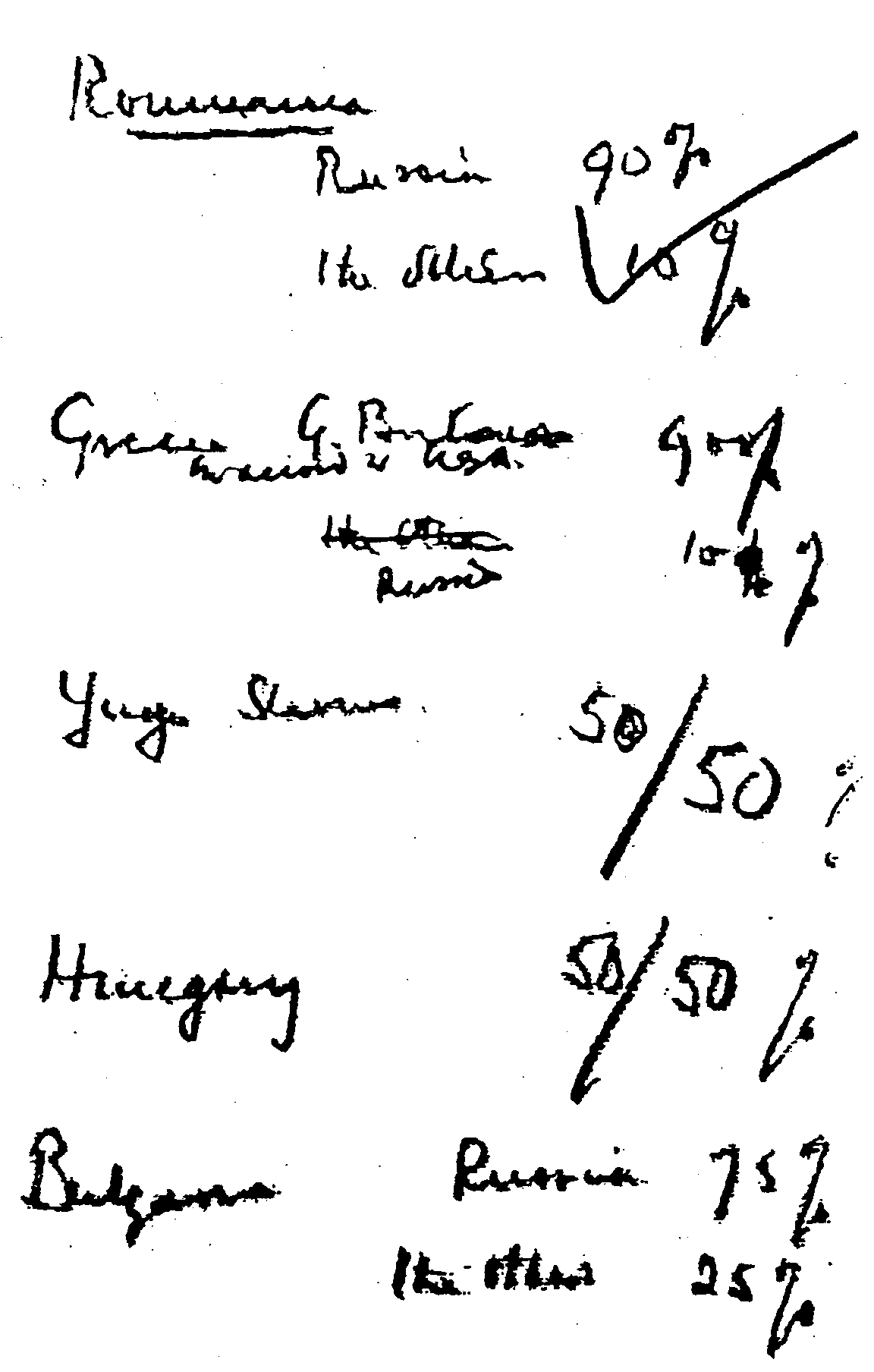
And what of Churchill? His committed colonialism would surely find favor with D’Souza – in 1954 the prime minister wrote to Eisenhower that he was “a bit skeptical about universal suffrage for the Hottentots” – but he was far from uncomplicated. Does Romney name as “one of [his] heroes” not just the man who warned of “an Iron Curtain [that] has descended across Europe,” but the one who sat with Stalin and chopped up a continent on a slip of paper? What of the parliamentarian who introduced legislation creating a minimum wage and offering unemployment insurance? What about the man who supported eugenics, who wrote the prime minister in 1910 to warn that “the multiplication of the feeble-minded is a very terrible danger to the race”? Or the budgeteer who prioritized solvency over military strength, championing adoption of the Ten-Year Rule, whereby the armed services took as an indefinite and continuous planning assumption that no major war would occur in the upcoming decade? Are those Churchills among Romney’s heroes?

Such two-dimensional comic-book likenesses as we find in Romney’s description of foreign countries and leaders are not only inaccurate, they’re insulting. They lay bare a truth most thinking people will already know, and one that is far more damaging to American diplomacy than returned artwork: unless you can raise money, give money, or vote, you are meaningless to a U.S. political candidate, and so your proud history will be rendered in finger-paint to influence those who can.

Why do we allow these caricatures to dominate our politics? Why do even our very best indulge them, much as they do the flag lapel pin and the simple-minded platitudes about Supporting the Troops? Because they fear the consequences of trying and failing to broaden the discourse, of trying to lead and being seen to lecture or pontificate or condescend, of alienating voters by unreservedly embracing knowledge and nuance. Because the greatest sin in our democracy is not to lie, but to lose.

The sad reality is that it doesn’t matter a damn whether Mitt Romney is right or wrong about culture, or Solidarity, or Churchill, or whether he tells Americans the truth about them or just a pretty story. And the reason is doesn’t matter is even sadder: because we’re stupid, and we’re easily manipulated, and because we don’t care.

Monday, April 9, 2012

The real threat of hybrid conflict

Talk to ten different military analysts about the meaning of the term "hybrid war," and you'll probably get 20 different answers. Some folks like to talk about hybrid threats, others about hybrid warfare; some talk up hybrid adversaries, and still others worry about hybrid conflict. Usually what they're getting at falls into the grey area between irregular warfare conducted by poorly-armed non-state militants and the purportedly more traditional, "conventional" conflict waged by high-tech, capital-intensive state militaries. In the hybrid future, we're told, irregular adversaries will employ high-tech weapons while sophisticated state enemies are likely to adopt guerilla-style tactics—avoiding American strengths while maximizing their own.

Nearly all wars are a strategic hybrid: a mix of violent action, diplomacy, and messaging, combining destruction, coercion, and persuasion. The modern hybrid war construct implies that future conflict will take on a more tactically hybrid character: that states will employ guerilla tactics in concert with heavy weapons, or that sub-state groups will use sophisticated weapons hand-in-hand with terrorism and insurgency.

You see, as Conrad Crane has said before (and as I love to repeat), there are only two kinds of war: asymmetric and stupid. Capable adversaries will always seek to capitalize on their own strengths and focus on our weaknesses. The hybrid concept simply tells us that violent actors will seek to diversify their capabilities and become less predictable by employing weapons and tactics more frequently associated with different parts of the sophistication and organization spectrum.

Big deal, right? If a weapon system or tactical method is proven to be effective, shouldn't we expect that our adversaries will make it a part of what they do? Frank Hoffman says hybrid war is defined by a "blend of the lethality of state conflict with the fanatical and protracted fervor of irregular war," which I'm not sure tells us all that much of anything about how it differs from the sort of war we already know. If those capable of state-like lethality had access to a sustaining base of manpower imbued with the "fanatical and protracted fervor" of violent extremists, why haven't they blended the two before now?

Hoffman does put his finger on the characteristic that seems important to the whole range of hybrid warfare disciples, and that's increased lethality. But dramatically increased battlefield lethality has been a challenge for miltary planners and theorists for a century and a half, one that has been addressed pretty well by those militaries with economic and intellectual capacity to adapt. For our adversaries to combine weapons lethality with "fanatical and protracted fervor" doesn't pose nearly so significant a military challenge as does the combination of lethality with effective force employment.

The big problem with the modern hybrid war concept is that it's based both on a misunderstanding of military effectiveness – one that fails to acknowledge that we do, in fact, know with relative certainty what works on the battlefield (Stephen Biddle calls it "the modern system of force employment," and has specified its component parts pretty elaborately in a 2004 book called Military Power) – and on a blurring of the real distinction between success in battle and success in war.

Still, not every organized violent actor fights the same way, and there are a variety of reasons for that. But if you want to kill the enemy, destroy formations, and seize and hold ground, you do your best to employ your forces in line with the dictates of the modern system. That is, if you want to fight, you do the things you have to do to get good at fighting—you learn to shoot, move, and communicate in dispersed formations, operating with a combined-arms team that seeks maximum cover and concealment to blunt enemy firepower, and you procure the weapons and equipment that facilitate those skills.

Some of those that have learned the modern system are still not capable of producing favorable war outcomes, owing to strategic failures or other circumstantial limitations. And other entities do achieve political success even when they simply cannot do the things that are neccessary to operate effectively on the modern battlefield, whether for internal political, cultural, or economic reasons. That's because they wage war in a strategic fashion (asymmetric, even!)—by minimizing the importance of fighting to the accomplishment of their goals.

Futurists hawking hybrid concepts that focus on tactical or technological hybridity often seem to overlook this basic point: tactical effectiveness is really important, and almost every violent actor is going to do his best to achieve it when the political, cultural, doctrinal, or financial barriers are surmountable. But tactical effectiveness isn't everything, and it's often extremely difficult and extremely expensive to achieve and sustain. All the "hybrid warfare" idea tells us is that in the future, the range of potential adversaries is not so clearly dichotomous when we look at buying power, human capital, and tactical and strategic imagination as it may have been before. Sometimes guerillas will want to fight, because they've gotten better at it. And sometimes armies will want to talk, because they think it's gotten too expensive to fight.

We needed a new term for that?

I bring all of this up in relation to an article that ran on AOL Defense last week, headlined "How to Fight Hybrid Threats: Tanks, Airstrikes, and Training." The piece could just as easily have been called "How to Be Good at Battle: Shoot, Move, and Communicate." I don't mean to be too dismissive, though, because it's a useful reminder to the general audience of the point I made above: we know certain things about how to fight effectively, and our recent involvement in the sort of conflicts where fighting power has thus far failed to translate well into "victory" ought not make us forget that.

The piece is built around an interview with Dr. David Johnson, a RAND scholar and retired Army officer who published a book last year about the lessons of the Israel's recent wars. I'm sure some of you will have read (or at least skimmed) Hard Fighting: Israel in Lebanon and Gaza when it first appeared; if not, it's available for free (pdf) on RAND's website, and the AOL Defense interview does a good job of getting at some of the major conclusions.
The driver of the hybrid threat, for Johnson, is the spread of long-range weapons: anti-tank guided missiles, anti-ship cruise missiles, shoulder-fired anti-aircraft weapons (called "man-portable air defense systems," or MANPADS), even relatively unsophisticated long-range rockets like those used by Hezbollah in 2006. When Israeli airstrikes alone couldn't find and destroy the well-hidden rocket launchers, Israel sent in ground troops, only to be bloodied by unexpectedly fierce resistance.
Here we see the bankruptcy of the hybrid idea as a tactical construct laid bare: what's just been described as "the driver of the hybrid threat" is in fact the driver of nearly all tactical adaptation over the last century or so: the problem of the offensive in the face of overwhelming firepower—increasing weapons range and rate of fire, the deepening of the battlefield, and the consequent limitations on tactical and operational maneuver.

So why is "the hybrid threat" any different to the basic military problem we've been trying to solve for all this time? Johnson contends that a shift in Western states' priorities from inter-state war to counter-guerrilla operations has pushed them to forget about that basic problem: instead of worrying about the perfection of protected maneuver in order to close with and destroy a lethal enemy, Israel and the U.S. have focused narrowly on the subsidiary issue of how to identify and target the enemy.
So how can the US prepare for hybrid threats? In part by going back to the future, said Johnson, whose books include a history of how the US learned to use tanks and airpower in World War II. "It is a problem that can't be solved by a single service," he said. The Air Force and Army today work together more closely than ever before in providing air support to ground troops in Afghanistan, but air-ground cooperation has gotten good in past conflicts as well, only to break down post-war when bureaucratic and budgetary battles between the services start to matter more. Hybrid threats will impose serious limits on helicopter operations – as the Soviets found out in Afghanistan after the CIA provided the mujahideen with Stinger missiles – so support from higher, faster, and harder-to-hit fixed-wing aircraft will be essential. Conversely, the Air Force will need the ground troops to root out hybrid enemies from their hiding places, he argued, just as the Israeli Air Force proved unable to spot Hezbollah's rocket launchers from overhead. "Ground maneuver is the only thing that will make him visible because he's hiding from everything overhead," said Johnson.
The challenge of so-called hybrid war is that it's reminded us of the need to consider these two questions together: firepower and maneuver, attack and defense, target identification and force protection. The excerpt above is like a billboard for Biddle's modern system (miraculously, Johnson doesn't cite Military Power in his recent study, though he does take lessons from a recent monograph Biddle co-authored about the Lebanon war): artillery and air power are used in close combination with ground forces to pin down the enemy, force him to keep his head down and allow friendly ground forces to maneuver on his position. But how to separate him from the population, to force him to come out and fight? Well-trained infantry must be capable of meeting the enemy in his sanctuaries – whether forests or mountains or urban areas – to identify, isolate, and fix him for destruction. These are the fundamentals of combined-arms land warfare, as useful for Americans in 2018 as for Germans in 1918.

But this is all somewhat peripheral to the real cause for concern with hybrid war: it exacerbates the expectation–outcome gap so often responsible for puncturing our will to fight. The real problem with so-called hybrid adversaries isn't that they're so much more dangerous than the range of threats we've prepared for—it's that they're so much more dangerous than we expect that they should be, because they're not states. We don't expect Hizballah or the Taliban to be able to deepen the battlefield with anti-access technologies, the sort of weapons that allow them to target exposed forces even when they're not on patrol. We don't expect guerilla fighters to take on Western infantry and armor on the conventional battlefield. When it comes down to it, we frankly don't expect sub-state groups to be able to kill Americans in what we've always considered to be the sort of straight-up battlefield fight in which U.S. arms are dominant; this explains the widespread freak-out in response to Wanat, where American soldiers were killed and positions overrun by Taliban infantry using infiltration tactics and small arms.

I recently mentioned Patricia Sullivan's "War Aims and War Outcomes: Why Powerful States Lose Limited Wars," a paper that I think can help us to understand the true political danger of the hybrid threat. Sullivan constructs a model for war outcomes in asymmetric conflict in which
strong states select themselves into armed conflicts only when their pre-war estimate of the cost of attaining their political objectives through the use of force falls below the threshold of their tolerance for costs. The more the actual costs of victory exceed a state's prewar expectations, the greater the risk that it will be pushed beyond its cost-tolerance threshold and forced to unilaterally withdraw its forces before it attains its war aims. (497)
She goes on to make a compelling case about the difference between wars of coercion and wars of destruction, but that's less germane to our point here. What I'm getting at is this: because we don't expect irregular adversaries to fight in conventional ways and with conventional weapons, we're not prepared for the sort of casualties that are normally associated even with wildly successful conventional ground combat. (This expectation is exaggerated yet further by the experiences of Desert Storm and OIF I, when U.S. forces inflicted historically unprecedented casualty ratios on conventional enemies due to a remarkable confluence of American technological edge, extraordinarily poor Iraqi force employment, and good fortune. Our recent opponents have been irregulars who mostly lack the capacity to engage our forces using the modern system and regulars who proved unwilling or incapable of doing so.) In short, we have forgotten that land warfare has significant costs in men and materiel, even when waged successfully.

This
is the real threat of hybrid conflict: that it reminds us of how bloody war is and has always been; that it delivers that reminder during a strategically inconsequential war; and that the lessons we learn about cost tolerance during that strategically inconsequential war shape our expectations for the future in perverse ways and leave us unwilling to sustain the necessary costs when the next Big One comes along.

Monday, May 23, 2011

Memo to Jennifer Rubin: Israel's QME has nothing to do with the U.S. defense budget

In an unsurprisingly derivative and unconvincing argument about the need for GOP presidential aspirants to oppose cuts to the defense budget, the Post's resident expert-on-everything couldn't help but take a dig at the Obama administration's imaginarily insufficient future military support for Israel:
[The president] bragged at AIPAC :

Because we understand the challenges Israel faces, I and my administration have made the security of Israel a priority. It’s why we’ve increased cooperation between our militaries to unprecedented levels. It’s why we’re making our most advanced technologies available to our Israeli allies. And it’s why, despite tough fiscal times, we’ve increased foreign military financing to record levels.
That includes additional support — beyond regular military aid — for the Iron Dome anti-rocket system. This is a powerful example of American-Israel cooperation which has already intercepted rockets from Gaza and helped saved innocent Israeli lives. So make no mistake, we will maintain Israel’s qualitative military edge.
How’s he going to do all that if he keeps taking a chain saw to the defense budget? It is, as with his deficit plan and refusal to alter unsustainable entitlement programs, a refusal to level with the public and to lead.
It's funny you should ask, Ms. Rubin, because there's a perfectly good answer. And it speaks to the question of who it is, exactly, that refuses to level with the public.

Israel is the recipient of the largest share of American military assistance by an extremely large margin. How large? Just over $3 billion of the five and a half billion set aside for foreign military financing (FMF) worldwide, as a matter of fact. (The next-highest amount for a single country, as you may have heard in recent months, is Egypt's $1.3 billion.) This THREE BILLION DOLLARS A YEAR comes as part of a 2007 commitment by the U.S. government of $30 billion in military assistance to Israel over the next ten years -- a pledge that candidate Obama insisted he would honor, and that President Obama shows no sign of failing to honor. If that's not enough, Israel is the only recipient of U.S. military assistance permitted to use grant aid to purchase defense articles and services from its own armaments industry, not the U.S.

While we're on the subject, want to know something interesting about that military aid and its relationship to the defense budget? Well, there is no relationship between the two. FMF is a part of the International Security Assistance section of the Foreign Operations account... that's right, the State Department's budget, not the defense budget. You know, the one your buddies on the Hill want to slash?

Iron Dome is another interesting example. How could the U.S. possibly continue its financial support for an Israeli rocket and missle defense system in a time of shrinking budgets? Surely this would be among the first of the cuts, especially considering the Obama administration's manifest eagerness to betray the Jewish state. Strange, but recent history doesn't bear this out. The president requested $205 million in the FY 11 budget to help the Israelis pay for Iron Dome. In case you're worried about Congressional support, don't: the House approved the request by a 410-4 vote. And when shutdown-averting continuing appropriation finally passed last month, that $205 million earmark was included in a $415 million carve-out of the Defense RDT&E fund dedicated solely to Israeli cooperative programs. That was enough for PM Netanyahu to express "his deep appreciation for U.S. funding of the 'Iron Dome' rocket and mortar defense system" to President Obama during an April 18th phone call. I guess he's not worried about the bits of the U.S. defense budget that are dedicated to paying for Israeli defensive systems, at least.

And as for "making our most advanced technologies available to our Israeli allies," well, that doesn't cost us anything at all beyond what's been talked about above: the safe-as-safe-gets cooperative R&D account and the free money to purchase U.S. gear that's included in the foreign aid budget.

So "how's he going to do all that" if the defense budget gets cut? Easy: the same way we've been doing it all along.

Now who's refusing to level with the public, Ms. Rubin? Are you ignorant of these facts, or simply disingenuous?

Monday, August 16, 2010

Israel's buying Joint Strike Fighters, and it's really not as bad as you think

I know a lot of my friends and acquaintances in the defense policy world get anxious about Israel. That's often justifiable, particularly when we get to talking about Tel Aviv's adventurism vis-a-vis Lebanon and, more worryingly, Iran. So this morning I've noticed a little bit of agita on Twitter about the recent announcement that Israeli Defense Minister Ehud Barak has approved purchase of 20 F-35 Joint Strike Fighters, a deal that will be financed by American grant military aid. Does this deal threaten Middle East peace? Probably not, but the reality is that it doesn't much matter. This sale is actually a security-assistance success story.

Let's deal with one thing up front: Israel is the recipient of the largest chunk of American military aid, and that's something that's not going to change. In fact, the State Department and Congress have a plan to increase annual funding over the next several years with the aim of delivering a total of $30B in Foreign Military Finance (FMF) in the coming decade. Israel gets a whole bunch of American cash to spend on arms. That's a reality of American foreign policy, one that obtains no matter which party is in the White House or who controls Congress. So if your complaint is about the money, then you've got bigger issues. (I'm not saying those issues aren't legit, but they're not what this post is all about.)

So why is the JSF thing not only not a big deal, but actually kind of a good deal? Well, for one thing, Israel is the only recipient of FMF that isn't required to spend those U.S. aid dollars on U.S. materiel. They can use a quarter of the cash to support their own defense industrial base, so the choice to purchase a U.S. system is really a best-case-scenario when it comes to big-ticket, sophisticated defense articles. If that cash is headed to Israel no matter what, at least they're buying F-35s and not Rafales, Gripens, Eurofighters, or whatever else: foreign military sales help to keep U.S. production lines open and warm, lower unit costs for the U.S. military, and generally mitigate system risk.

Further, Israel finally backed down on the persistent demand that they be able to modify the F-35 for integration of Israeli components and weapons, something that the USG is not one bit interested in. The JSF is a "closed package," meaning that you buy the standard configuration and that's it. Not only does this help the program folks to maintain and sustain the aircraft down the line, but it avoids any potentially nasty complications with industrial espionage and whatnot. (You know, not that our Israeli partners would EVER engage in something like that.)

So don't panic! This deal worked out about as well as it was ever going to. This is a boost to the F-35 program, which needs pretty much all the help it can get. The conditions of the sale are generally pretty good for the U.S. And let's be serious: do you think the Israelis are going to have a less difficult time threatening their allies with F-35s than they currently do with F-15s and F-16s? Especially in light of the fact that QME considerations already limit U.S. sales to Israel's neighbors to less capable systems?

Tuesday, August 10, 2010

Security assistance: from strategic assurance to capacity building in one simple graphic

The Wall Street Journal ran a story today on the proposed $30B sale of F-15s to Saudi Arabia by the U.S. Those who don't know the security assistance business may be surprised to learn that American allies in the Middle East are among the freest-spending customers in the U.S. defense materiel market, though our government is statutorily required to ensure that none of these sales endanger Israel's qualitative military edge (QME). But Israeli qualms about this particular sale are mostly overstated in the Journal piece, and that's not really what I wanted to talk about. For me, the most interesting thing in the piece is this graphic:

This, more than anything in the text, is a sign of the times. You'll notice that the leading purchasers in the early part of the last decade tended to be traditional partners like Egypt, Israel, and Kuwait, along with our NATO and east Asian treaty allies. For about half a century, security assistance was mostly about satisfying treaty obligations, maintaining regional balance, executing foreign policy commitments, and assuring allies and partners.

In the post-9/11 era, as you can see, there's been a shift: weapons system sales are now very often geared towards increasing the fighting capabilities of foreign partners, frequently focusing on counterterrorism. That's why you see states like Morocco, Iraq, and Pakistan on the list, as well as many of the traditional recipients of U.S. gear. You'll also notice that the Emiratis joined the Saudis in opening their wallets, a result of anxiety on the part of the Gulf states about Iran's intentions.

The part of the story that's not being told in the graphic: Israel and Egypt are mostly spending U.S. dollars (in the form of State-appropriated Foreign Military Finance, or FMF funds), as are the Iraqis and Pakistanis via a number of different sources of grant aid and COCOM-directed assistance. (On this latter point, I would guess that the value of 1206 cases -- in which the relevant COCOM uses Defense Department funds to purchase capacity-building materiel for a foreign partner, rather than transferring the funds to the customer as grant aid -- is not included in these numbers, but I'm not 100% sure.) As security assistance has become increasingly focused on battlefield effect rather than the more wide-ranging foreign policy and political justifications applied to traditional military aid, the USG and the Department have understandably gotten a lot more interested in what exactly being purchased. This explains why many of the leading purchasers in the latter half of the decade are recipients of grant aid and special appropriations: it's easier to convince a foreign partner to buy the system you think is most appropriate to its needs when it's your cash he's spending. Though nobody much minds that the Egyptians spend their grant money on tanks they can't maintain and aircraft they can't fly, because the objective of that security assistance program is primarily about confidence-building and regional stability, not improvement to fighting capabilities.

This highlights a fundamental tension in the SECDEF's stated intent to institutionalize the security assistance and "building partner capacity" missions as core competencies of the Department: increasing dependence on foreign partners to address security challenges demands U.S. force structures and institutions that are optimized to provide support for partner forces. But our partners' awareness that this is our desired approach, and that this approach will demand the provision of certain weapons systems in certain configurations, will often mean that they're able to resist spending their own funds on the gear that we decide is best. In short, we're going to have a hell of a time convincing foreign governments that they ought to spend their own money on U.S. gear when we've got it down on paper all over the place that it's a strategic imperative for us to build their capacity.

And: if this just turns into a massive materiel-welfare system, then are we really saving that much cash and effort by transitioning to a more indirect approach, or should we just quit dealing with the myriad challenges of being a massive proliferator and pretty much look out for ourselves?

Tuesday, June 1, 2010

Fast-roping 101 (stolen from about 30 different people on Twitter) (UPDATED)

Off the top of my head, h/t to Chris Albon, Herb Carmen, and Exum.


Awesome. (Ex: "Too soon?")

UPDATE: Schmedlap is, of course, totally right about this:
I'm not real keen on making fun of the [Israeli] troops. I don't think they had much say in the matter and they actually did everything right. It takes a lot of balls to fastrope into an angry mob, knowing that you will likely get your ass kicked, and to respond first with non-lethal weapons and only escalate to lethal force after getting an ass-whooping. What went wrong was not the fault of those troops. What went wrong occurred above the tactical level ... Mock the decision makers, not the guys whose asses were left flapping in the wind (literally).
I can't disagree with any of that. And I hope no one got the impression that we're trying to make light of what happened to these dudes, though I suppose that's pretty obviously what the graphic looks like it's doing.

More than anything, I think the reason this causes a chuckle is that it underlines the absurdity of the situation in which these Israeli troops found themselves. It's an illustration of the timeless military maxim "shit rolls downhill" -- some poor bastard is left hanging on a rope because his government decided to "man up."

That said, Schmedlap is 100% right.