Mitt Romney’s recent travels abroad have
caused a brief surge in commentary on the foreign policy and national security
aspects of the presidential campaign. In this general category I include the
re-animated flap over the Obama administration’s return to Britain of a
Churchill bust that once graced the Oval Office; the sundry criticisms of the
president for being “anti-Poland” in his Reset policy toward Russia; the
hilarious and incredible suggestion that there are such things as pro- and
anti-Israel camps among national politicians in America; and Governor Romney’s
controversial and unsubtle suggestion that Israelis are rich and Palestinians
poor because of something he failed to adequately explain but subsumed under
the heading of “culture.”
It’s this last bit that has perhaps
spurred the most discussion, if only because the rest is such well-trod ground.
Social scientists and economic historians have criticized Romney’s claims in
the press, both for oversimplification and for genuine factual errors. None of
this will matter to potential voters, of course, who can’t be fussed to read
the books that political candidates variously satirize, lionize, or otherwise
caricature. By now we’re all very well acquainted with the fundamental reality
of politics, which is that people don’t care so much about the truth as what
their particular orthodoxy tells them is the truth.
But the “culture” comments – which are
viewed as a gaffe by the left, but will likely serve as the sort of happily
impolitic, plain-truth rallying cry so beloved by ignorant culture warriors of
every stripe – are interesting for the way they distill right-wing ideology
about ideas, circumstances, cause and effect in politics and history, and the
triumph of one people over another. Put another way, what Romney said is the
collectivized and nationalized version of basic conservative dogma: some people
have good ideas, good values, good habits, and good personal qualities, and
those people succeed in the world – including by getting rich – as a result. Be
better, work harder, think the right way, and you’ll have a better life—it’s
the foundation of the American Dream… isn’t it?
An admittedly amusing critical
blog post on the Economist ignores the appeal of this thinking to a large
segment of Romney’s base (and arguably to an even broader segment of the
American electorate, including some voters who are currently undecided):
Comparing the income of the average Israeli to that of the average Palestinian, as though their prospects at birth had been equivalent and their fortunes today are largely the result of their own efforts and their "culture", is gratuitously insulting and wreaks damage to American diplomacy. Besides that, it's just wrong.
Wrong or right, this should sound
familiar to those who have paid attention to other recent campaign
imbroglios—most notably the “you didn’t build that” spat. With its efforts to
paint the president as a socialist, a collectivist, an enemy of business, an
impediment to Americans’ entrepreneurial spirit, the Romney campaign is
catering to the sort of people who believe (against any and all evidence to the
contrary) that personal success is far more attributable to hard work and right-thinking
than to background, context, and circumstantial factors—including sheer good
luck.
The entire American political and
economic project is built around a shared commitment to this fantastical
aspiration: that we can create a society that is so free, so fair, so basically
egalitarian that the sole determinant of success and failure will be the
quality of one’s ideas and one’s willingness to work. Left and right disagree,
of course, about the various and competing merits of liberty and equality, and
about whether the modern United States offers a sufficiently level playing
field to permit pure freedom to fairly and effectively separate losers from
winners. The important role played by American political and economic
institutions and by the public goods that government has enabled are at the
core of the Obama speech from which “you didn’t build that” has been so
unceremoniously wrenched.
Romney understands this, of course, and
his paean to the Israelis’ superior “culture” surely was founded on respect not
simply for shared religious identity and classically liberal political ideals,
but for the policies through which culture (and political culture) is mediated into economically productive
activity. But he has a base to pander to, and that base includes a fair number
of people who really do believe what
Romney’s semantic imprecision made it look as though he actually meant: that
Israelis are rich because they’re mostly Jews, while Palestinians are poor
because they’re mostly Muslims.
But I digress a bit here. What we’re
really dealing with is nothing more complicated than the most conservative
(both in the literal and politically-partisan senses of that word) of all
possible arguments: that the circumstances in which people and nations find
themselves are fair and just, that they are a product of history’s implicit
judgment (or fate’s, or God’s; Romney gave this one away in Israel when he
referred to the “hand of providence”), and that as a result they ought
generally to be left alone. What is is what ought to be. All is for the best in
this best of all possible worlds! Israel’s triumph and prosperity is a
validation of its goodness, to this strain of thought.
We needn’t look too far back in history
for similarly conservative justifications of the status quo, and at least one
bears in part an almost literally unbelievable similarity to Romney’s remarks
in Israel. In his critical
re-telling of Britain’s history abroad, Mark Curtis recounts
a 1946 speech by a colonial administrator in Kenya who noted that
“the greater part of the wealth of the country is at present in [British] hands… This land we have made is our land by right – by right of achievement.” He explained to the Africans that “their Africa has gone forever,” since they were now living in “a world which we have made, under the humanitarian impulses of the late nineteenth and the twentieth century.” The Governor added: “We appear to Africans as being immensely wealthy and nearly all of them are in fact very poor… But these are social and economic differences and the problems of this country in that respect are social and economic and not political; nor are they to be solved by political devices.” Britain was in Kenya “as of right, the product of historical events which reflect the greatest glory of our fathers and grandfathers.” [Emphasis mine.]
One presumes that by characterizing
inequality as “social and economic and not political” in origin, the governor
meant to imply that social and economic change were a necessary precursor to
the political resolution of the imbalance, or even that political arrangements
were altogether irrelevant to it. (It takes no great imagination to see that
this was wildly disingenuous. Britons justified their Empire with the perverse
and thankfully obsolete rhetoric of the White Man’s Burden, but the practical administration
of the empire was intended to head off the sort of independent political
development that might threaten London’s essentially extractive
relationship with the colonies, which were progressively liquidated as
their economic value came to be outweighed by the complications and costs of
their maintenance.)
Israeli conservatives and their American
supporters view the matter of the Palestinian territories in a similar way: stop complaining about “occupation” and fix
yourselves, as you’re the real cause of what’s wrong. Don’t tell us we’re responsible for your backwardness—look at how we’ve
succeeded! We can talk about rights once
you’ve built a properly liberal political culture and eliminated the extremist
populism our own policies and attitudes help to perpetuate. And so it goes.
There’s intended irony in the parallel I
draw between Romney’s attitude toward Palestinians and the British imperial
view of Kenyans, considering the unhinged ramblings of Dinesh D’Souza and Mike
Huckabee on the subject of President Obama’s alleged “anti-colonial ideology.”
The author of a crypto-racist, pseudo-Freudian volume in whose telling the
president’s position on everything from interior decoration to tax policy is
foreordained by his father’s incontrovertible foreignness may assert that “my
argument has nothing to do with the ‘birther’ claim,” but this is plainly
untrue. As Amy Davidson notes in an excellent New Yorker piece on the aforementioned statuary
controversy,
[T]he shadow behind Churchill’s bust is birtherism, or its less conspiracy-minded companion, the conviction that Obama is, by virtue of his heritage, alien and un-American. This notion was most blatantly expressed by Dinesh D’Souza. […] This is part of a larger story about how Obama is really an anti-colonialist socialist who doesn’t like countries like Britain or America. In this telling, all that Obama keeps hidden about himself is exposed because he just can’t stand to look Churchill in the eye.
“Less conspiracy-minded” than a tale of
document forgery is the belief that the President of the United States, driven
by an un- and anti-American worldview, has repeatedly sought elective office in
order to purposefully enact policies that would hamstring and damage a country
that he secretly loathes? That even a writer unsympathetic to either narrative
should describe them in this way reveals an unhealthy focus on the forms of
criticism rather than their substance. To aver that the President is not
legally an American is considered out-of-bounds to all but the most ridiculous
figures in our political scene, yet it’s deemed acceptable and plausible for
others to suggest not simply that Obama’s policies are bad for America, but
that they are intentionally so!
A candidate for the presidency can’t say
this, of course, lest he be made to look like a raving lunatic. Or worse, he
may be accused of casting doubt on his opponent’s patriotism—and patriotism is
a subject with which the American electorate simply will not tolerate you
messing around. But he and his proxies and surrogates can insinuate as much,
and this is exactly what both Bust-Gate and Culture-Gate are all about: boiling
down complicated, ambiguous reality to proclaim an objective truth (Churchill
was an unvarnished American hero! Israelis are comparatively successful because
they think and act like Westerners!), framing that “truth” as an essentially
American consensus, and then insinuating that the president simply stands
outside this consensus. The message is this: Barack Obama does not share our
American values.
You’ll note that I began this essay by
referencing “the foreign policy and national security aspects of the campaign,”
rather than simply “foreign policy and national security.” That’s because all
of this has very little to do with other countries, or with advancing American interests,
or with ensuring the safety of our people, a truth that’s made obvious by
Romney’s adulation of foreign political figures (Churchill, Wałęsa, Netanyahu)
whose own countrymen tend to view them with considerably more ambivalence. (The
Republican often pays
homage to Margaret Thatcher, which is risible when juxtaposed with his
wife’s newfound
enthusiasm about her Welsh heritage. The Iron Lady isn’t likely to have
many fans in Nantyffyllon.)
Instead this talk of the special
relationship is about – like everything else in the campaign – manipulating the
feelings of U.S. voters by invoking code-words associated with the issues and
seeding doubts about your opponent, signaling that I’m One of You and the Other
Guy Isn’t. (This isn’t unique to Romney or to conservatives, as should be plain
to see: the president’s campaign is largely based on the thinly-veiled
assertion that his opponent is taking advantage of Regular People to further
enrich the small minority of People Like Him.)
The code-words in foreign policy are
simple to discern: victory, patriotism, American exceptionalism, American
strength. Standing with the forces of freedom and democracy. Standing with
those who Share Our Values. Standing with Churchill and Israel. Accept each of
these elements wholeheartedly, without reservation or nuance, or be accused of
enthusiasm for their Manichean alternatives: Defeat. Betrayal. Self-hatred.
American weakness. Tyranny and terrorism. Appeasement.
Must it be this way? Surely the
questions are not so simple, nor the answers so clear. Maybe D’Souza has done
us all a favor by invoking the president’s alleged “anti-colonial ideology”
instead of treating him as a “conventional liberal”; maybe we can pause and ask
what exactly is so wrong with
anti-colonial ideology? Are we only permitted to be anti-colonialists as
private citizens, or as white people? Was not Dwight Eisenhower an anti-colonialist?
Should we doubt the patriotism and integrity of that most eloquent critic of
empire – a Serious Anti-Communist who wouldn’t be out of place on the list
of Romney heroes – George Orwell?
And what of Churchill? His committed
colonialism would surely find favor with D’Souza – in 1954 the prime minister
wrote to Eisenhower that he was “a bit skeptical about universal suffrage for
the Hottentots” – but he was far from uncomplicated. Does Romney name as “one
of [his] heroes” not just the man who warned of “an Iron Curtain [that] has
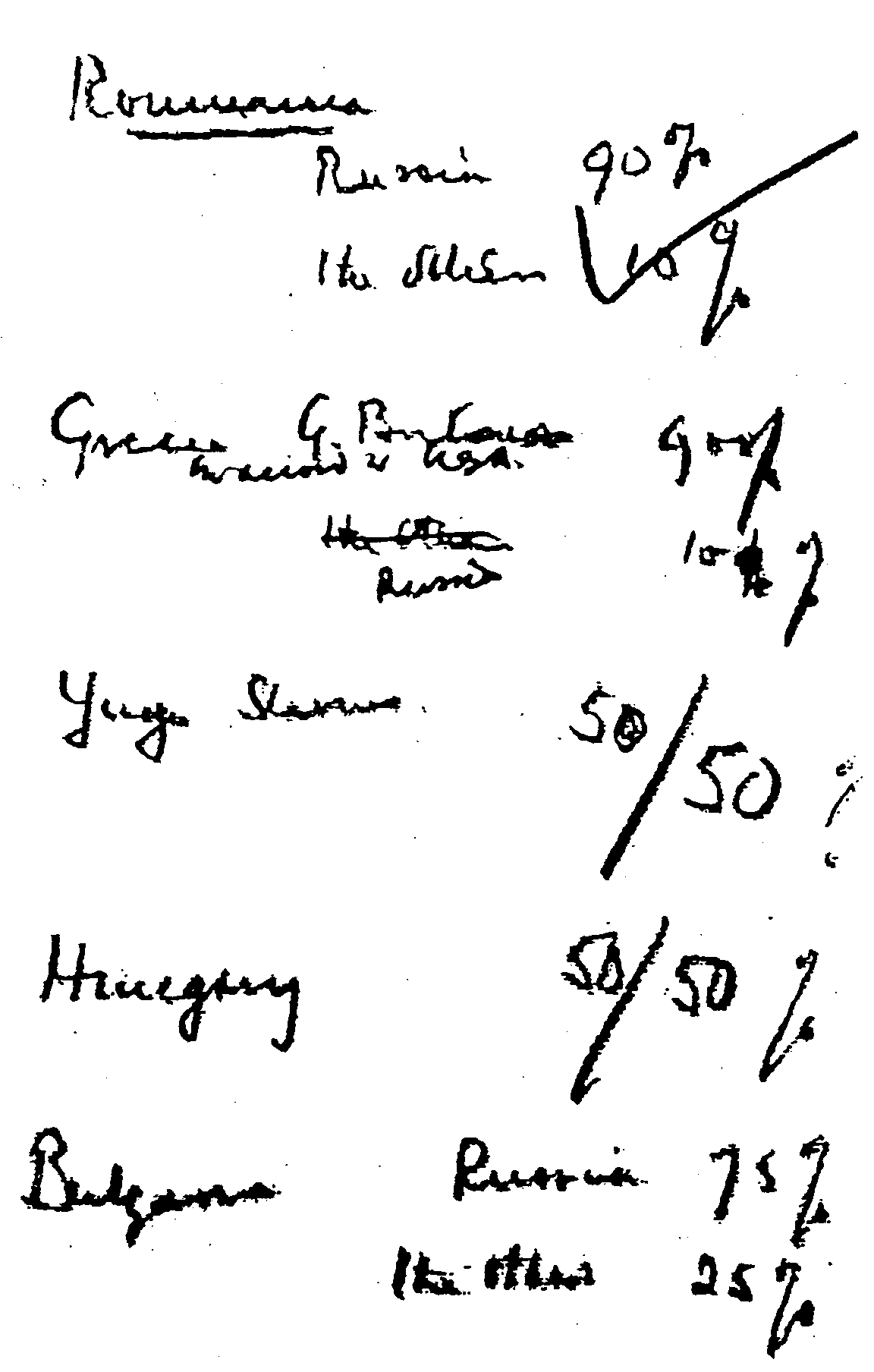
descended across Europe,” but the one who sat with Stalin and chopped up a continent
on a slip
of paper? What of the parliamentarian who introduced legislation creating a
minimum wage and offering unemployment insurance? What about the man who
supported eugenics, who wrote the prime minister in 1910 to
warn that “the multiplication of the feeble-minded is a very terrible
danger to the race”? Or the budgeteer who prioritized solvency over military
strength, championing adoption
of the Ten-Year Rule, whereby the armed services took as an indefinite and
continuous planning assumption that no major war would occur in the upcoming
decade? Are those Churchills among
Romney’s heroes?
Such two-dimensional comic-book
likenesses as we find in Romney’s description of foreign countries and leaders
are not only inaccurate, they’re insulting. They lay bare a truth most thinking
people will already know, and one that is far more damaging to American
diplomacy than returned artwork: unless you can raise money, give money, or
vote, you are meaningless to a U.S. political candidate, and so your proud
history will be rendered in finger-paint to influence those who can.
Why do we allow these caricatures to
dominate our politics? Why do even our very best indulge them, much as they do
the flag lapel pin and the simple-minded platitudes about Supporting the
Troops? Because they fear the consequences of trying and failing to broaden the
discourse, of trying to lead and being seen to lecture or pontificate or
condescend, of alienating voters by unreservedly embracing knowledge and nuance.
Because the greatest sin in our democracy is not to lie, but to lose.
The sad reality is that it doesn’t
matter a damn whether Mitt Romney is right or wrong about culture, or
Solidarity, or Churchill, or whether he tells Americans the truth about them or
just a pretty story. And the reason is doesn’t matter is even sadder: because
we’re stupid, and we’re easily manipulated, and because we don’t care.