Spc. Giunta deployed to Afghanistan for the second time with Battle Company, 2d Battalion (Airborne), 503d Infantry Regiment -- battlespace owners of the infamous Korengal Valley. The actions for which he was decorated took place on the valley's Gatigal Spur during Operation ROCK AVALANCHE, and were briefly chronicled in Sebastian Junger's War and the companion film "Restrepo." I'll reproduce the award citation in its entirety here:
Specialist Salvatore A. Giunta distinguished himself conspicuously by gallantry and intrepidity at the risk of his life above and beyond the call of duty in action with an armed enemy in the Korengal Valley, Afghanistan, on October 25, 2007. While conducting a patrol as team leader with Company B, 2d Battalion (Airborne), 503d Infantry Regiment, Specialist Giunta and his team were navigating through harsh terrain when they were ambushed by a well-armed and well-coordinated insurgent force. While under heavy enemy fire, Specialist Giunta immediately sprinted towards cover and engaged the enemy. Seeing that his squad leader had fallen and believing that he had been injured, Specialist Giunta exposed himself to withering enemy fire and raced towards his squad leader, helped him to cover, and administered medical aid. While administering first aid, enemy fire struck Specialist Giunta’s body armor and his secondary weapon. Without regard to the ongoing fire, Specialist Giunta engaged the enemy before prepping and throwing grenades, using the explosions for cover in order to conceal his position. Attempting to reach additional wounded fellow soldiers who were separated from the squad, Specialist Giunta and his team encountered a barrage of enemy fire that forced them to the ground. The team continued forward and upon reaching the wounded soldiers, Specialist Giunta realized that another soldier was still separated from the element. Specialist Giunta then advanced forward on his own initiative. As he crested the top of a hill, he observed two insurgents carrying away an American soldier. He immediately engaged the enemy, killing one and wounding the other. Upon reaching the wounded soldier, he began to provide medical aid, as his squad caught up and provided security. Specialist Giunta’s unwavering courage, selflessness, and decisive leadership while under extreme enemy fire were integral to his platoon’s ability to defeat an enemy ambush and recover a fellow American soldier from the enemy.
Specialist Salvatore A. Giunta’s extraordinary heroism and selflessness above and beyond the call of duty are in keeping with the highest traditions of military service and reflect great credit upon himself, Company B, 2d Battalion (Airborne), 503d Infantry Regiment, and the United States Army.Sal Giunta and his comrades were ambushed by an enemy element that outgunned them by more than two to one and brought to bear overwhelming firepower with AK-47s and rocket propelled grenades from nearly point-blank range. It may have been only down to the timely, correct, and immensely courageous actions of a 22-year old specialist that an entire American squad avoided being killed to the last man on Gatigal Spur.
The relevant excerpt from Junger's book describes Giunta's actions in similarly cut-and-dry, clinical fashion, concerned as the book is with trying to understand man's reactions when faced with the stress, fear, and danger of combat. It also quotes Giunta in a manner that's consistent with what few other public comments I've seen him make: as a humble, selfless professional, a man who professes not to have done his job because of personal bravery but rather because he understood -- as Junger concludes -- that survival and success are the product of every man doing what's expected of him.
Giunta estimates that not more than ten or fifteen seconds elapsed between the initial attack and his own counterattack. An untrained civilian would have experienced those ten or fifteen seconds as a disorienting barrage of light and noise and probably have spent most of it curled up on the ground. An entire platoon of men who react that way would undoubtedly die to the last man.
Giunta, on the other hand, used those fifteen seconds to assign rates and sectors of fire to his team, run to Gallardo’s assistance, assess the direction of a round that hit him in the chest, and then throw three hand grenades while assaulting an enemy position. Every man in the platoon — even the ones who were wounded — acted as purposefully and efficiently as Giunta did. For obvious reasons, the Army has tried very hard to understand why some men respond effectively in combat and others just freeze. “I did what I did because that’s what I was trained to do,” Giunta told me. “There was a task that had to be done, and the part that I was gonna do was to link alpha and bravo teams. I didn’t run through fire to save a buddy — I ran through fire to see what was going on with him and maybe we could hide behind the same rock and shoot together. I didn’t run through fire to do anything heroic or brave. I did what I believe anyone would have done.”Giunta did exactly what his own team leader had instructed him years before on his first deployment to Afghanistan, as recounted today by the President: "You've just got to try to do everything you can when it's your time to do it." And he did.
This, ultimately, is what heroism is about: the willfull choice to do one's duty when it would be simple to do otherwise. We recognize differing degrees of heroism in different ways, imagining as those of us who have never faced combat do that it must be infinitely more difficult to do one's duty when gripped with the fear of death. And the particular standard for the Medal of Honor suggests a sort of qualitative difference between qualifying acts of valor and those recognized by other decorations: conspicuous gallantry and intrepidity at the risk of one's life, above and beyond the call of duty. But recognizing that "duty" is an inherently subjective, movable determination in the complex environment of combat, and recognizing Sal Giunta's own belief that he merely did what was expected, mustn't we acknowledge that all heroism springs from the same root? Heroism, fundamentally, is about sacrifice -- whether it's the sacrifice of one's life or merely the sacrifice of one's literal freedom, the choice to go to the other side of the world in the service of your country, to show up every day to do a job that can be difficult and dangerous simply so that others won't have to.
This isn't, perhaps, a universally accepted definition of heroism, or even a conventional one. I suppose I'd never really thought of it in precisely these terms until today, when I read this load of unapologetically ignorant rubbish (courtesy of Adam Weinstein at Mother Jones). In "The Feminization of the Medal of Honor," Bryan Fischer lauds SSG Giunta for what he suggests is a deserved award (so as to check the "supporting the troop/s" box), before deriding "a disturbing trend in the awarding of these medals, which few others seem to have noticed. We have feminized the Medal of Honor." He continues:
According to Bill McGurn of the Wall Street Journal, every Medal of Honor awarded during these two conflicts has been awarded for saving life. Not one has been awarded for inflicting casualties on the enemy. Not one.
Gen. George Patton once famously said, "The object of war is not to die for your country but to make the other guy die for his."
When we think of heroism in battle, we used the [sic] think of our boys storming the beaches of Normandy under withering fire, climbing the cliffs of Pointe do [sic] Hoc while enemy soldiers fired straight down on them, and tossing grenades into pill boxes to take out gun emplacements.
That kind of heroism has apparently become passe when it comes to awarding the Medal of Honor. We now award it only for preventing casualties, not for inflicting them.
So the question is this: when are we going to start awarding the Medal of Honor once again for soldiers who kill people and break things so our families can sleep safely at night?
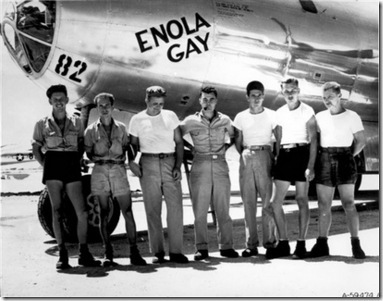
I would suggest our culture has become so feminized that we have become squeamish at the thought of the valor that is expressed in killing enemy soldiers through acts of bravery. We know instinctively that we should honor courage, but shy away from honoring courage if it results in the taking of life rather than in just the saving of life. So we find it safe to honor those who throw themselves on a grenade to save their buddies.Leaving aside the fact that this incoherent fool is simply wrong on the facts, and that Sal Giunta didn't throw himself on a grenade but rather direct effective counterfire on the enemy so as to repel an ambush, then literally shot his mortally wounded comrade out of the hands of the enemy, and that SFC Paul Smith was posthumously awarded the Medal of Honor for actions in Iraq that are believed to have resulted in between 20 and 50 enemy KIA, and also leaving aside the fact that the Medal of Honor has historically been awarded with a variety of justifications and that there is no traditional minimum standard of aggression from which we have recently deviated, and even further leaving aside the fact that the application of Bryan Fischer's obscene, bankrupt conception of "valor" would decorate the pilot and crew of the Enola Gay with Medals of Honor while leaving unrecognized men like MA2 Michael Monsoor... can we take anything meaningful from this silly piece?
Well, I did, and I'll try to explain how. It's only after pausing momentarily to consider this perverse complaint that I've come to really consider why the preservation of life is such an important component of nearly every story of uncommon valor: because without meaningful sacrifice, without that "selfless disregard for his own safety" that seems to grace every MOH citation, without that fundamental knowledge that a man was willing to trade his life for those of his colleagues in the performance of his duty -- without all that, and without our collective belief in all of that, soldiering is just another profession, and the soldier's "duty" is no more glorious than a mercenary's job.
"Stripped to its essence," Junger writes, "combat is a series of quick decisions and rather precise actions carried out in concert with ten or twelve other men. In that sense it's much more like football than, say, like a gang fight. The unit that choreographs their actions best usually wins. They might take casualties, but they win." One of the great paradoxes of war is that a commander must be willing to risk his men in order to best serve them; he must often be willing to sacrifice his men to win. A fighting man's confidence in the commander not to trade his men's lives too cheaply is the bedrock on which good order and discipline are built. But universal belief that no man is more important than the mission, that everyone has a job to do, and must do it as best he can to effectively execute Junger's concert or football game or choreography -- the continuation of this belief is why it matters so much that our conception of heroism forever entails self-sacrifice. So long as men fight and sacrifice and die in the performance of their duty and in defense of their fellow man, those who remain can be confident in fighting and winning. And that's why those Medal of Honor recipients who do live to wear the decoration will likely forever remain the fortunate exceptions, those whose impulse to self-sacrifice was foiled by good fighting and good luck.
I got to thinking about this subject after spending some time recently talking with a guy that I was only peripherally acquainted with prior to last weekend. His name is DJ Skelton* -- he's an Army captain, an '03 West Point grad, and he's preparing to deploy to Afghanistan in command of a company. That in itself is nothing unusual, of course, but here's what is: he's doing so six years after being very seriously wounded in Fallujah, just a month into his first deployment as an infantry platoon leader. DJ was struck in the chest with an RPG and riddled with AK fire before he'd even hit the ground, lost an eye, much of the bone in one leg, and fine motor function in one hand. Most people would be looking forward to civilian life just as soon as they'd come through emergency medical care, justifiably focused on themselves and how to cope with permanent disability. Not only did Skelton fight through a long and arduous recovery process, but he fought to hold on to his Army career in the face of innumerable institutional obstacles, all the while spending what he must have feared would be his final months in the Army working to make sure his fellow wounded veterans got the care they deserved from the Pentagon. Now he's back in the infantry, ready to deploy again and lead soldiers into combat. You know what he said to me? "I'm just blessed to be there serving with so many great men, combat veterans, guys who have been deployed four or five times and keep coming back." Here he is going back into combat after surviving a horrific experience his first time there, and all he can think about is how much the others are giving up to be there.
Why do I bring this up now? Because DJ's story is one of heroism as well: the heroism of keeping going, of staying committed to the task in spite of pain and difficulty. This isn't a guy who's bereft of options in life. He's exceptionally well-educated, fluent in extremely difficult languages (he spent five years as an enlisted Chinese linguist before going to West Point and earning a commission, and was on track to become a China Foreign Area Officer before talking the Army into letting him go back to the infantry), charismatic and connected at the highest levels of the Defense Department. There are easier lives to lead than at the head of an infantry company, in Afghanistan or anywhere else, and DJ could easily pursue them without a hint of criticism or approbation. And yet he chose to stay -- not just to stay, as if it were the default option, but to fight his way back from the apparent end of his Army career, fight his way back into the line, and fight his way back to combat. Rather than take what the Army was offering -- to acknowledge that he was "too broken," leave the service and take with him the tremendous investment the government had made in his training -- he persevered, found a way back, and made an example of himself for other wounded veterans to follow. Like Sal Giunta, DJ Skelton is doing his job because it's his job, because it's what he signed up to do. Because he knows the whole thing only works if everybody does his job. He's overcoming pain and fear, sacrificing his own personal comfort to make use of his talents in the service of other people. That's heroism -- heroism of a different kind, and in the face of a different challenge, but heroism just the same.
[*Note: in the original version of this post, I avoided mentioning DJ by name or giving some very specific identifying information only because I hadn't yet sought his permission. I've since spoken with DJ, and he's happy to have his story told as a way to give other wounded vets hope and encouragement. You can read more about his experiences in this article, written two years ago while he was a company commander at the Defense Language Institute.]
Frequent mention of "the heroes in our armed forces" can sound like so much patronizing pablum to the ears of a cynic, easily dismissed for the failure to distinguish between the fat FOBbits eating Burger King in the desert and those who spend long deployments in austere conditions and near-constant danger, like the men of Battle Company. But before we dismiss that more expansive definition of heroism, it's worth remembering that there are thousands of greater and lesser sacrifices being made every day by those who serve our country. A young man charges into automatic rifle fire to link two elements of his scattered squad. A wounded veteran returns to combat in command of a company, unwilling to let his talent and training go to waste in garrison or the civilian world. A young veteran like Matt Valkovic, who apparently didn't get enough of war-torn countries while on active duty in west Baghdad, joins a nonprofit like Spirit of America (stay tuned -- more on this in a later post) to try to get downrange again and enable the counterinsurgency effort. Or even closer to home, and perhaps the reason I'm thinking so much about service and sacrifice today: my twin brother, husband and father of two young children, put to sea this afternoon to begin his third six-month deployment on a fast-attack submarine, accessing all your anti-access environments and defending American primacy in the briny deep.
"If I am a hero," the president quoted SSG Giunta as saying, "then every man who stands around me, every woman in the military, every person who defends this country is." To which the president added, "and he's right." That's why I'm sanguine where Amy Davidson is wistful, on the question of just what exactly it is that got young Sal Giunta from a sandwich counter in Iowa to a photo op with the president: without war, she suggests, the country would never have had use of this man. "One feels, when one hears that [Giunta's enlistment was not motivated by patriotism, but rather by curiosity about the world], not that war is ennobling but that there is potential in this country that we're missing, or not using as fully as we could. How can we satisfy and make use of that curiosity? It shouldn't take a war to get Sal Giunta out of Subway." And she's right -- it shouldn't take a war. But it may take the military -- after all, it's not just a job, it's an adventure! -- and I don't see much of anything wrong with that. Whether it's a couple of years as an enlisted Air Force fireman on a frigid missile base in North Dakota or a junior officer tour on an Aegis cruiser or a peacekeeping hitch in Kosovo, there will continue to be opportunities for service, and through service, opportunities to learn the meaning of sacrifice, selflessness, and responsibility. And that's where heroism is born.
War didn't make Sal Giunta into a hero -- genetics, parenting, and the Army did. War merely reminds us of what heroism really means by calling on men like Giunta to demonstrate their selfless, reflexive impulse to service.