Showing posts with label Ukraine. Show all posts

Tuesday, January 19, 2010

Shouldn't getting caught cheating in an election disqualify you from the next one?

Not in Ukraine! Victor Yanukovych took a plurality of votes in Sunday's presidential election after trying unsuccessfully (so close!) to steal the 2004 vote.
Two of the chief combatants in the 2004 Orange Revolution, which brought to power a pro-Western government that has left the public increasingly disillusioned, battled in a presidential election on Sunday, but because neither received enough votes to win outright, they will face each other in a runoff.

That runoff, scheduled for Feb. 7, is seen as a referendum on the Orange Revolution, which has mired Ukraine in political and economic upheaval for much of the past five years.

The results of the voting on Sunday reflected the revived fortunes of the opposition leader, Viktor F. Yanukovich, who was the loser in the Orange Revolution but who has taken advantage of the public’s soured mood and the bickering among Orange officials.

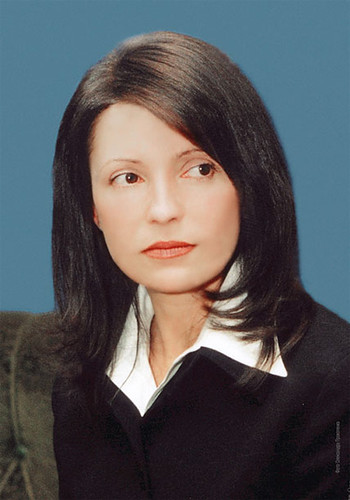
Once criticized as a tool of Moscow, Mr. Yanukovich has retained an America political consultant and softened his image. He is to face Prime Minister Yulia V. Tymoshenko, one of the Orange heroes, in the runoff.

The first official returns reported late Sunday, with a fraction of votes counted, showed Mr. Yanukovich with about 38 percent and Ms. Tymoshenko with about 25 percent. The other candidates were far behind.

On Sunday night, both Mr. Yanukovich and Ms. Tymoshenko reached out to losing candidates for endorsements. A looming question is whether those more ideologically aligned with Ms. Tymoshenko will support her.
It's interesting to see the varied response across the media: the Guardian tells us that Yanukovych is "poised to take Ukraine presidency" while the Atlantic Council headlines that pro-West candidate Tymoschenko "has momentum."

(Let me go ahead and get this out of the way, since I know someone's going to bring it up in the comments: Yulia Tymoshenko used to be hot. Like, really hot -- at least for a head of government. Her looks have suffered a rather precipitous decline, much like those of her partner in the Orange Revolution Victor Yushchenko. He was poisoned, though, so he has an excuse.)

Ok, back to the serious stuff. I am not a Ukraine expert, and I don't want to suggest that I know a whole lot more about this than anyone else. I suppose I do qualify as the blog's resident eastern Europe guy, though, and I bore personal witness to a couple of elections in former communist countries. So let me just say that I think the Guardian's suggestion that this election belongs to Yanukovych is just damn stupid. Tymoshenko has made a lot of enemies in the five years since the Orange Revolution, and she's fallen out with the current president (who registered just over one out of every 20 votes this time around). Neither candidate makes a secret of the fact that they'll seek closer relations with Russia, something that seems almost unavoidable after several years of tense disagreements between Moscow and Kiev over energy prices. But Yanukovych seems certain to seek a strategic re-orientation towards the East, whatever noises he's making now about pursuing an independent course for his country. Tymoshenko claims that "to vote for Yanukovych is to go back to the Stone Age," and it's hard not to agree with her.

Part of the reason I'm reluctant to speculate on how this is going to shake out is that the political landscape in Ukraine has changed so much over the last five years. The 2004 election was much simpler: it was about West versus East, the European Union versus Russia, modernity versus a retrograde return to the too-tight embrace of the near neighbor. Yanukovych was all about the latter course, and Yushchenko represented a break from all that: a turn towards the light. That's why it was so easy for to unite pro-democracy, anti-government liberals behind a coalition of reform candidates.

But beyond strategic alignment, there was a huge ethno-linguistic element to that election: Yanukovych was wildly popular in the Russian-speaking eastern part of Ukraine, while Yushchenko's support came from the Ukrainian-speaking, more independent western and central parts of the country. (I could bore you with a whole lot of history here, tell you about the Polish-Lithuanian Commonwealth and the Polish history of Lviv/Lwow and Union of Brest and the the distinction between the Eastern Orthodox and Ukrainian Greek Catholic factions in the country, but I'll spare you. Instead I'll just remind you of Samuel Huntington's 1998 book The Clash of Civilizations and the Remaking of World Order -- the cover of new paperback editions shows the Stars and Stripes alongside Islam's crescent and star, in case you're dense -- and the prediction contained therein, that Ukraine's place astride the fault line between Occident and Orient would result in the eventual partition of that country.) Those demographic realities still obtain, but it's not clear that they're still dispositive.

All of which is a long and boring way of saying that I don't know what the hell is going to happen. Maybe this is my American optimism, but I'd expect the majority of the losing candidates to throw their support behind Tymoshenko and give the Orange Revolution one more chance.

Monday, July 27, 2009

This is rich...

...coming from a Russian:

On Sunday, Russian President Dmitry Medvedev criticized the U.S. over its continued support of membership in the North Atlantic Treaty Organization for the former Soviet republics of Ukraine and Georgia, saying the alliance "is not ready" to absorb them. Mr. Biden visited both states during his trip through the region last week, and reaffirmed U.S. support for both to join the alliance.

"We don't think it's right to drag certain countries into military and political alliances against the will of their people," Mr. Medvedev said on Russia's NTV television.

I guess it's a good thing all the Poles, Czechs, Hungarians, Bulgarians, Lithuanians, etc. were already pro-Russia commies when you guys got there!

But more on point:

U.S. Secretary of State Hillary Clinton said the Obama administration considered Russia a "great power" and wanted it to be a strong and prosperous country, in an apparent effort to reassure Moscow that the White House remains committed to efforts to "reset" bilateral relations.

Mrs. Clinton made the remarks in response to a question about Vice President Joe Biden's suggestion, during a Wall Street Journal interview published on Saturday, that Russia's weakening economy was likely to make it more amenable to cooperate with the West on national security issues.

"We view Russia as a great power," Mrs. Clinton said on NBC News's "Meet the Press" on Sunday. "Every country faces challenges. We have our challenges, Russia has their challenges. There are certain issues that Russia has to deal with on its own."

She said the Obama administration didn't believe it has an upper hand in its ties with Moscow, and noted that Mr. Biden had been the first senior administration member to publicly call for a "reset" in the two countries' relationship, in an address in Munich, Germany, in February.

Mr. Biden's comments to the Journal raised concerns in Moscow, which questioned whether he was speaking for the U.S. government. "The question is: Who is shaping the U.S. foreign policy -- the president or the respectable members of his team?" asked Russian presidential aide Sergei Prikhodko. He said it was "perplexing" that Mr. Biden delivered the comments just as the U.S. was talking about a reset in relations.

It's tough to fault the Russians here if they're confused, because I'm not sure anyone in this country knows our priorities when it comes to continued NATO enlargement, nuclear arms reduction, and other issues associated with "reset" with Russia.

Thursday, July 23, 2009

Ukrainian energy independence ain't just a Ukrainian problem

As you probably know, the vice president has been in Iraq, Ukraine, and Georgia this week. He made noises about ethnic strife in Iraq (consistent with his long history of supporting the partition of that country), poked Russia in the eye by continually and vocally supporting Ukraine and Georgia's quest to join NATO, and facilitated some strong-man grandstanding by the pesky but polished Mikheil Saakashvili. But believe it or not, Biden actually did something good on this foreign jaunt!
U.S. Vice President Joe Biden chastised Ukraine's political leadership on Wednesday, saying Kiev risks squandering its celebrated Orange Revolution through governmental infighting that has stalemated needed economic reforms, including liberalizing Ukraine's gas market to end dependence on foreign powers and their suppliers.
Ukraine's precarious security situation is, of course, largely a result of its close proximity to Russia. Aside from its sheer vulnerability to aggressive military action, the country's internal politics are complicated by a substantial pro-Moscow, Russian-speaking minority. And on top of all that, Kiev is dependent on Russian natural gas supplies to meet its energy needs.

Russia is often (understandably and legitimately) faulted for using the gas spigot to manipulate Ukraine in times of crisis and disagreement. By cutting supply, Moscow can effectively -- and literally -- freeze out those ingracious brats in "little Russia" who wish to define their own national interests. What you don't hear much about, however, is the Ukrainian political leadership's complicity in the whole deal. (Ok, "complicity" may be too strong, but there's certainly some fault.)

Mr. Biden saved his toughest criticism for the government's handling of the energy sector, where the government provides large subsidies on imported natural gas that is sold domestically. Analysts have argued the disparity between market prices and the cheap government-sold gas has created a black market where corruption is rampant.

In addition, analysts said, the large subsidies have forced Kiev to rely on below-market-price imports from Russia, which allows Moscow to directly influence Ukraine's domestic economy. Twice in the past three years, disputes between Russia and Ukraine over gas payments have shut down a major gas pipeline that transits from Ukraine to the rest of Europe, leaving parts of Eastern and Central Europe shivering during the winter.

Although he didn't mention Russia by name, Mr. Biden said reform of the energy sector was essential to Ukraine's independence and national security, saying only if the country liberalized its gas market would it be free of dependence on foreign powers and their suppliers.

"Your economic freedom depends more, I suspect in this country, on your energy freedom than on any other single factor," Mr. Biden said, urging conservation as well as reform. "That will be a boon to your economy and an immeasurable benefit, I respectfully suggest, to your national security." Mr. Biden also announced the establishment of a joint U.S.-Ukrainian working group on energy security.

It's always easier to subsidize essential goods to win domestic popularity, particularly when those goods are produced indigenously. The complicating factor, of course, is when the goods are imported (see Venezuela), or when processing into useful commodities takes place out of the country (Iranian oil gets exported for refining, then re-imported where it's sold at a massive discount; economic turmoil ensues). So Yushchenko and Tymoschenko et al. aren't innocent here, and they can take concrete steps to help assert their country's independence from its bullying neighbor.