Showing posts with label elections. Show all posts

Thursday, August 2, 2012

Romney abroad: on culture, busts, and the categorical imperative of democracy

NOTE: I feel the need to introduce this post with a reiteration of the usual disclaimer. I'm not representing anyone else's views or analysis here but my own. I can't imagine why you would have assumed that I might be, but we don't normally veer into domestic politics and this post does so unabashedly. That said, I don't believe it's partisan, and I hope you'll evaluate the analysis as being up to the standards we typically uphold around here.

Mitt Romney’s recent travels abroad have caused a brief surge in commentary on the foreign policy and national security aspects of the presidential campaign. In this general category I include the re-animated flap over the Obama administration’s return to Britain of a Churchill bust that once graced the Oval Office; the sundry criticisms of the president for being “anti-Poland” in his Reset policy toward Russia; the hilarious and incredible suggestion that there are such things as pro- and anti-Israel camps among national politicians in America; and Governor Romney’s controversial and unsubtle suggestion that Israelis are rich and Palestinians poor because of something he failed to adequately explain but subsumed under the heading of “culture.”

It’s this last bit that has perhaps spurred the most discussion, if only because the rest is such well-trod ground. Social scientists and economic historians have criticized Romney’s claims in the press, both for oversimplification and for genuine factual errors. None of this will matter to potential voters, of course, who can’t be fussed to read the books that political candidates variously satirize, lionize, or otherwise caricature. By now we’re all very well acquainted with the fundamental reality of politics, which is that people don’t care so much about the truth as what their particular orthodoxy tells them is the truth.

But the “culture” comments – which are viewed as a gaffe by the left, but will likely serve as the sort of happily impolitic, plain-truth rallying cry so beloved by ignorant culture warriors of every stripe – are interesting for the way they distill right-wing ideology about ideas, circumstances, cause and effect in politics and history, and the triumph of one people over another. Put another way, what Romney said is the collectivized and nationalized version of basic conservative dogma: some people have good ideas, good values, good habits, and good personal qualities, and those people succeed in the world – including by getting rich – as a result. Be better, work harder, think the right way, and you’ll have a better life—it’s the foundation of the American Dream… isn’t it?

An admittedly amusing critical blog post on the Economist ignores the appeal of this thinking to a large segment of Romney’s base (and arguably to an even broader segment of the American electorate, including some voters who are currently undecided):
Comparing the income of the average Israeli to that of the average Palestinian, as though their prospects at birth had been equivalent and their fortunes today are largely the result of their own efforts and their "culture", is gratuitously insulting and wreaks damage to American diplomacy. Besides that, it's just wrong.
Wrong or right, this should sound familiar to those who have paid attention to other recent campaign imbroglios—most notably the “you didn’t build that” spat. With its efforts to paint the president as a socialist, a collectivist, an enemy of business, an impediment to Americans’ entrepreneurial spirit, the Romney campaign is catering to the sort of people who believe (against any and all evidence to the contrary) that personal success is far more attributable to hard work and right-thinking than to background, context, and circumstantial factors—including sheer good luck.

The entire American political and economic project is built around a shared commitment to this fantastical aspiration: that we can create a society that is so free, so fair, so basically egalitarian that the sole determinant of success and failure will be the quality of one’s ideas and one’s willingness to work. Left and right disagree, of course, about the various and competing merits of liberty and equality, and about whether the modern United States offers a sufficiently level playing field to permit pure freedom to fairly and effectively separate losers from winners. The important role played by American political and economic institutions and by the public goods that government has enabled are at the core of the Obama speech from which “you didn’t build that” has been so unceremoniously wrenched.

Romney understands this, of course, and his paean to the Israelis’ superior “culture” surely was founded on respect not simply for shared religious identity and classically liberal political ideals, but for the policies through which culture (and political culture) is mediated into economically productive activity. But he has a base to pander to, and that base includes a fair number of people who really do believe what Romney’s semantic imprecision made it look as though he actually meant: that Israelis are rich because they’re mostly Jews, while Palestinians are poor because they’re mostly Muslims.

But I digress a bit here. What we’re really dealing with is nothing more complicated than the most conservative (both in the literal and politically-partisan senses of that word) of all possible arguments: that the circumstances in which people and nations find themselves are fair and just, that they are a product of history’s implicit judgment (or fate’s, or God’s; Romney gave this one away in Israel when he referred to the “hand of providence”), and that as a result they ought generally to be left alone. What is is what ought to be. All is for the best in this best of all possible worlds! Israel’s triumph and prosperity is a validation of its goodness, to this strain of thought.

We needn’t look too far back in history for similarly conservative justifications of the status quo, and at least one bears in part an almost literally unbelievable similarity to Romney’s remarks in Israel. In his critical re-telling of Britain’s history abroad, Mark Curtis recounts a 1946 speech by a colonial administrator in Kenya who noted that
“the greater part of the wealth of the country is at present in [British] hands… This land we have made is our land by right – by right of achievement.” He explained to the Africans that “their Africa has gone forever,” since they were now living in “a world which we have made, under the humanitarian impulses of the late nineteenth and the twentieth century.” The Governor added: “We appear to Africans as being immensely wealthy and nearly all of them are in fact very poor… But these are social and economic differences and the problems of this country in that respect are social and economic and not political; nor are they to be solved by political devices.” Britain was in Kenya “as of right, the product of historical events which reflect the greatest glory of our fathers and grandfathers.” [Emphasis mine.]
One presumes that by characterizing inequality as “social and economic and not political” in origin, the governor meant to imply that social and economic change were a necessary precursor to the political resolution of the imbalance, or even that political arrangements were altogether irrelevant to it. (It takes no great imagination to see that this was wildly disingenuous. Britons justified their Empire with the perverse and thankfully obsolete rhetoric of the White Man’s Burden, but the practical administration of the empire was intended to head off the sort of independent political development that might threaten London’s essentially extractive relationship with the colonies, which were progressively liquidated as their economic value came to be outweighed by the complications and costs of their maintenance.)

Israeli conservatives and their American supporters view the matter of the Palestinian territories in a similar way: stop complaining about “occupation” and fix yourselves, as you’re the real cause of what’s wrong. Don’t tell us we’re responsible for your backwardness—look at how we’ve succeeded! We can talk about rights once you’ve built a properly liberal political culture and eliminated the extremist populism our own policies and attitudes help to perpetuate. And so it goes.

There’s intended irony in the parallel I draw between Romney’s attitude toward Palestinians and the British imperial view of Kenyans, considering the unhinged ramblings of Dinesh D’Souza and Mike Huckabee on the subject of President Obama’s alleged “anti-colonial ideology.” The author of a crypto-racist, pseudo-Freudian volume in whose telling the president’s position on everything from interior decoration to tax policy is foreordained by his father’s incontrovertible foreignness may assert that “my argument has nothing to do with the ‘birther’ claim,” but this is plainly untrue. As Amy Davidson notes in an excellent New Yorker piece on the aforementioned statuary controversy,  
[T]he shadow behind Churchill’s bust is birtherism, or its less conspiracy-minded companion, the conviction that Obama is, by virtue of his heritage, alien and un-American. This notion was most blatantly expressed by Dinesh D’Souza. […] This is part of a larger story about how Obama is really an anti-colonialist socialist who doesn’t like countries like Britain or America. In this telling, all that Obama keeps hidden about himself is exposed because he just can’t stand to look Churchill in the eye.
“Less conspiracy-minded” than a tale of document forgery is the belief that the President of the United States, driven by an un- and anti-American worldview, has repeatedly sought elective office in order to purposefully enact policies that would hamstring and damage a country that he secretly loathes? That even a writer unsympathetic to either narrative should describe them in this way reveals an unhealthy focus on the forms of criticism rather than their substance. To aver that the President is not legally an American is considered out-of-bounds to all but the most ridiculous figures in our political scene, yet it’s deemed acceptable and plausible for others to suggest not simply that Obama’s policies are bad for America, but that they are intentionally so!

A candidate for the presidency can’t say this, of course, lest he be made to look like a raving lunatic. Or worse, he may be accused of casting doubt on his opponent’s patriotism—and patriotism is a subject with which the American electorate simply will not tolerate you messing around. But he and his proxies and surrogates can insinuate as much, and this is exactly what both Bust-Gate and Culture-Gate are all about: boiling down complicated, ambiguous reality to proclaim an objective truth (Churchill was an unvarnished American hero! Israelis are comparatively successful because they think and act like Westerners!), framing that “truth” as an essentially American consensus, and then insinuating that the president simply stands outside this consensus. The message is this: Barack Obama does not share our American values.

You’ll note that I began this essay by referencing “the foreign policy and national security aspects of the campaign,” rather than simply “foreign policy and national security.” That’s because all of this has very little to do with other countries, or with advancing American interests, or with ensuring the safety of our people, a truth that’s made obvious by Romney’s adulation of foreign political figures (Churchill, Wałęsa, Netanyahu) whose own countrymen tend to view them with considerably more ambivalence. (The Republican often pays homage to Margaret Thatcher, which is risible when juxtaposed with his wife’s newfound enthusiasm about her Welsh heritage. The Iron Lady isn’t likely to have many fans in Nantyffyllon.)

Instead this talk of the special relationship is about – like everything else in the campaign – manipulating the feelings of U.S. voters by invoking code-words associated with the issues and seeding doubts about your opponent, signaling that I’m One of You and the Other Guy Isn’t. (This isn’t unique to Romney or to conservatives, as should be plain to see: the president’s campaign is largely based on the thinly-veiled assertion that his opponent is taking advantage of Regular People to further enrich the small minority of People Like Him.)

The code-words in foreign policy are simple to discern: victory, patriotism, American exceptionalism, American strength. Standing with the forces of freedom and democracy. Standing with those who Share Our Values. Standing with Churchill and Israel. Accept each of these elements wholeheartedly, without reservation or nuance, or be accused of enthusiasm for their Manichean alternatives: Defeat. Betrayal. Self-hatred. American weakness. Tyranny and terrorism. Appeasement.

Must it be this way? Surely the questions are not so simple, nor the answers so clear. Maybe D’Souza has done us all a favor by invoking the president’s alleged “anti-colonial ideology” instead of treating him as a “conventional liberal”; maybe we can pause and ask what exactly is so wrong with anti-colonial ideology? Are we only permitted to be anti-colonialists as private citizens, or as white people? Was not Dwight Eisenhower an anti-colonialist? Should we doubt the patriotism and integrity of that most eloquent critic of empire – a Serious Anti-Communist who wouldn’t be out of place on the list of Romney heroes – George Orwell?

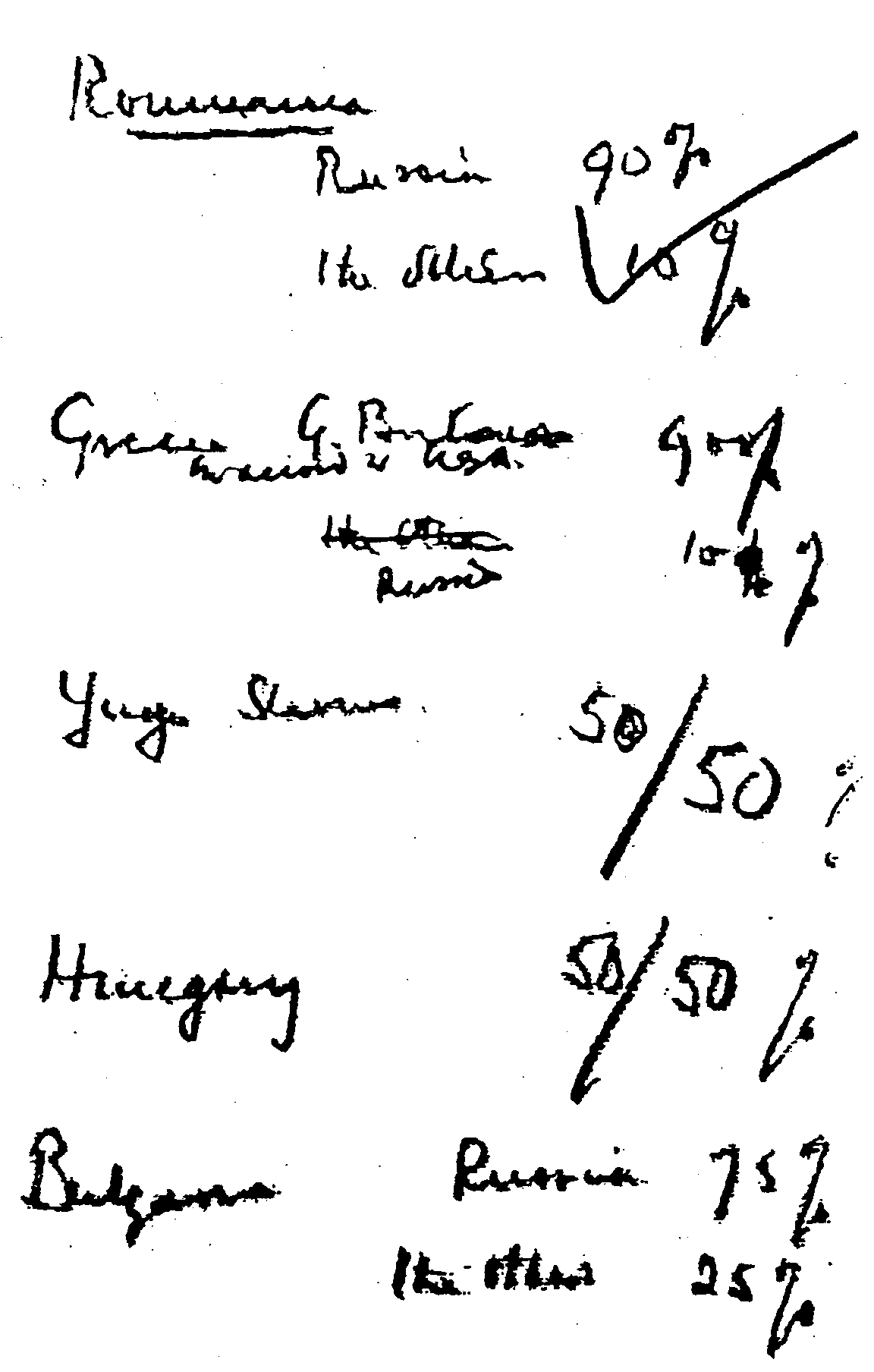
And what of Churchill? His committed colonialism would surely find favor with D’Souza – in 1954 the prime minister wrote to Eisenhower that he was “a bit skeptical about universal suffrage for the Hottentots” – but he was far from uncomplicated. Does Romney name as “one of [his] heroes” not just the man who warned of “an Iron Curtain [that] has descended across Europe,” but the one who sat with Stalin and chopped up a continent on a slip of paper? What of the parliamentarian who introduced legislation creating a minimum wage and offering unemployment insurance? What about the man who supported eugenics, who wrote the prime minister in 1910 to warn that “the multiplication of the feeble-minded is a very terrible danger to the race”? Or the budgeteer who prioritized solvency over military strength, championing adoption of the Ten-Year Rule, whereby the armed services took as an indefinite and continuous planning assumption that no major war would occur in the upcoming decade? Are those Churchills among Romney’s heroes?

Such two-dimensional comic-book likenesses as we find in Romney’s description of foreign countries and leaders are not only inaccurate, they’re insulting. They lay bare a truth most thinking people will already know, and one that is far more damaging to American diplomacy than returned artwork: unless you can raise money, give money, or vote, you are meaningless to a U.S. political candidate, and so your proud history will be rendered in finger-paint to influence those who can.

Why do we allow these caricatures to dominate our politics? Why do even our very best indulge them, much as they do the flag lapel pin and the simple-minded platitudes about Supporting the Troops? Because they fear the consequences of trying and failing to broaden the discourse, of trying to lead and being seen to lecture or pontificate or condescend, of alienating voters by unreservedly embracing knowledge and nuance. Because the greatest sin in our democracy is not to lie, but to lose.

The sad reality is that it doesn’t matter a damn whether Mitt Romney is right or wrong about culture, or Solidarity, or Churchill, or whether he tells Americans the truth about them or just a pretty story. And the reason is doesn’t matter is even sadder: because we’re stupid, and we’re easily manipulated, and because we don’t care.

Monday, April 11, 2011

It's Not Over in Cote d'Ivoire

The arrest of Laurent Gbagbo today has finally brought the long crisis in Cote d'Ivoire to the front pages of US newspapers.

But,a s Beth Dickinson explains very well here,this doesn't mean that things are over in Cote d'Ivoire. Yes, the recalcitrant loser of November's election has finally been detained by the forces of Alassane Ouattara but it took four long months. Much has happened since Gbagbo refused to step down after the UN and the Ivorian elections commission declared Ouattara the winner of the runoff vote.

Just to give a brief list, the Security Council agreed in December to send two thousand extra troops (they still haven't arrived), the two attack helicopters did arrive (three months late). In January-February, the international community did its best to strangle Gbagbo's resources: ECOWAS cut off his signing authority (this matters because Cote d'Ivoire is a Franc CFA country and therefore partially controlled by the regional central bank) and Ouattara announced a halt to cocoa and coffee exports. This led prices to skyrocket for cocoa futures. Meanwhile, the EU and the US froze Gbagbo's assets. South Africa, whose President seems to call for power-sharing a la Zimbabwe/Kenya every time someone tries to steal an election, finally followed suit on the asset freeze, but only ten days ago.

Last month, the Security Council finally imposed an asset freeze and travel bank on Gbagbo (they had threatened before but not named him or his family/entourage to a list). And finally, the Council told UNOCI and Licorne to really "use all necessary means" to prevent violence.

Still, Gbagbo's arrest today took a lot of support from the French Licorne forces and UNOCI, in particular by responding to the use of heavy weapons in Abidjan. On top of that, Gbagbo has been using a lot of anti-French, anti-UN and anti-foreigner (that is anti-northerner) rhetoric. Many of his supporters are still armed--the Republican Guard in particular has long refused to comply with a UN arms embargo. Not only that but he (and the head of his Young Patriots, Charles Ble Goude) used the months of crisis to recruit more followers, and arm them.

Last month, several hundred people were massacred in Duekoue, which is inhabited mostly by Gbagbo supporters. If this headline didn't make you think "Rwanda", I don't know what will but about 30,000 people had taken refuge in a church compound. This kind of thing could happen again. There has been heavy fighting in Abidjan for days now so we should expect high casualty figures. On top of everything, one million people have fled the fighting and over 100,000 fled to Liberia.

So, it's nice that Cote d'Ivoire is finally getting some attention, it's nice that the Security Council finally did more than threaten sanctions and in fact threw its support behind UNOCI and Licorne (something that many UNOCI and Licorne officials felt had long been lacking) but don't count this one as over yet. Alassane Ouattara gave a nice speech (in French) on how he will work on reconciliation, but it will take a lot of work.

Oh and one more thing, the New York Times' coverage of this crisis, has been abysmal. Why is it that for the first time in months, Adam Nossiter, their West Africa-based reporter-- is actually in Abidjan? Until now, all his articles have relied on wire reports and the byline has been from the safety of Ghana. Why was no one from the times there when the BBC, Le Monde, Reuters, AP, AFP, and others were on the ground, in some cases making it to Duekoue to report on the massacre there?

Thursday, February 24, 2011

Ongoing Crisis in Cote d'Ivoire (UPDATED--Heavy Fighting in Abidjan and West)

Amidst the violence in Libya, the ongoing crisis in Cote d'Ivoire' seems to have been forgotten--or at least ignored since it didn't seem much was happening. This week though, things are taking a turn for the more violent. Yesterday, six pro-Ouattara protesters were killed, along with ten pro-Gbagbo soldiers, right as an African Union delegation visited (again) to try and find a solution. Today, fighting erupted in the west of the country.

UPDATE: the BBC reports that heavy fighting has erupted in Abidjan and continues on the border with Liberia

What's the background to all this?

Basically, the country's internationally-recognized President, Alassane Ouattara, is trying to choke off the resources of his predecessor. While the UN Security Council agreed to send 2,000 extra peacekeepers to the country to help ensure security, Ouattara ordered a suspension of cocoa exports. This matters because cocoa is Cote d'Ivoire's biggest source of income (and the country is the world's largest producer of cocoa, for a look a cocoa futures since the crisis began in November, see here).

Since the November elections, the international community has been trying to choke off aincome to election loser Laurent Gbagbo: the EU and the US have imposed sanctions, Switzerland has frozen Gbago and loyalist assets, the ECOWAS central bank has rescinded Gbagbo's authority to spend money, and big Western banks have ceased operations.

In response, Gbagbo has tried to take control of some of the banks but ECOWAS controls the internet-based system for money transfers and they've shut it down. Gbagbo has also requested cocoa exporters to pay in hard cash but even that isn't working so well since many international companies know their governments recognize Ouattara's government (this week the US accepted the credentials of his ambassador to Washington) and they don't want to be sanctioned for supporting Gbagbo. All this to say, banning cocoa exports is one more way to make the Army and civil servants understand that, eventually, Gbagbo won't have enough money to pay their salaries. This has led to a run on banks--for the reasons you would imagine.

So what does this deadlock mean for Ivorian people: well, the economy is in the dumps, the UN reports that 40,000 Ivorians have fled to Liberia--which in itself is an indication of how bad things could get (who flees to Liberia?), and AU mediation is making the terrible recommendation that the two rivals should share power (a la Zimbabwe). ECOWAS has repeatedly toyed with military intervention which is risky because Gbagbo still has a lot of loyal/competent forces. So the question remains, do we just wait until Gabgbo runs out of money and support or do we do something else? Or does that depend on how much violence spreads and how quickly?

AND UPDATE: At what point do UNOCI and the French Licorne forces start using force to implement their mandate to "protect civilians from imminent threat of violence?"

Saturday, February 12, 2011

Rumblings in Gabon

In the last couple of days, some of the Africa-based/interested reporters I follow on Twitter have mentioned growing signs of political turmoil in Gabon (just do a search, you'll find them).

Since Ink Spots friend Carl Prine asked what I thought might be Egypt/Tunisia implications for sub-Saharan Africa, I thought I would dig around a little bit and see what I would find. I haven't yet seen any implication for the current political deadlock in Cote d'Ivoire but I'll be writing about that for Valentine's Day.

Gabon, you might recall, is a small, oil rich, former French colony in West Africa. Libreville has long been home to the Bongo family. Omar Bongo died a couple years ago and his son Ali, was "elected" President.

This blog post (from Accra) explains what has been going on in Gabon. In short, the opposition leader, André Mba Obame, who is thought to have won the 2009 elections that permitted Bongo Jr. to replace his father, has sworn himself in President (January 29th). He took refuge in the Libreville offices of the UN Development Program's (the article says it's the party's HQ but on further checking it's UN offices, see the links below). Security forces violently tried to take over the compound and thousands of students (and citizens) have taken to the streets, not just in the capital but around the country on several occasions since then. In addition, a private TV station was ordered to shut down and the opposition party was disbanded.

As the website Global Voices explains:
Thousands of opposition supporters took to the streets of the nation’s capital, Libreville, on January 29th, and faced violent suppression from Ali Bongo’s troops. Protests have spread to other cities, and the crackdown against them has become increasingly fierce. Protests planned for February 5th and 8th were both suppressed with tear gas. At this point, it’s unclear whether protesters will be able to continue pressuring the government, or whether the crackdown has driven dissent underground.

Anyway, these stories (here, here, here) describe what has been going on there. But to summarize: the Bongo family is thought to have stolen 8% of the country's GDP but while oil revenues have made a small group of people rich, 30% of the country's 1.5 million people still live in poverty, and it's clear that Bongo Jr. likely didn't win. He retains the support of France, major French investors such as Vincent Bollore --yes, the Bollore who lent Sarkozy his yacht so that the President could go on vacation.

I went looking around for stories in the French speaking media but was unsuccessful (nothing in Le Monde, nothing in Jeune Afrique, same thing from Radio France Internationale). One of the articles I linked to above mentions an interview with Bollore which basically says he supports Bongo and stability in Gabon (and that democracy there provides a basis for foreign investment). One of the articles mentions there was a small protests in Paris to support the people of Gabon. Unlike for both Tunisia and Egypt, senior French officials--that is the French Foreign Minister for Tunisia who used a Ben Ali jet while she was on vacation there during the protests and the Prime Minister, Francois Fillon who used a Mubarak jet in Egypt--have not yet been re-exposed for their scandalous friendship with Gabon's leadership but I think that's a matter of time.

I couldn't find much else but keep a tab on this page, it will be interesting to see whether the people of Gabon are inspired by their Tunisian and Egyptian sisters and brothers.

Friday, December 3, 2010

Stolen elections in Cote d'Ivoire (Breaking!)

Wow--it looks like President Gbagbo outright got his friends in the Conseil Consitutionnel to steal the election for him. This is huge, absolutely huge.

The second round, between incumbent Gbagbo and opposition leader Alassane Ouattara was held last week. Elections were supposed to be announced by the Independent Elections Commission by Wednesday but it missed the deadline. Yesterday, the Commission had announced (as the NYT/AP reports) 54.1% for the opposition leader and 45.9% for Gbagbo (the President is in year 1o of his first five year term after, I think 6 delays in elections).

But the Conseil, which is headed by a Gbagbo supporter, invalidated the results, saying the deadline was missed. Today, it announced that it was chucking out 500,00 votes, giving the incumbent victory--by 51.4% of the vote-- despite the fact that:

Those results — which were considered credible by the African Union, the United Nations and the White House — gave opposition leader Alassane Ouattara 54.1 percent of the vote, compared to 45.9 percent for Gbagbo.

It argued that Gbagbo supporters had been intimidated and that those votes were invalid...Meanwhile, the opposition leaders won what observers called a fair elections in neighboring Guinea and Blaise Campaore was "re-elected" in Burkina Faso...

Stay tuned, this could get really bad.

Sunday, February 21, 2010

Elections? We Need to Hold Elections? But...Bienvenue en Cote d'Ivoire

As you know, elections in Cote d'Ivoire have been postponed five times in the last five years. Surprise, surprise, it has happened again. What's the reason this time? There is "uncertainty" about the legitimacy of about on million people's place on the voter rolls. You'll remember that elections were formally delayed for the fifth time back in October.

Since then, as you could expect, that voter issue hasn't been addressed. In fact, you could basically say it's made no progress at all except to publicize President Gbagbo's accusations that elections commission officials have found "fraud" on the rolls. Specifically, Gbagbo is claiming that the elections commission has allowed half a million "foreigners" to be on the rolls. Then on Thursday February 11, the government announced that it had stopped reviewing the rolls...the catch? The elections can't be held until the rolls are finalized.

And then on Friday, February 12, President Gbagbo hit the reset button: he dissolved the government and fired the elections commission. Both institutions will reportedly be "reformed" within the week, though in a smaller format. The President says this will make them more effective. He's asked former rebel leader Guillaume Soro to stay on as Prime Minister.

Well, it's been ten days and the country still doesn't have a new government, in large part because the opposition parties have announced that they would request Gbagbo's resignation, not recognize Soro's new government, and demand that the elections commission resume its work (in its previous configuration). As a result, Gbagbo had to temporarily re-instate the Defense and Finance Ministers because Soro has yet to form a government.

Meanwhile, five people were killed by security forces (they opened fire) at a protest on Friday and frustration is mounting. The protests have spread to Bouake (the capital of the rebel-held north where several thousand people marched through the streets, setting fire to cars etc). Protests also erupted in Abidjan and Khorogo. Today, President Blaise Campaore of Burkina Faso will meet with opposition leaders to try and defuse the situation.

Ok, so what does all this mean? I think it means that Ivorian (and international) fears that the electoral process is in jeopardy are pretty well-founded. I think this has pretty serious implications for the Ouagadougou peace process and they're worrisome (MK could write a short dissertation--if he hasn't already--on the fact that Cote d'Ivoire is the only country for which a genocide alert has ever been issued).

I think this confirms that Gbagbo and Soro are reluctant to hold elections because they fear not only that they'll get pushed out but also that they will lose out on currently lucrative arrangements (lucrative for them). And I think that tensions are still so high that this could spell disaster. Combine that with a spineless UN mission, led by a diffident Special Representative of the Secretary General who views his job as requiring nothing more than support for the government, a significantly decreased French presence, and high tension, and you have a pretty volatile mix.

Tuesday, January 19, 2010

Shouldn't getting caught cheating in an election disqualify you from the next one?

Not in Ukraine! Victor Yanukovych took a plurality of votes in Sunday's presidential election after trying unsuccessfully (so close!) to steal the 2004 vote.
Two of the chief combatants in the 2004 Orange Revolution, which brought to power a pro-Western government that has left the public increasingly disillusioned, battled in a presidential election on Sunday, but because neither received enough votes to win outright, they will face each other in a runoff.

That runoff, scheduled for Feb. 7, is seen as a referendum on the Orange Revolution, which has mired Ukraine in political and economic upheaval for much of the past five years.

The results of the voting on Sunday reflected the revived fortunes of the opposition leader, Viktor F. Yanukovich, who was the loser in the Orange Revolution but who has taken advantage of the public’s soured mood and the bickering among Orange officials.

Once criticized as a tool of Moscow, Mr. Yanukovich has retained an America political consultant and softened his image. He is to face Prime Minister Yulia V. Tymoshenko, one of the Orange heroes, in the runoff.

The first official returns reported late Sunday, with a fraction of votes counted, showed Mr. Yanukovich with about 38 percent and Ms. Tymoshenko with about 25 percent. The other candidates were far behind.

On Sunday night, both Mr. Yanukovich and Ms. Tymoshenko reached out to losing candidates for endorsements. A looming question is whether those more ideologically aligned with Ms. Tymoshenko will support her.
It's interesting to see the varied response across the media: the Guardian tells us that Yanukovych is "poised to take Ukraine presidency" while the Atlantic Council headlines that pro-West candidate Tymoschenko "has momentum."

(Let me go ahead and get this out of the way, since I know someone's going to bring it up in the comments: Yulia Tymoshenko used to be hot. Like, really hot -- at least for a head of government. Her looks have suffered a rather precipitous decline, much like those of her partner in the Orange Revolution Victor Yushchenko. He was poisoned, though, so he has an excuse.)

Ok, back to the serious stuff. I am not a Ukraine expert, and I don't want to suggest that I know a whole lot more about this than anyone else. I suppose I do qualify as the blog's resident eastern Europe guy, though, and I bore personal witness to a couple of elections in former communist countries. So let me just say that I think the Guardian's suggestion that this election belongs to Yanukovych is just damn stupid. Tymoshenko has made a lot of enemies in the five years since the Orange Revolution, and she's fallen out with the current president (who registered just over one out of every 20 votes this time around). Neither candidate makes a secret of the fact that they'll seek closer relations with Russia, something that seems almost unavoidable after several years of tense disagreements between Moscow and Kiev over energy prices. But Yanukovych seems certain to seek a strategic re-orientation towards the East, whatever noises he's making now about pursuing an independent course for his country. Tymoshenko claims that "to vote for Yanukovych is to go back to the Stone Age," and it's hard not to agree with her.

Part of the reason I'm reluctant to speculate on how this is going to shake out is that the political landscape in Ukraine has changed so much over the last five years. The 2004 election was much simpler: it was about West versus East, the European Union versus Russia, modernity versus a retrograde return to the too-tight embrace of the near neighbor. Yanukovych was all about the latter course, and Yushchenko represented a break from all that: a turn towards the light. That's why it was so easy for to unite pro-democracy, anti-government liberals behind a coalition of reform candidates.

But beyond strategic alignment, there was a huge ethno-linguistic element to that election: Yanukovych was wildly popular in the Russian-speaking eastern part of Ukraine, while Yushchenko's support came from the Ukrainian-speaking, more independent western and central parts of the country. (I could bore you with a whole lot of history here, tell you about the Polish-Lithuanian Commonwealth and the Polish history of Lviv/Lwow and Union of Brest and the the distinction between the Eastern Orthodox and Ukrainian Greek Catholic factions in the country, but I'll spare you. Instead I'll just remind you of Samuel Huntington's 1998 book The Clash of Civilizations and the Remaking of World Order -- the cover of new paperback editions shows the Stars and Stripes alongside Islam's crescent and star, in case you're dense -- and the prediction contained therein, that Ukraine's place astride the fault line between Occident and Orient would result in the eventual partition of that country.) Those demographic realities still obtain, but it's not clear that they're still dispositive.

All of which is a long and boring way of saying that I don't know what the hell is going to happen. Maybe this is my American optimism, but I'd expect the majority of the losing candidates to throw their support behind Tymoshenko and give the Orange Revolution one more chance.

Monday, August 17, 2009

And how many troops is it going to take to change that?

The close of Dexter Filkins' article today about Taliban intimidation and the upcoming election pretty much nails the crux of this whole counterinsurgency campaign:

In their six weeks here [in Helmand province], the Marines have succeeded in chasing many Taliban fighters from the area. But the Taliban, and the fears of them, linger.

One farmer said the Taliban regularly imposed a tax on the crops in the area.

Another, an elderly man with a long white beard, said the Taliban fighters were sure to deal harshly with people who talked to the Americans.

“We’re afraid you’re going to leave this place after a few months,” he told First Lt. Patrick Nevins, an officer from Chapel Hill, N.C., who led the Marine unit into Tarakai.

“I promise you,” Lieutenant Nevins said, “we will be here when the weather gets cold, and when it gets hot again.”

The Marines walked back to their base, and the Afghans back into their homes.

Will they still be there, in the villages, in hot and cold, day and night? How can we possibly provide enough troops to maintain constant presence in such an austere, disconnected environment? This would seem to call for an ink blot approach as a simple function of resource scarcity, but isn't the Helmand operation sort of taking us in the opposite direction, by clearing an area that we can't possibly hold?

Monday, August 10, 2009

"Karzai should see this as 'Godfather II'..."

"You got to get out of the business and go legit."

That's what one UN official had to say about the Afghan president's familial links to drug trafficking and other forms of criminality, as related by the excellent Elizabeth Rubin in yesterday's New York Times Magazine. More:

Yet on every trip I’ve made to Kandahar, I have heard another story about Ahmed Wali and drugs. Some of the people who have recounted the incidents are now dead. Like Malim Akbar Khakrezwal, an elder of the Alakozai tribe. In 2006, he took me around the fertile lands of his district, which are now infiltrated by Taliban. He told me that when he was provincial-intelligence chief, he captured 1,400 kilograms of opium belonging to Jan Muhammad, then governor of Uruzgan and a very close friend of the president. Jan Muhammad told Akbar to release the opium, and he refused. “My brother called me and said, ‘We are not able to fight these big people,’ ” Akbar told me. “ ‘We are weak. Release them.’ So I went to Ahmed Wali and said: ‘You are my commander; what should I do with this opium? Should I give it back to Jan Muhammad?’ ‘Yes. Give it back,’ he said. Twenty days later I was released from my position.” Last year he was assassinated.

A Western intelligence official who has spent much of the last seven years in Kandahar and, for obvious reasons, wanted to remain anonymous, told me: “The Karzai family has opium and blood on their hands. They systematically install low-level officials up to provincial governors to make sure that, from the farm gate, in bulk, the opium is moved unfettered. When history analyzes this period and looks at this family, it will uncover a litany of extensive corruption that was tolerated because the West tolerated this family.”

Perhaps. Or not. As many Afghans have pointed out, U.S. history is full of robber barons and of families who made their fortunes during Prohibition, and in the words of Ashraf Ghani “turned very decent as families.”

The article's already been linked by a bunch of people, but I'm highlighting it here in case you've missed it. In the midst of all this talk about strategic re-assessment in Afghanistan, and with the 20 August presidential election looming, we might ought to give a little consideration to how our horse (?) is being perceived by his own (myriad) constituency/ies, right?

Sunday, August 9, 2009

President for Life? Easy, Hold a Referendum to Make Constitutional Change Legitimate

Le Monde has an interesting editorial today about the growing number of African leaders who are obtaining changes in their countries' constitutions to permit them to remain president, initially for additional terms but usually for what amounts to a lifetime appointments. (Instead of translating full paragraphs, as Alma did earlier this weekend, I will just summarize relevant points).

Last week, the President of Niger, Mamadou Tandja, won a referendum to change the constitution to allow him to run for a third term. He supposedly won with a 90% margin. It took some work for Tandja to get his way: he had to dismiss parliament, dissolve the constitutional court, and replace its members with judges who would approve of his referendum plans.

The Presidents of Algeria, Tunisia, Cameroon, and Chad, have also taken these types of steps. There are rumblings, the editorial says, that the president of Burkina Faso, Blaise Campaore, wants to do the same so he can run for a fifth term in office. These Presidents hold elections sure but what kinds of elections exactly? Usually, the ones that, despite widely reported irregularities and intimidation, the international community rules them good enough. To use the expression of one of my grad school professors, those elections get a D-. They don't fail, they just don't really pass either. It's just too much of a hassle to worry about them though.

So, given that elections are fast approaching in both Guinea and Cote d'Ivoire, the editorial asks, how do you organize elections so they aren't hijacked by either a single official or of course a party in a country's conflict? How do you make sure that elections aren't used to rubber stamp constitutional changes that undermine peace and security? What should our response be to such D-"elections" and "referenda"?

Monday, July 6, 2009

Carville goes to Kabul?

James Carville is apparently going to Afghanistan to consult for Ashraf Ghani. The U.S.-educated former finance minister is challenging Hamid Karzai in the August presidential elections. From Bloomberg:

In an interview before leaving for Kabul, Carville said he hadn’t discussed his trip with [SecState Hillary] Clinton, and was going for an exploratory visit as a private consultant.

“I don’t think anybody would veto me doing this,” said Carville, 64, who said he has worked on campaigns in 18 countries. “I’ve worked in Israel when Bill Clinton was president. It’s what I do.”

Ghani, 60, who has a Ph.D in anthropology from Columbia University in New York and worked at the Washington-based World Bank, is one of 41 Karzai opponents competing in the Aug. 20 elections. Ghani, who became finance minister in 2002, said in an interview with the New York Times in January that he stepped down from that post in 2004 because Afghanistan had been taken over by drug traffickers.

Curious to see if Christian and Josh have anything to say about this.