Showing posts with label veterans. Show all posts

Thursday, November 1, 2012

The rank hypocrisy of veterans on OPSEC

I've written on these pages before about questioning the expertise of anyone claiming to have expertise and that arguments should be weighed as they stand. Most recently, I hit on IAVA for talking about civ-mil relations in a way that exceeded their understanding of it. But that sin is much less than those of groups who intentionally mislead the public through their own hypocrisy. Specifically, political veterans from the very right on OPSEC.

I don't think I need to go into a lot of detail - most of you know the background. This past summer the right end of the veteran (and non-veteran) blogosphere blew up with allegations against the President (and his administration) of leaking classified information about the SEAL raid to kill bin Laden for political gain. They didn't just get frothy-mouthed about this issue (of which they had some standing before they lost their reasoning faculties), they got active with at least one Super PAC started by a former Navy SEAL dedicated to OPSEC alone.

Fast forward a few months and the change in their position on OPSEC is so radical that it makes my head spin. Take the milblog This Ain't Hell - a staunchly conservative, veteran group blog that I occasionally visit for their amusing (if too serious) "stolen valor" posts. In primary contributor Jonn Lilyea's 11 June 2012 post, "Sanger defends Administration leaks", Lilyea says:
How about we let our secrets remain that way until whichever war we're fighting ends, so we don't intentionally get mired in the morass that the media made of this last war with their "open debate". ... And how about someone put a muzzle on the leaks out of the Obama Administration and let them debate the issues instead of smokescreening their failures.
Pretty straightforward position: secrets are secrets and should stay that way while the secrets affect current operations. But when it comes to Benghazi the tone changes. Lilyea posits today, in a post that quotes a report drawn from an "uncovered" Secret cable, "Who knows what other information they're sitting on today that will blow up in our faces and cost more American lives later." Again, this classified cable that affects current operations coming to light isn't an OPSEC violation, it's "uncovered". Blatant, reeking hypocrisy.

The previously-mentioned Special Ops OPSEC Super PAC does not even hide their hypocrisy on OPSEC. In a press release from 17 October 2012, the OPSEC president said:
President Obama wanted credit after our military killed bin Laden. Highly classified secrets were leaked, endangering real heroes and their families. But when terrorists killed SEALs and diplomats in Libya, this administration does not tell the truth about what happened.
In summation, this Super PAC was started because the President leaked classified info about something he shouldn't have leaked because it relates to ongoing operations. But the President is at fault because he doesn't leak classified info that relates to ongoing operations. Don't think about it too long or it will hurt your brain.

This hypocrisy isn't limited to fringe blogs (admittedly with more hits than this humble blog, but I'd rather be thoughtful than popular) or fringe political groups. A fringe blogger at a mainstream newspaper, Jennifer Rubin, supports hitting the President on the bin Laden leaks in a July post, positively quoting Governor Romney at the VFW, before accusing the President of "stonewalling" yesterday for not disclosing information that is rightly classified. I'm less concerned about Rubin as she's a pure political hack, but the point is that pure political hacks are taking their cues from veterans-cum-hacks because of the latters' perceived expertise.

These veterans and their hypocrisy is irritating at the least and dangerous at the worst. Because our veteran population is so small and our national defense so complicated, the general public looks to those few veterans who speak up to help explain how varied aspects of our national defense work. But the most vocal veterans on the issue of OPSEC, at least in volume, has been those who bathe in the fetid waters of hypocrisy. Their domestic political concerns are skewing how they present defense issues to the public, causing them to mislead the American public into believing the President is wrong for both leaking classified information and for not leaking classified information. And the American people don't know to juxtapose these two issues and see the hypocrisy of it all, even if there was some substance to the crux of their original position (minus the whole "Obama is a traitor" nonsense).

Obviously free-thinking people should always examine any argument for fallacies or validity, but too often we allow related experience to substitute for expertise. As my IAVA post made clear, being a veteran in and of itself does not make a veteran an expert on anything beyond his or her own experiences. Keep that in mind as you read through political discourse in the waning days of the presidential campaign.

Thursday, September 20, 2012

The Senators who voted against the Veterans Jobs Corps Act

Last week I wrote about a handful of Senators attempting to block the Veterans Jobs Corps Act of 2012 - a bill that would have put a lot of veterans to work and would also make it easier for future generations of veterans to transition to civilian life. When it came time to move this bill forward on the floor of the Senate 40 Republican Senators voted against doing so and have all but killed the bill. This bill isn't perfect, but with 9/11-era veterans experiencing unemployment 3 percentage points higher than the general population, mainly due to their service, this bill would have put a lot of them to work to help close that gap. It also contained measures to pay for the program. The Republicans have presented no reasoning why they don't support this bill beyond misunderstanding/representing the budgeting measure or complaining that the House won't pass it anyway so why bother. Way to take leadership. Of these 40 heroes, only 4 are up for reelection in November. Here's the whole list of Senators who voted against it (since it's not all that easy to get a permanent link at the Thomas Library):

Alexander (TN)
Ayotte (NH)
Barrasso (WY) - up for reelection
Blunt (MO)
Boozman (AR)
Burr (NC)
Chambliss (GA)
Coats (IN)
Cochran (MS)
Corker (TN) - up for reelection
Cornyn (TX)
Crapo (ID)
DeMint (SC)
Enzi (WY)
Graham (SC)
Grassley (IA)
Hatch (UT) - up for reelection
Hoeven (ND)
Hutchinson (TX)
Isakson (GA)
Johanns (NE)
Johnson (WI)
Kyl (AZ)
Lee (UT)
Lugar (IN)
McCain (AZ)
McConnell (KY)
Moran (KS)
Paul (KY)
Portman (OH)
Risch (ID)
Roberts (KS)
Rubio (FL)
Sessions (AL)
Shelby (AL)
Thune (SD)
Toomey (PA)
Vitter (LA)
Wicker (MS) - up for reelection

How many of these Senators say they're serious about jobs and they're serious about veterans issues? At least now we know how they really feel about it.

Friday, September 14, 2012

The Veterans Jobs Corps Act and the Senate Republicans against it

The Department of Labor released August employment data late last week. Yet again, 9/11-era veterans have significantly higher rates of unemployment than the population at large - nearly 3 percentage point higher. Lauren Bailey at the VA has some good analysis at VAntage Point on how the overall trend is positive, but employment prospects remain quite bleak for those recently separated from active duty. Congress has been mulling legislation to help the situation for some time now and is getting closer to passing a bill.

Enter Senate Bill 3457 (Veterans Jobs Corps Act of 2012). This bill, introduced by Senator Bill Nelson, would establish a job corps for veterans that allows the VA to provide grants and contracts specifically for post-9/11 veterans in areas such as first responders and public land conservation. The bill would provide $1 billion over 5 years for this and includes taxes to pay for it (because of that whole Budget Control Act thing). This would obviously help chip away at the current and outrageous unemployment levels of this population. This bill contains a couple of other provisions to help veterans find jobs, but most importantly is that it will begin laying the groundwork to ease state certifications and licensing for veterans based on training and work experience from active duty service. This is an enormous problem where combat medics cannot be certified as EMTs because of onerous training and certification requirements that could be eased if the states and the Department of Defense just talked about it to make transition easier. Section 4 of this bill requires the states to provide information about this to the DoD if they want any veterans job money from the VA. This is a great step forward.

This bill should be a slam dunk. It helps veterans in need and it pays for the program. Now enter a couple of Senate Republicans, specifically Senators Jeff Sessions and Rand Paul, who are trying to hold this bill up. Sessions took to the Senate floor yesterday to gripe about how this bill violates the Budget Control Act. He mentions that it's important legislation, but by God we can't afford it and that the additional revenue the bill purports to raise is really just funny math. We simply can't afford this $1 billion in additional expenditures. Unfortunately for Senator Sessions, the Congressional Budget Office disagrees about it being funny math and estimates that over 10 years this bill will actually reduce the national deficit by roughly $200 million. Some people have a hard time with facts and numbers.

Senator Paul seems to have a different problem altogether: that the U.S. is doling out cash to our enemies. He tried to add two amendments to the Veterans Jobs Corps Act of 2012 that would have cut U.S. aid to Libya, Egypt, and Pakistan. I very much understand that amendments like this happen all the time and that Franken-bills are how lots of laws are passed. Paul is willing to hold up aid to unemployed veterans because of a foreign policy issue that belongs somewhere else and is most likely more about scoring political points than making actual policy. This is unconscionable.

In all, 8 Senate Republicans voted against moving forward with this bill: Senators Blunt, Coburn, DeMint, Inhofe, Johnson (Wisconsin variety), Lee, Paul, and Sessions. They all say they care about veterans and that they care about jobs, but their actions today have proven otherwise.  Of course there is some skepticism that the House would not pass this bill. But put simply: this bill should be passed. We have a specific American population that is hurting more than others and that hurt is originating from the fact that they were in their Nation's service. This bill helps compensate for some of that and sets the framework to help future veterans transition more easily than this generation.

Monday, August 13, 2012

Stars Earn Stripes: bad TV, worse morality UPDATED

This is your fault America. When television producers were looking to cut costs and introduced low-budget fare to the public in the form of reality television, you gobbled it up. It did not matter how asinine or offensive the show was: Operation Repo, Jersey Shore, Undercover Boss, Toddlers and Tiaras. The dumber the better. Continuing this streak of crapulence, NBC is now subjecting us to Stars Earn Stripes, where eight celebrities, of varying quality, conduct dramatized military and law enforcement activities under the tutelage of former special operators and SWAT officers as well as today's least-liked graduate of Hudson High School for Boys (my alma mater), retired General Wes Clark.

I will not critique the show in the usual sense (the L.A. Times and Washington Post have already done so), mainly because I refuse to watch this nonsense. There has been, however, push back against the show because many feel that it glamorizes war and treats it as sport instead of the serious, deadly business that it really is. From a petition making its rounds on Twitter today, the leftist activist group RootsAction wrote the following to NBC:
Your entertainment show "Stars Earn Stripes" treats war as sport. This does us all a disservice. We ask that you air an in-depth segment showing the reality of civilian victims of recent U.S. wars, on any program, any time in the coming months. 
Their assertion is not incorrect - Stars does treat war as sport which is the greater of two disservices to the public (the other being the quality of the entertainment they provide). As a veteran who has seen war as closely as one can, I think that Todd Palin jumping from a helicopter is a far cry from earning stripes and can only be interpreted as the fetishization of war. (Aside: Where are all of you non-commissioned officers? I'm sure you did more than this nonsense to earn your stripes.)  In spite of this, Stars Earn Stripes seems comparatively benign to other forms of war glorification. These eight has-beens may shoot weapons at static targets, but compared to modern video games where war is literally a sport, albeit digital, this show seems delightfully archaic.

This is not to give Stars or NBC pass. They are using war and America's current trust, nay, love of veterans and the military to make profit for themselves and their shareholders. I find this morally offensive.  Yes, the winner of the show's competition gets $100,000 to donate to their veterans/law enforcement charity of choice. But how many dollars were spent producing this show? How much will ad revenue bring in? I suspect the profits of a prime-time show on NBC will exceed $100,000. Good on them for doing something for charity, but I think they could and should do a lot more.  If NBC were to contribute all of their profits to veterans charity, and I strongly suggest that they do, this show would cease to be a morally reprehensible source of entertainment. It would merely be a reprehensible source of entertainment, which is exactly what you all seem to clamor for anyway.

Update: As I think about why this form of profit-making from war is so offensive to me, vice other forms such as video games or war movies, I think it has to do with the fact that this show is purely profit-driven. Realistic video games show war as it is: bloody and cruel. Whether gamers choose to acknowledge this lesson potentially learned is not the fault (or even design) of the games' makers. But the lesson is there. Likewise, movies involving war generally have some sort of political message: to support the troops or protest a particular war or war in general. Stars Earn Stripes has no political message, it has provides no lens through which to learn more about the horrors of war. It is about the military and what they do being totally awesome and profiting from providing that viewpoint. In other words, it provides no utility to society except for those few making a buck off of the worst experiences mankind must endure. That is what makes this show so morally reprehensible.

Thursday, August 9, 2012

Ohio and military votes: towards a warrior caste and unbalanced civil-military relations

The Ohio military voting issue that surfaced within the past week has raised some ugly politics and views. While reticent to wade into what is primarily a domestic political concern, this confrontation is pouring light into the dark corners of civil-military relations that we'll discuss shortly. But first a synopsis of the facts as they occurred.

Election Day in Ohio in 2004 was a disaster in that the state was obviously unprepared for the number of voters who came to vote. Some voting lasted until the early hours of the next morning and provisional ballots were improperly used, causing a significant number of them to be discounted. As a response (in part as well as for other reasons it seems), the State of Ohio opened up an early voting period for any voters in the days prior to Election Day in order to ease the burden on the big day and the potential for screw-ups (i.e., discounting valid votes). This option was used extensively since, particularly in the final three days before Election Day. However, this past year the Ohio House of Representatives passed a law that maintained early in-person voting rights in the final 3 days before Election Day only for Ohioans subject to the Uniformed and Overseas Citizens Absentee Voting Act (UOCAVA) - most of whom are military members and their families. This bill removed the right of all other Ohioans to vote early in person in the final 3 days running up to Election Day, cutting their early voting off on the Friday prior. To sum, every Ohioan had been able to vote early in person in the three days before Election Day until this year when the Ohio legislature changed the law so that only  military personnel and their families could do this. The Obama campaign, and others, have sued the State of Ohio to reinstate early in-person voting for all of Ohio, not just those subject to UOCAVA. Please read this, this, and this for more perspective (thanks to Hayes Brown - @HayesBrown - for providing the Slate link to get this started for me).

The response from Mr. Obama's political opponents can be most kindly described as misrepresenting the Obama campaign's lawsuit. The Romney campaign has billed it as an attempt to suppress military votes - suggesting that the lawsuit was attempting to remove military members' ability to vote early instead of reinstating all Ohioans' ability to vote early. The Romney campaign is supported on this position by a number of influential military-affiliated organizations, including the Association of the U.S. Army. Their argument is petty politics and they're using smoke and mirrors to attack the Obama campaign. Fine. There is a lot of political football in this, but that does negate the fact that the Obama campaign is in no way suing to prevent extra time for military personnel from Ohio to vote. It also has absolutely nothing to do with mail-in absentee ballots from overseas. This is the bottom line and these facts are not (should not be, rather) in contention.

At this point you're probably asking yourself why I'm going on about this on a relatively apolitical security blog. If you move beyond the pandering, obfuscation, and outright lying that passes for political discourse, this issue has given the darkest and most extreme voices of CMR a drum to beat upon. Congressman Allen West issued a statement in which he doesn't propagate the Romney campaign lie of disenfranchising military, but instead avers that what the President is trying to do is offensive:
how dare this President compare the service, sacrifice, and commitment of those who Guard our liberties not as special and seek to compare them to everyone else.
Poor use of the English language aside, a sitting member of the U.S. House of Representatives is saying the law in Ohio should stand as it is because those that serve our nation in arms are better than everyone else and should be given an edge. You can't even compare those in uniform to the rest of society. It seems that Mr. West believes service members deserve more rights, more democracy than those who do not serve. Don't think this is a prevalent viewpoint among many Americans, especially those who have or are serving? Right-leaning blog This Ain't Hell covered the Ohio voting issue along the same lines. This poem, ubiquitous among military/veteran Facebook pages and crappy PX art expos, explicitly states how much more important veterans are than other members of society. Or the old quote, too often mis-attributed to George Orwell:
People sleep peacefully in their beds at night only because rough men stand ready to do violence on their behalf.
Thank God for those rough men or the rest of you weenies would have a rough go of it. All of those policemen, firemen, engineers, architects, sewage maintenance types, water purifiers and others who contribute to our way of life should, in contrast, apparently keep me up all night. Still think I'm reading too much into this? The Stolen Valor Act was an attempt to criminalize a narrow band of lying to prevent people from pretending to be a decorated service member or veteran and that such lies somehow diminish the acts of valor that really occurred. Read commentary on the Supreme Court's decision to overturn the Act and tell me it doesn't reek of men and women offended that others deign to pretend they are in this elite and protected element of society (and then read the comments sections of those and similar posts). I ask: why was lying about having advanced degrees or sleeping with members of the opposite sex or about your personal wealth not also outlawed? The only conclusion I can come up with is that they aren't special like the military and therefore not worthy of special protection.

There are a number of reasons why the public treats current and former military members and family as special, including their very real sacrifices over the past 10 years of war and Vietnam guilt. Some of that is warranted. But this pernicious belief that these self-selecting members of society are better, beyond comparison to rest of the country, and thus deserving of greater helpings of democracy than the rest is anti-democratic and antithetical to any reasonable theories of civil-military relations necessary to keep our society safe. There is a reason they are called service members - their volunteering to serve our society does not grant them more rights and privileges. Some remediation is necessary to repair inequities created by their service (such as veterans' healthcare and jobs programs), but their rights as citizens are not impaired.  Embracing acts that go beyond correcting inequalities and that instead promote the creation of a special caste of citizens with more rights is exactly the kind of attitude that could help foment a warrior caste that would in actuality upend the balance of civil-military relations. Huntington weeps and our country hurts for it.

Monday, May 14, 2012

A rant on the substitution of "veteran" for expertise

"I would love to give my medals directly to a NATO official," said Broseus, 28. "I don't feel like I earned them in a just manner. I felt I was more of an occupier In Iraq than anything else, and I want them to know how that feels."
So was Iraq veteran Greg Broseus quoted by Dawn Turner Trice in the Chicago Tribune. Yes, you read that correctly. An Iraq veteran who is opposed to military interventions wishes to protest against the war in Afghanistan by returning his medals earned in Iraq to a NATO official.

This post is not about returning medals as a form of anti-war protest or protesters, veterans even, against the war. I may not chose the same courses of action, but have at it. As a veteran, I served ostensibly to defend the rights of our citizens to generally do as they please. This post is about veterans and the media.

Broseus, the focal point of the Trice's column, was a HMMWV gunner in 2005 from the Ohio National Guard. I think it's safe to assume that Broseus was a Specialist or Sergeant in such a position, give or take a rank. It's not that I expect every Spec-4 in the Army to know the theater campaign plan and all of the key players of that plan, but how does a soldier not know who he works for? How does he not know that NATO was entirely uninvolved with warfighting in Iraq?* These are things you might want to double-check before doing an interview on your protest.

Mr. Broseus, you can't return medals to someone who didn't give them to you in the first place. I get that you're upset at being activated (let's not touch the subject of duty today...) and that you oppose war.  But for heaven's sake, make your protest meaningful. Because most vets who read that piece are going to think you're an idiot for "returning" your medals to NATO when it was the U.S. Army that awarded them to you in the first place and that NATO was never in a position to award you medals for Iraq. If you want to return them in protest, do it smartly or the quality of your protest is cheapened. Because as things stand right now, I thank you for your service but I don't think you have the knowledge base to comment on national security policy in a way that should be influential based on your status as a veteran.

I understand this is a lengthy rant on a minor incident, but it was a minor incident that was indicative of something that's been bothering me for a while.  I am tired of veterans using their veteran status to give validity to their pet causes when this status does not in actuality provide that validity. This is true for both anti- and pro-war types or any number of other issues surround the military. Your opinions are your opinions and they may be shaped by your experience as a veteran. How could serving not shape your opinions on the world?

But we have to understand that there is no uniform veteran experience or thought process. A former HMMWV gunner has every right to comment on whether we go to or remain at war.  However, unless s/he adequately frames his pro/anti-war argument in a way that shows how his HMMWV gunning enlightened his thinking, then I put his opinion in the same category as the general public's and measure it by the quality of the reasoning. This problem is not limited to lower-enlisted veterans and is in fact more egregiously perpetrated by former officers. Generals who specialize in logistics have lots of standing to opine on logistics. But I really don't want to hear you talk about strategy or operations. Stay in your lane. Wearing a uniform once does not give you the standing to talk about all topics military. Nor does your rank.

The vast preponderance of the blame for this sorry column rests with the columnist. I think Mr. Broseus feels very strongly about his opinion that seems to have been significantly shaped by his experience as a HMMWV gunner. I hope that his protest helps him deal with his experiences. But Trice should know better than to flaunt Broseus' veteran-ness as a reason to give his anti-war stance and ability to classify the war in Afghanistan as "occupation" any validity because he is a veteran. Shame on you and your newspaper for not at least commenting on it.

The bottom line to this is that our news sources should be more responsible in how they use and sell veteran commentary to ensure that when adding the gravitas of "veteran" to said commentary it is appropriately used. I don't have much faith of this occurring. So maybe the answer is that veterans should only comment on things as veterans if their military experience gave them special and expert opinion on the topic. Of course, that's not going to happen either, is it? It's up to you, readers, to understand the font of expertise and the quality of argument and reasoning. Good luck.

*Yes, I am aware that NATO has been funding and manning slots at the Iraq military school at Camp Rustamiyah. But that's not warfighting.

Thursday, March 22, 2012

Stop loss filing deadline extended again

The Department of Defense has extended the deadline for eligible veterans to apply for Retroactive Stop Loss Special Pay (or RSLSP in DoD parlance which absolutely cannot help itself from making any and every term into an acronym - and yes, DoD parlance is a being unto itself, but I digress) until October 21, 2012. The special pay was authorized in the 2009 War Supplemental Appropriations Act to pay stop-lossed soldiers $500 for every month they were stop-lossed. But in spite of continuous extension for veterans to file for the special pay, DoD has paid out only a fraction of the approximately 145,000 eligible veterans have applied. As Juliet Beyler, acting director of Officer and Enlisted Personnel Management, said in the press release: "Even with extensive outreach efforts, and tremendous support from the President, Congress, the VA, veteran and military service organizations, and friends and family around the world, some qualified individuals have not yet applied." If you think you're eligible for it - apply now. If you know someone you think might be eligible for it, tell them to go apply now. For once, DoD is extending a deadline for the right reason. Take advantage of it - you've earned it.

Tuesday, November 16, 2010

Heroism, sacrifice, and the Medal of Honor

On October 25, 2007, then-Specialist Salvatore Giunta distinguished himself conspicuously by gallantry and intrepidity at the risk of his life above and beyond the call of duty in action with an armed enemy, which, in case you didn't know, is pretty much what you have to do to be awarded the Medal of Honor. Today SSG Giunta became the first living recipient since Vietnam of the nation's highest military decoration, joining LT Michael Murphy, SFC Jared Monti, and SSG Robert James Miller -- all three of whom were killed in the performance of their valorous acts -- as one of four awardees from the Afghan war.

Spc. Giunta deployed to Afghanistan for the second time with Battle Company, 2d Battalion (Airborne), 503d Infantry Regiment -- battlespace owners of the infamous Korengal Valley. The actions for which he was decorated took place on the valley's Gatigal Spur during Operation ROCK AVALANCHE, and were briefly chronicled in Sebastian Junger's War and the companion film "Restrepo." I'll reproduce the award citation in its entirety here:
Specialist Salvatore A. Giunta distinguished himself conspicuously by gallantry and intrepidity at the risk of his life above and beyond the call of duty in action with an armed enemy in the Korengal Valley, Afghanistan, on October 25, 2007. While conducting a patrol as team leader with Company B, 2d Battalion (Airborne), 503d Infantry Regiment, Specialist Giunta and his team were navigating through harsh terrain when they were ambushed by a well-armed and well-coordinated insurgent force. While under heavy enemy fire, Specialist Giunta immediately sprinted towards cover and engaged the enemy. Seeing that his squad leader had fallen and believing that he had been injured, Specialist Giunta exposed himself to withering enemy fire and raced towards his squad leader, helped him to cover, and administered medical aid. While administering first aid, enemy fire struck Specialist Giunta’s body armor and his secondary weapon. Without regard to the ongoing fire, Specialist Giunta engaged the enemy before prepping and throwing grenades, using the explosions for cover in order to conceal his position. Attempting to reach additional wounded fellow soldiers who were separated from the squad, Specialist Giunta and his team encountered a barrage of enemy fire that forced them to the ground. The team continued forward and upon reaching the wounded soldiers, Specialist Giunta realized that another soldier was still separated from the element. Specialist Giunta then advanced forward on his own initiative. As he crested the top of a hill, he observed two insurgents carrying away an American soldier. He immediately engaged the enemy, killing one and wounding the other. Upon reaching the wounded soldier, he began to provide medical aid, as his squad caught up and provided security. Specialist Giunta’s unwavering courage, selflessness, and decisive leadership while under extreme enemy fire were integral to his platoon’s ability to defeat an enemy ambush and recover a fellow American soldier from the enemy.
Specialist Salvatore A. Giunta’s extraordinary heroism and selflessness above and beyond the call of duty are in keeping with the highest traditions of military service and reflect great credit upon himself, Company B, 2d Battalion (Airborne), 503d Infantry Regiment, and the United States Army.
Sal Giunta and his comrades were ambushed by an enemy element that outgunned them by more than two to one and brought to bear overwhelming firepower with AK-47s and rocket propelled grenades from nearly point-blank range. It may have been only down to the timely, correct, and immensely courageous actions of a 22-year old specialist that an entire American squad avoided being killed to the last man on Gatigal Spur.

The relevant excerpt from Junger's book describes Giunta's actions in similarly cut-and-dry, clinical fashion, concerned as the book is with trying to understand man's reactions when faced with the stress, fear, and danger of combat. It also quotes Giunta in a manner that's consistent with what few other public comments I've seen him make: as a humble, selfless professional, a man who professes not to have done his job because of personal bravery but rather because he understood -- as Junger concludes -- that survival and success are the product of every man doing what's expected of him.
Giunta estimates that not more than ten or fifteen seconds elapsed between the initial attack and his own counterattack. An untrained civilian would have experienced those ten or fifteen seconds as a disorienting barrage of light and noise and probably have spent most of it curled up on the ground. An entire platoon of men who react that way would undoubtedly die to the last man.
Giunta, on the other hand, used those fifteen seconds to assign rates and sectors of fire to his team, run to Gallardo’s assistance, assess the direction of a round that hit him in the chest, and then throw three hand grenades while assaulting an enemy position. Every man in the platoon  —  even the ones who were wounded  —  acted as purposefully and efficiently as Giunta did. For obvious reasons, the Army has tried very hard to understand why some men respond effectively in combat and others just freeze. “I did what I did because that’s what I was trained to do,” Giunta told me. “There was a task that had to be done, and the part that I was gonna do was to link alpha and bravo teams. I didn’t run through fire to save a buddy  —  I ran through fire to see what was going on with him and maybe we could hide behind the same rock and shoot together. I didn’t run through fire to do anything heroic or brave. I did what I believe anyone would have done.”
Giunta did exactly what his own team leader had instructed him years before on his first deployment to Afghanistan, as recounted today by the President: "You've just got to try to do everything you can when it's your time to do it." And he did.

This, ultimately, is what heroism is about: the willfull choice to do one's duty when it would be simple to do otherwise. We recognize differing degrees of heroism in different ways, imagining as those of us who have never faced combat do that it must be infinitely more difficult to do one's duty when gripped with the fear of death. And the particular standard for the Medal of Honor suggests a sort of qualitative difference between qualifying acts of valor and those recognized by other decorations: conspicuous gallantry and intrepidity at the risk of one's life, above and beyond the call of duty. But recognizing that "duty" is an inherently subjective, movable determination in the complex environment of combat, and recognizing Sal Giunta's own belief that he merely did what was expected, mustn't we acknowledge that all heroism springs from the same root? Heroism, fundamentally, is about sacrifice -- whether it's the sacrifice of one's life or merely the sacrifice of one's literal freedom, the choice to go to the other side of the world in the service of your country, to show up every day to do a job that can be difficult and dangerous simply so that others won't have to.

This isn't, perhaps, a universally accepted definition of heroism, or even a conventional one. I suppose I'd never really thought of it in precisely these terms until today, when I read this load of unapologetically ignorant rubbish (courtesy of Adam Weinstein at Mother Jones). In "The Feminization of the Medal of Honor," Bryan Fischer lauds SSG Giunta for what he suggests is a deserved award (so as to check the "supporting the troop/s" box), before deriding "a disturbing trend in the awarding of these medals, which few others seem to have noticed. We have feminized the Medal of Honor." He continues:
According to Bill McGurn of the Wall Street Journal, every Medal of Honor awarded during these two conflicts has been awarded for saving life. Not one has been awarded for inflicting casualties on the enemy. Not one.
Gen. George Patton once famously said, "The object of war is not to die for your country but to make the other guy die for his."
When we think of heroism in battle, we used the [sic] think of our boys storming the beaches of Normandy under withering fire, climbing the cliffs of Pointe do [sic] Hoc while enemy soldiers fired straight down on them, and tossing grenades into pill boxes to take out gun emplacements.
That kind of heroism has apparently become passe when it comes to awarding the Medal of Honor. We now award it only for preventing casualties, not for inflicting them.
So the question is this: when are we going to start awarding the Medal of Honor once again for soldiers who kill people and break things so our families can sleep safely at night?
I would suggest our culture has become so feminized that we have become squeamish at the thought of the valor that is expressed in killing enemy soldiers through acts of bravery. We know instinctively that we should honor courage, but shy away from honoring courage if it results in the taking of life rather than in just the saving of life. So we find it safe to honor those who throw themselves on a grenade to save their buddies.
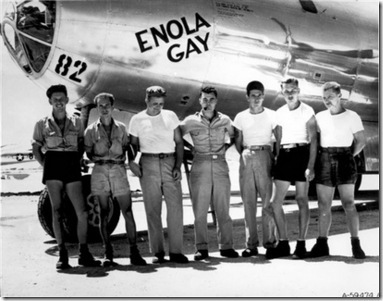
Leaving aside the fact that this incoherent fool is simply wrong on the facts, and that Sal Giunta didn't throw himself on a grenade but rather direct effective counterfire on the enemy so as to repel an ambush, then literally shot his mortally wounded comrade out of the hands of the enemy, and that SFC Paul Smith was posthumously awarded the Medal of Honor for actions in Iraq that are believed to have resulted in between 20 and 50 enemy KIA, and also leaving aside the fact that the Medal of Honor has historically been awarded with a variety of justifications and that there is no traditional minimum standard of aggression from which we have recently deviated, and even further leaving aside the fact that the application of Bryan Fischer's obscene, bankrupt conception of "valor" would decorate the pilot and crew of the Enola Gay with Medals of Honor while leaving unrecognized men like MA2 Michael Monsoor... can we take anything meaningful from this silly piece?

Well, I did, and I'll try to explain how. It's only after pausing momentarily to consider this perverse complaint that I've come to really consider why the preservation of life is such an important component of nearly every story of uncommon valor: because without meaningful sacrifice, without that "selfless disregard for his own safety" that seems to grace every MOH citation, without that fundamental knowledge that a man was willing to trade his life for those of his colleagues in the performance of his duty -- without all that, and without our collective belief in all of that, soldiering is just another profession, and the soldier's "duty" is no more glorious than a mercenary's job.

"Stripped to its essence," Junger writes, "combat is a series of quick decisions and rather precise actions carried out in concert with ten or twelve other men. In that sense it's much more like football than, say, like a gang fight. The unit that choreographs their actions best usually wins. They might take casualties, but they win." One of the great paradoxes of war is that a commander must be willing to risk his men in order to best serve them; he must often be willing to sacrifice his men to win. A fighting man's confidence in the commander not to trade his men's lives too cheaply is the bedrock on which good order and discipline are built. But universal belief that no man is more important than the mission, that everyone has a job to do, and must do it as best he can to effectively execute Junger's concert or football game or choreography -- the continuation of this belief is why it matters so much that our conception of heroism forever entails self-sacrifice. So long as men fight and sacrifice and die in the performance of their duty and in defense of their fellow man, those who remain can be confident in fighting and winning. And that's why those Medal of Honor recipients who do live to wear the decoration will likely forever remain the fortunate exceptions, those whose impulse to self-sacrifice was foiled by good fighting and good luck.

I got to thinking about this subject after spending some time recently talking with a guy that I was only peripherally acquainted with prior to last weekend. His name is DJ Skelton* -- he's an Army captain, an '03 West Point grad, and he's preparing to deploy to Afghanistan in command of a company. That in itself is nothing unusual, of course, but here's what is: he's doing so six years after being very seriously wounded in Fallujah, just a month into his first deployment as an infantry platoon leader. DJ was struck in the chest with an RPG and riddled with AK fire before he'd even hit the ground, lost an eye, much of the bone in one leg, and fine motor function in one hand. Most people would be looking forward to civilian life just as soon as they'd come through emergency medical care, justifiably focused on themselves and how to cope with permanent disability. Not only did Skelton fight through a long and arduous recovery process, but he fought to hold on to his Army career in the face of innumerable institutional obstacles, all the while spending what he must have feared would be his final months in the Army working to make sure his fellow wounded veterans got the care they deserved from the Pentagon. Now he's back in the infantry, ready to deploy again and lead soldiers into combat. You know what he said to me? "I'm just blessed to be there serving with so many great men, combat veterans, guys who have been deployed four or five times and keep coming back." Here he is going back into combat after surviving a horrific experience his first time there, and all he can think about is how much the others are giving up to be there.

Why do I bring this up now? Because DJ's story is one of heroism as well: the heroism of keeping going, of staying committed to the task in spite of pain and difficulty. This isn't a guy who's bereft of options in life. He's exceptionally well-educated, fluent in extremely difficult languages (he spent five years as an enlisted Chinese linguist before going to West Point and earning a commission, and was on track to become a China Foreign Area Officer before talking the Army into letting him go back to the infantry), charismatic and connected at the highest levels of the Defense Department. There are easier lives to lead than at the head of an infantry company, in Afghanistan or anywhere else, and DJ could easily pursue them without a hint of criticism or approbation. And yet he chose to stay -- not just to stay, as if it were the default option, but to fight his way back from the apparent end of his Army career, fight his way back into the line, and fight his way back to combat. Rather than take what the Army was offering -- to acknowledge that he was "too broken," leave the service and take with him the tremendous investment the government had made in his training -- he persevered, found a way back, and made an example of himself for other wounded veterans to follow. Like Sal Giunta, DJ Skelton is doing his job because it's his job, because it's what he signed up to do. Because he knows the whole thing only works if everybody does his job. He's overcoming pain and fear, sacrificing his own personal comfort to make use of his talents in the service of other people. That's heroism -- heroism of a different kind, and in the face of a different challenge, but heroism just the same.

[*Note: in the original version of this post, I avoided mentioning DJ by name or giving some very specific identifying information only because I hadn't yet sought his permission. I've since spoken with DJ, and he's happy to have his story told as a way to give other wounded vets hope and encouragement. You can read more about his experiences in this article, written two years ago while he was a company commander at the Defense Language Institute.]

Frequent mention of "the heroes in our armed forces" can sound like so much patronizing pablum to the ears of a cynic, easily dismissed for the failure to distinguish between the fat FOBbits eating Burger King in the desert and those who spend long deployments in austere conditions and near-constant danger, like the men of Battle Company. But before we dismiss that more expansive definition of heroism, it's worth remembering that there are thousands of greater and lesser sacrifices being made every day by those who serve our country. A young man charges into automatic rifle fire to link two elements of his scattered squad. A wounded veteran returns to combat in command of a company, unwilling to let his talent and training go to waste in garrison or the civilian world. A young veteran like Matt Valkovic, who apparently didn't get enough of war-torn countries while on active duty in west Baghdad, joins a nonprofit like Spirit of America (stay tuned -- more on this in a later post) to try to get downrange again and enable the counterinsurgency effort. Or even closer to home, and perhaps the reason I'm thinking so much about service and sacrifice today: my twin brother, husband and father of two young children, put to sea this afternoon to begin his third six-month deployment on a fast-attack submarine, accessing all your anti-access environments and defending American primacy in the briny deep.

"If I am a hero," the president quoted SSG Giunta as saying, "then every man who stands around me, every woman in the military, every person who defends this country is." To which the president added, "and he's right." That's why I'm sanguine where Amy Davidson is wistful, on the question of just what exactly it is that got young Sal Giunta from a sandwich counter in Iowa to a photo op with the president: without war, she suggests, the country would never have had use of this man. "One feels, when one hears that [Giunta's enlistment was not motivated by patriotism, but rather by curiosity about the world], not that war is ennobling but that there is potential in this country that we're missing, or not using as fully as we could. How can we satisfy and make use of that curiosity? It shouldn't take a war to get Sal Giunta out of Subway." And she's right -- it shouldn't take a war. But it may take the military -- after all, it's not just a job, it's an adventure! -- and I don't see much of anything wrong with that. Whether it's a couple of years as an enlisted Air Force fireman on a frigid missile base in North Dakota or a junior officer tour on an Aegis cruiser or a peacekeeping hitch in Kosovo, there will continue to be opportunities for service, and through service, opportunities to learn the meaning of sacrifice, selflessness, and responsibility. And that's where heroism is born.

War didn't make Sal Giunta into a hero -- genetics, parenting, and the Army did. War merely reminds us of what heroism really means by calling on men like Giunta to demonstrate their selfless, reflexive impulse to service.

Thursday, November 11, 2010

In memoriam, thanks, and happy birthday

First: today is Remembrance Day, so try to pause for a quiet moment and think of those who have sacrificed so much in defense of their families, their neighbors, and those they'd never met.
They shall grow not old, as we that are left grow old; 
Age shall not weary them, nor the years condemn.
At the going down of the sun and in the morning
We will remember them.
Second: here in America, it's Veterans Day, where we thank all those who have served, drawing no distinction between sacrifice of comfort and spilling of blood. To those who chose to serve, who chose to suspend their own freedom and comfort to maintain those same privileges for their countrymen -- we're in your debt. Hope you've all had a great day, and that you had at least one moment where you were reminded how much your service means to so many others.

And third: yesterday was the 235th birthday of the U.S. Marine Corps. Happy birthday, devildogs, and long may the Corps continue. Check out the commandant's message for some goosebumps moments, and read Bob Work and Frank Hoffman on the reasons why we'll need Marines no matter how the operational environment may shift.

Wednesday, July 14, 2010

C'est le 14 Juillet: African Veterans to Get Same Benefits as their French Colleagues!

Over at Secret Defense, Jean Dominique Merchet reports that African veterans who served with French forces during WWII, Korea, Indochina, and Algeria will now get the same benefits as their colleagues. President Sarkozy (who is in need of some positive spin--have you read about the whole Bettencourt "affaire"? It's a trip), in honor of the Fete Nationale du 14 Juillet, has announced a 150 million Euro program to ensure that African veterans now receive the same level benefits, regardless of where they now live.

Why is this such a big deal? Because, as the BBC explains, until now, African soldiers were only payed a pension worth one tenth to one fifth of what their French colleagues got. Back in May, the Conseil Constitutionnel (the Constitutional Council) declared that practice illegal so now Sarko is presenting legislation to the Assemblee Nationale and the law should go into effect in January.

Oh, and did you see that soldiers from 13 African countries (Burkina Faso, Cameroon, CAR, Congo, Gabon, Madagascar, Mali, Mauritanie, Niger, Sénégal, Tchad and Togo) joined French forces today on the Champs Elysees for the Annual Defile du 14 Juillet? It was apparently pouring rain most of the time but this created a lot of buzz too--not all of those leaders have the best human rights records and Sarkozy was criticized both for colonial nostalgia and for granting them the honor of parading.

Bon 14 Juillet les amis!

Thursday, November 12, 2009

"The American soldier is a pretty impressive young man."

I'm a bit late on this one, but I hope everyone took time today to consider the sacrifice of those who have served this country and who continue to do so. One of the more moving things I read on this Veteran's Day was George Packer's account of a memorial service in Afghanistan last May for two soldiers from 3 BCT, 10th Mountain.

I asked Adler how his company had taken these two deaths. “The men are really resilient,” he said. “They’ve held together pretty well. These are numbers fourteen and fifteen for me since I’ve joined the Army.” He smiled slightly. “The American soldier is a pretty impressive young man.”


At the memorial service, Adler had been the first speaker. “Nothing will bring back our brothers in arms,” he had said. “But we can go on fighting for our nation, and for each other.” His emphasis was on the last three words.

Sometimes we forget that the men and women facing danger for this country are just regular guys and gals, many of them 19-year old dudes who'd be playing X-Box or hanging out at the mall if they weren't taking hostile fire on the other side of the world. (If you need a reminder, check out this Denver Post photoessay that Ex highlighted earlier in the week.) But they are there, doing hard things -- and doing them with a rare sort of confidence and strength, as CPT Adler reminds us -- and we're not. We ought to be thankful for that, and for them.

As we remember our veterans here in America, let's think also about what else this day means in so many places around the world: armistice, peace, freedom, and in some cases, independence reborn.

Wednesday, September 2, 2009

Complications with the "new G.I. Bill"

Today's Early Bird featured a nugget from the Associated Press about the first students to receive financial aid under the "Post 9/11 G.I. Bill," passed last year.

Facing a rush of last-minute claims, the Department of Veterans Affairs has cut housing checks to tens of thousands of veterans returning to college under the newly expanded GI Bill, but officials acknowledge that several thousand could get their money later than expected.

With the academic year recently under way, yesterday was the first day many veterans were due their first monthly housing stipends, which range from under $1,000 to upward of $2,500 depending on factors including location.

So this sounds great, right? Some delays, but really, why would the VA expect a "rush of last minute claims"?

Enter Alex, a young veteran, student, and the author of the really well-written blog Army of Dude.

When the Post 9/11 Bill passed through Congress with a veto-proof majority, I cheered. When it was signed into law, I was elated. But on August 1 of this year, when the bill went live after almost three years of legislation, hopes, dreams and well-wishes, I was silent. I did not want to commemorate a non-event as a moment of triumph. I took part in lobbying on Capitol Hill for the bill when it was just that - a scrap of paper that promised financial security in a post-Army life where almost everything feels uncertain and nebulous. I knew it would take at least a month after August 1 to see how it would play out. Through fears that the VA would fumble this rare opportunity to make good on a solemn promise made by FDR sixty five years ago, I watched August crawl by, swept up in a lazy mosaic of final exams and term papers that capped a full semester. With the old GI Bill in hand and the new one on the way, I took a leap of faith. With my bank account dwindling and rent, utility bills, school tuition and other obligations on the table, coupled with the advice of my VA counselor, I bet it all on the Post 9/11 GI Bill.

And I lost.

Go read about the depressing details of his experience here.

Army of Dude is one of those blogs that I check in on every few weeks, and every time I scold myself for not reading more regularly. Bet you'll feel the same.

Wednesday, August 5, 2009

"Today, there are no soldiers in Congo. Today, they are jokers."

This is how a Congolese WWII veteran describes his country's forces today. The quote is from a Washington Post story from yesterday about a camp for Congolese WWII veterans in Eastern Congo.

The story describes how they were "recruited" and served in the war. They weren't really recruited at all of course, more kidnapped and made to fight for Belgium (does that sound familiar?).

The story raises the question of how you support veterans in countries like Congo, Liberia, Sierra Leone, and of course Afghanistan. Figuring out what an adequate pension looks like has been a challenge and a source of tension in these countries. In many cases, ex-combatants found to lack the qualifications to integrate new forces have refused to demobilize until they were assured sufficient pensions to support themselves and their families.

Still, I was surprised that these veterans were apparently paid pensions until the fall of Mobutu:

The men returned to eastern Congo after the war. Tami [one of the veterans] became a nurse; Ngumbi became a farmer. During the rule of dictator Mobutu Sese Seko, who wrecked the economy but also instilled a sense of national and African pride, the men said they received a decent pension.

When Mobutu was overthrown in a coup, though, the pensions stopped. These days, the veterans get by on food and help from relatives.

War has swept a few times through Walikale, with a succession of rebel groups and recently the Congolese army -- now known as one of the worst-trained armies on the planet -- looting the veterans' camp. The soldiers stole the men's boots, their uniforms, their Congolese flag, and most of their medals.

And the story ends with the title quote.

Wednesday, July 22, 2009

Service Does Not an Expert Make...

...in and of itself. I have done more than my fair share of time in Iraq as a soldier, but that does not make me an expert on all of Iraq or Afghanistan or national defense strategy or even counterinsurgency for that matter. Service, at any level or location, is a lens - like education or other life experiences - through which one gains a unique perspective. But let us not confuse that with "expertise."

There are a large number of bloggers and commentators who are veterans who look down upon those that have not served as not being qualified to speak on matters of the conflicts in which we are fighting. Those non-veteran commentors could, however, be just as or more qualified to speak on these issues than most uniformed personnel who ever served due to whatever their life experiences may be. Those life experiences provide a lens as well and may end up being of more value to the general populace than a soldier who spent 15 months on a FOB guarding the local national workers sweeping the latrines.

Before you all start writing letters (comments, on the other hand, are welcome), I am not saying that that soldier's service wasn't important. I am saying that his performing that function does not make him an expert on theater- or strategic-level issues in Iraq even if he does get to wear a patch on his right shoulder. I would conjecture that below the Corps level, being a veteran of Iraq provides a lens and not expertise (with the caveat that only certain positions at the Corps level provide true "expertise"). My Army career culminated as a brigade planner in Iraq which caused my expertise to culminate at operations conducted within my brigade's battlespace and no further. My expertise is limited by my experiences.

I'll use a historical example: Tammy Duckworth. Ms. Duckworth is a fine American who served, and continues to serve, her nation well - both in and out of uniform. She has certainly sacrificied much because of her tour in Iraq. But during her run for the House in 2006 she made a lot of statements about the strategic history and direction of Iraq that was given validity in the media because she was a wounded Iraq veteran. The reality is that as UH-60 pilot, she had gleaned no more expertise on Iraq because of her service than the LN guard mentioned above. That expertise was given to her because of her service and it was unwarranted. She knew as much about Iraq outside of a FOB as anyone else who read the NY Times or Fiasco. I'll also say that I don't believe that she tried to say that she was an expert because of her experiences, but that mantle was certainly given to her by others because of it.

This is not to say that her opinion didn't matter, even through the lens of her experiences. She should be listened to as a vet, but not given the credence of an expert commensurate with an academic who has spent years studying either U.S. defense policy or Iraq specifically. Her experiences as a wounded vet give her much more validity to warrant her positions in the Illinois and U.S. Veterans Affairs departments, but not that alone. That would suggest that any of the millions of citizens that are dependant upon VA hospitals are qualified to run VA directorates, and I'm pretty sure no one here believes that.

No one's opinion should be dismissed out of hand because they did not (or did for that matter) serve in the military. That fact alone does not make anyone an expert on anything and merely provides a lens through which to view the world. This lens can be significant (it has certainly defined much of my world outlook), but it does not equate to expertise. Expertise is limited to an individual's experiences. Arguments, on the other hand, are based on elements derived from facts or views seen through the author's lens. And they should be weighed on those elements, not on some ordained or self-described expertise that extends beyond that person's experiences.

Total number of American Iraq War vets?

Does anyone have a reliable number for this? I've seen "over a million" bandied about, but not in any official format. The Google has failed me for the last time.

Answers on a postcard, please.